Day One
We entered into Yellowstone at the South entrance – one of the 5 entrances into the park. The first big difference we noticed in the landscape was the change from wide open valleys and tall peaks, to deep canyons and dense forests. Lewis Canyon greets us once we enter, carved by the river of the same name. The first official stop in Yellowstone is to Lewis Falls (yes, all the same Lewis named after, you guessed it, Meriwether Lewis of the famous Lewis & Clark expedition). This was an easy roadside stop with a good amount of street parking on both sides to view these 30 ft falls.
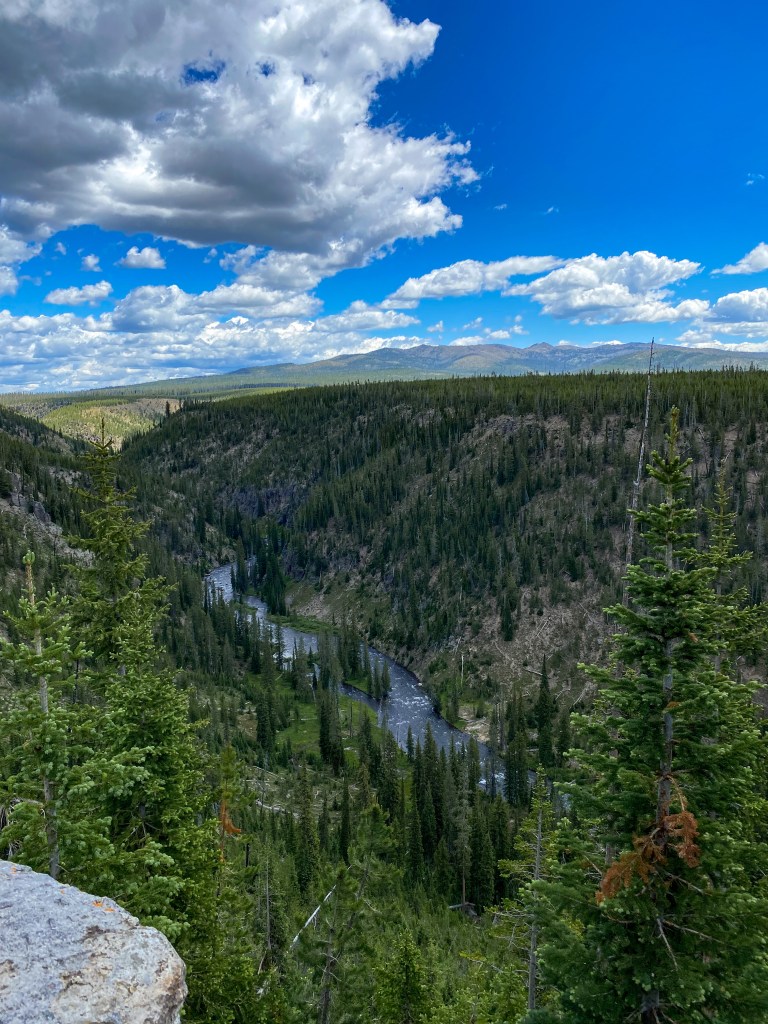
Lewis Canyon 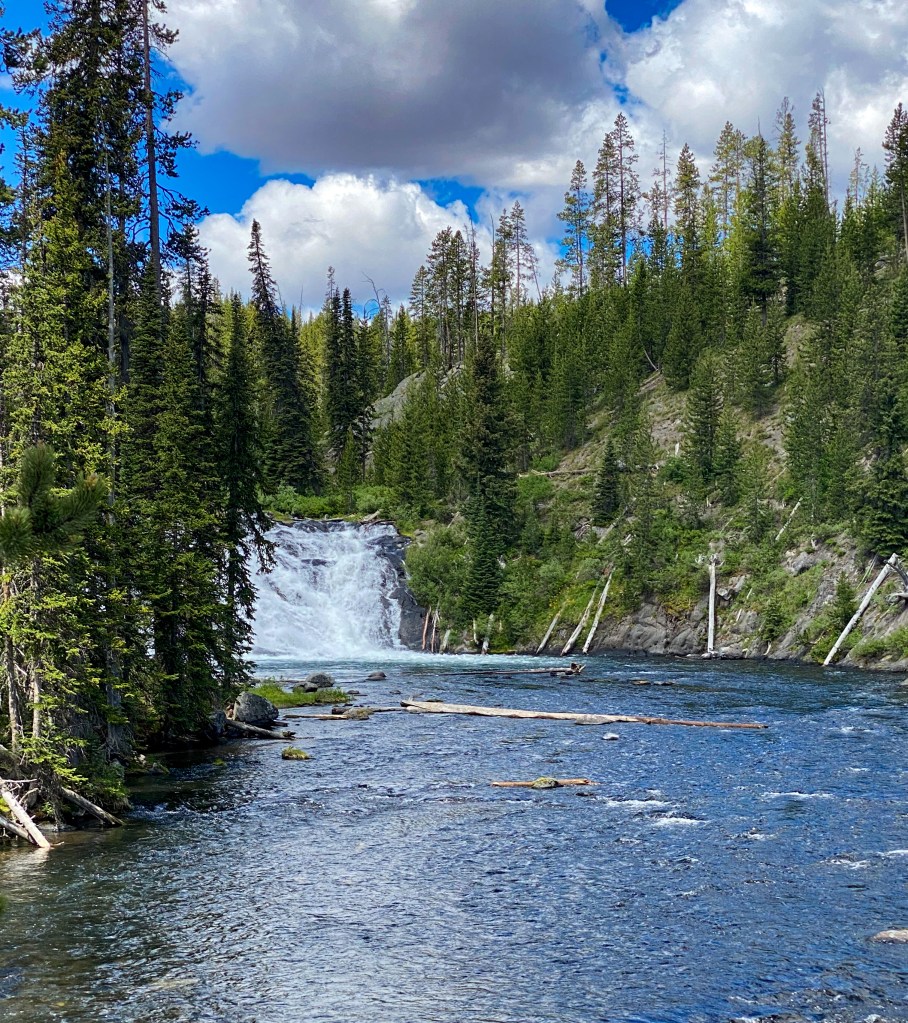
Lewis Falls 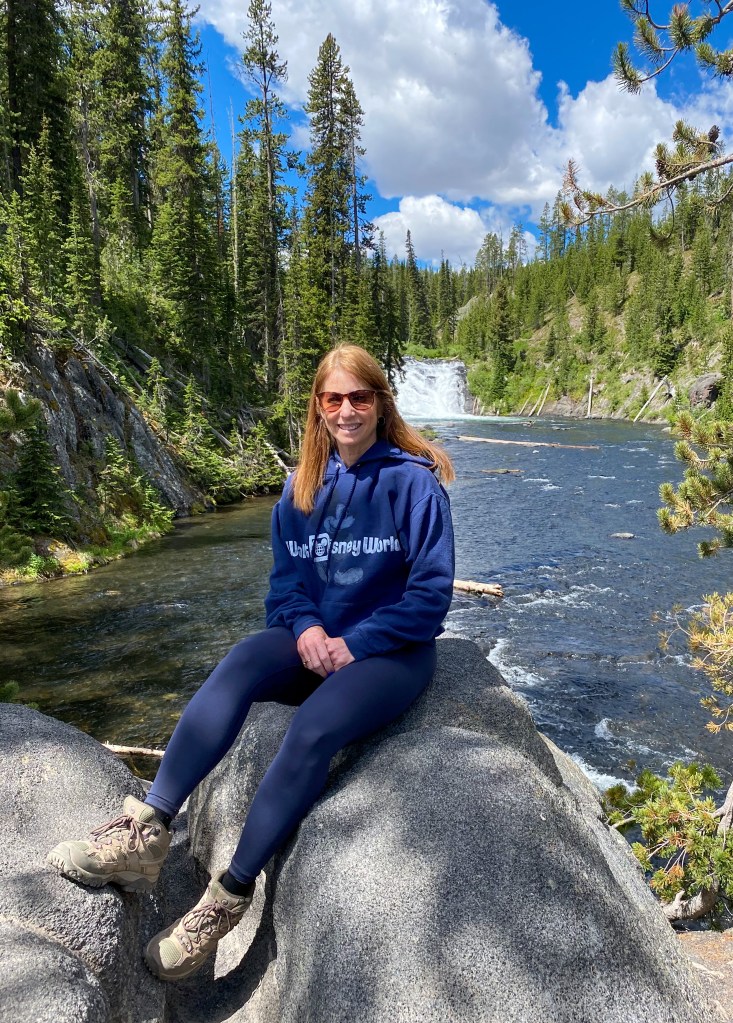
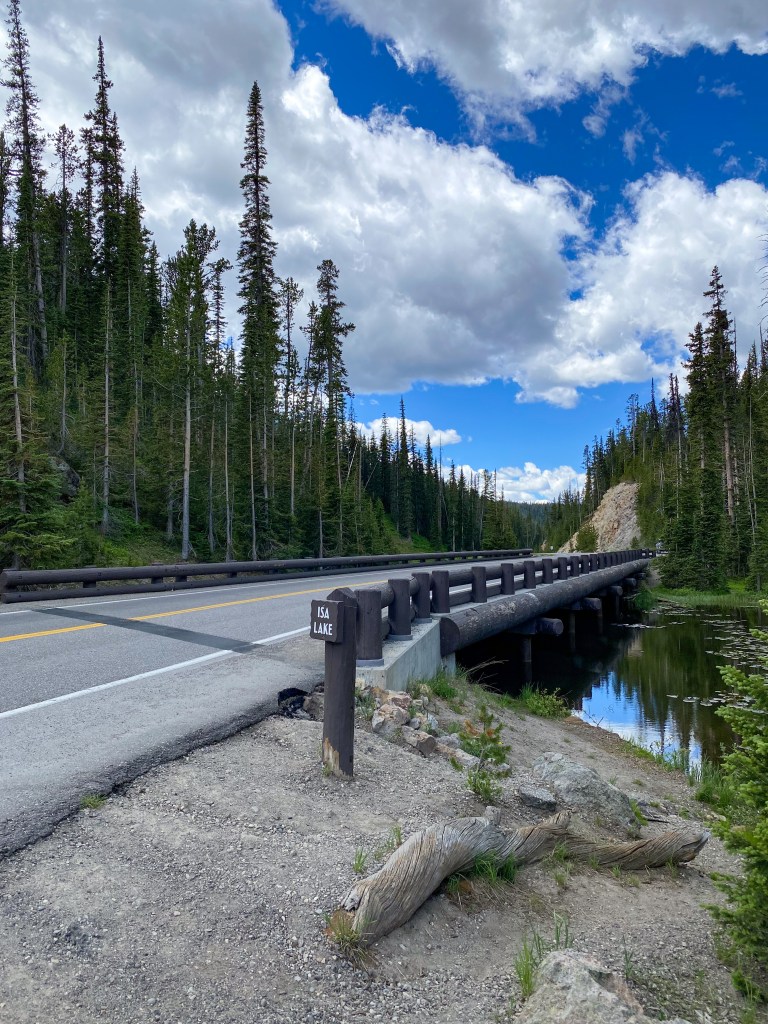
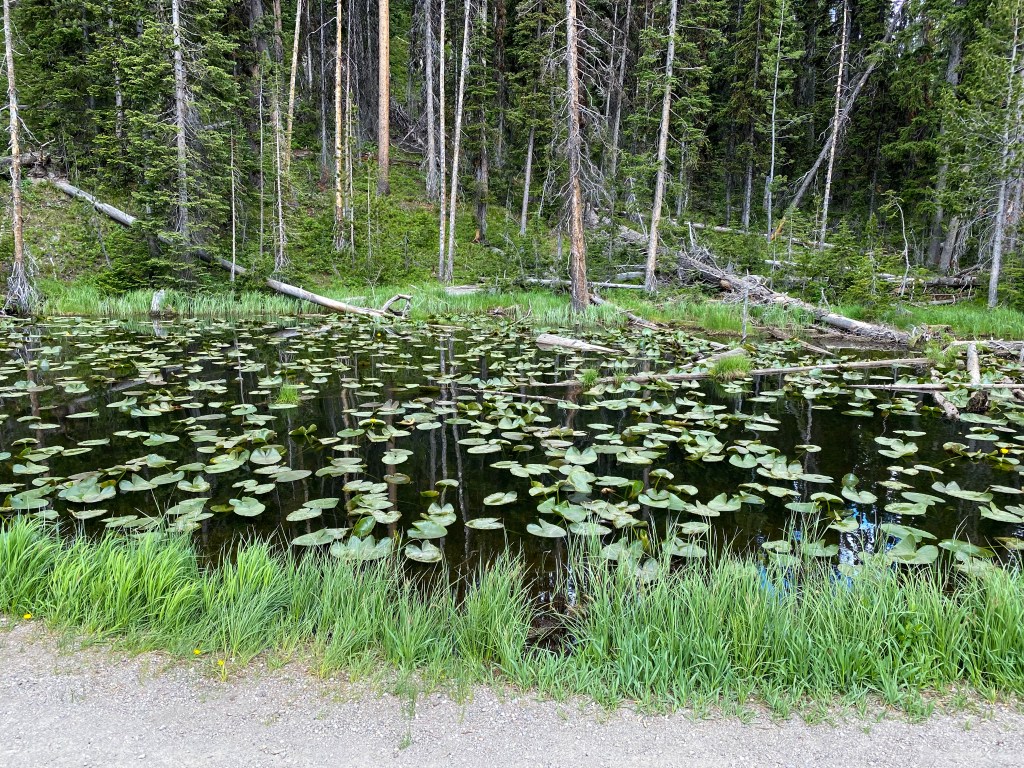
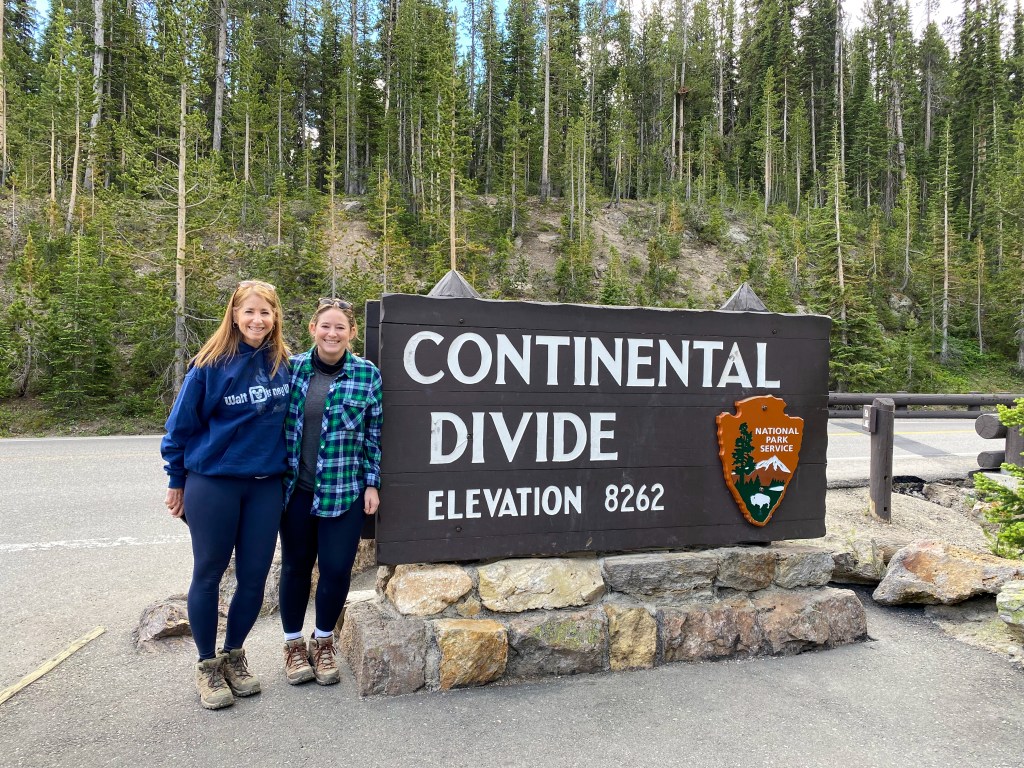
The next little stop was to see not the first, not the second, but the third intersection of the Continental Divide in Yellowstone – Craig Pass. There’s a special lake there called Isa Lake – it’s special because the lake is divided along this imaginary line, and the drainage flows backwards. So when the spring runoff empties into the lake, the east drainage flows into the Pacific, and the west drainage flows into the Gulf of Mexico.
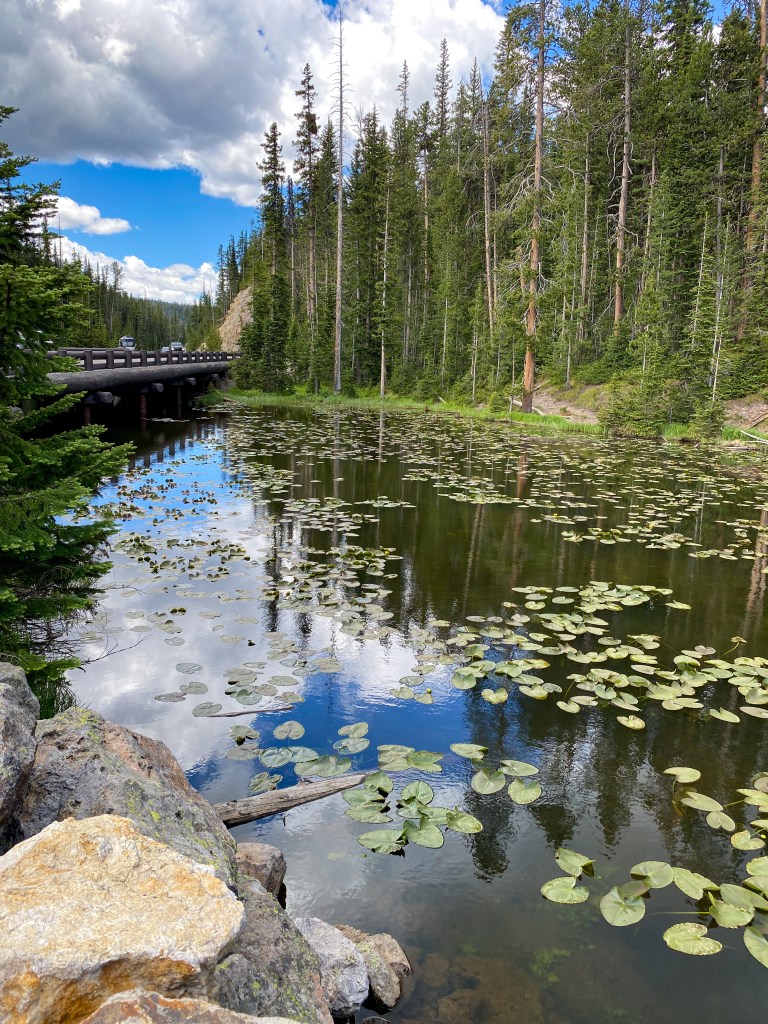
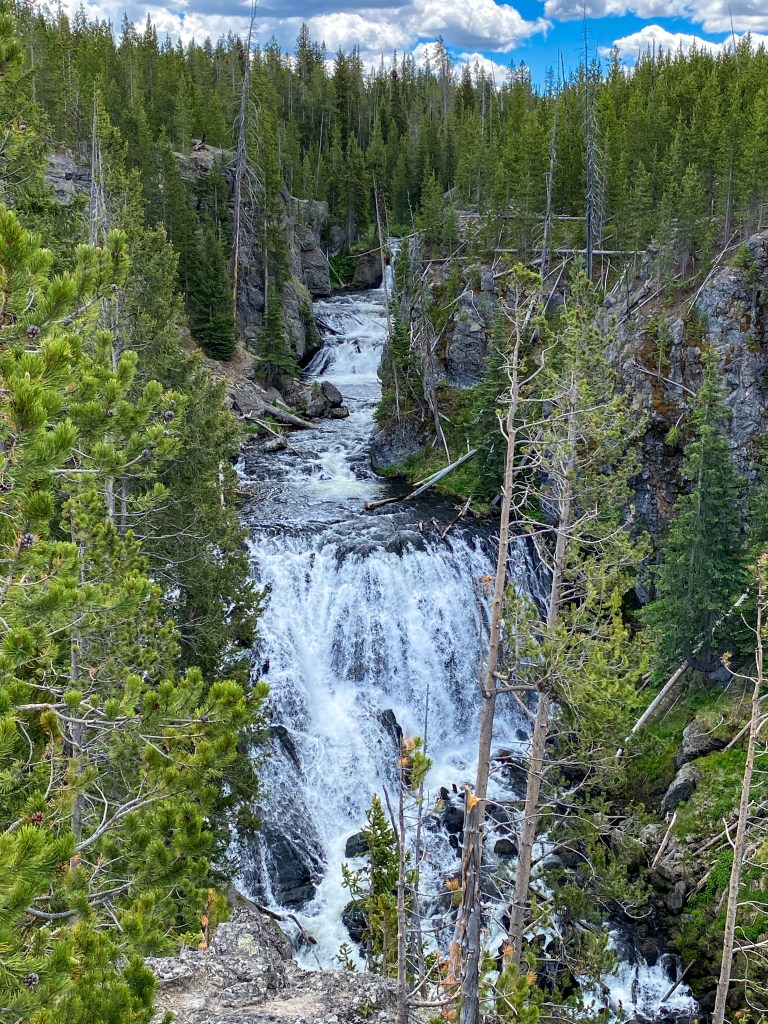
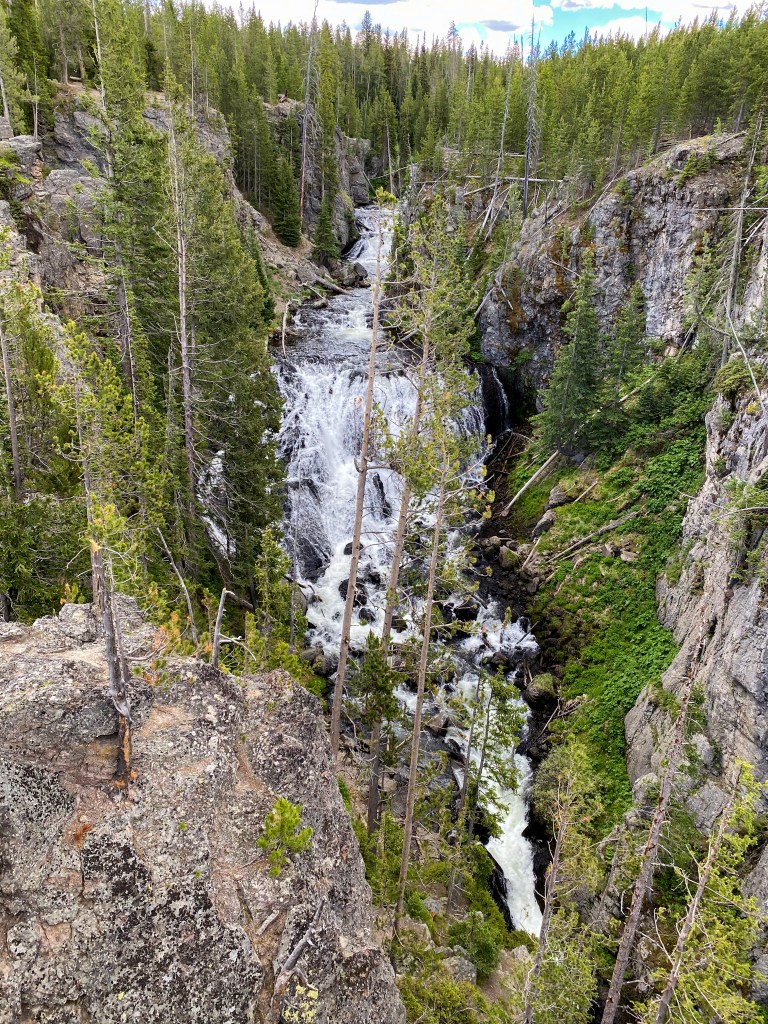
Our last stop before our first Yellowstone hike was to see the Kepler Cascades. These 150 ft multi-tiered falls are part of Firehole River. Because they are only 2-3 miles before you reach Old Faithful, these are usually overlooked.
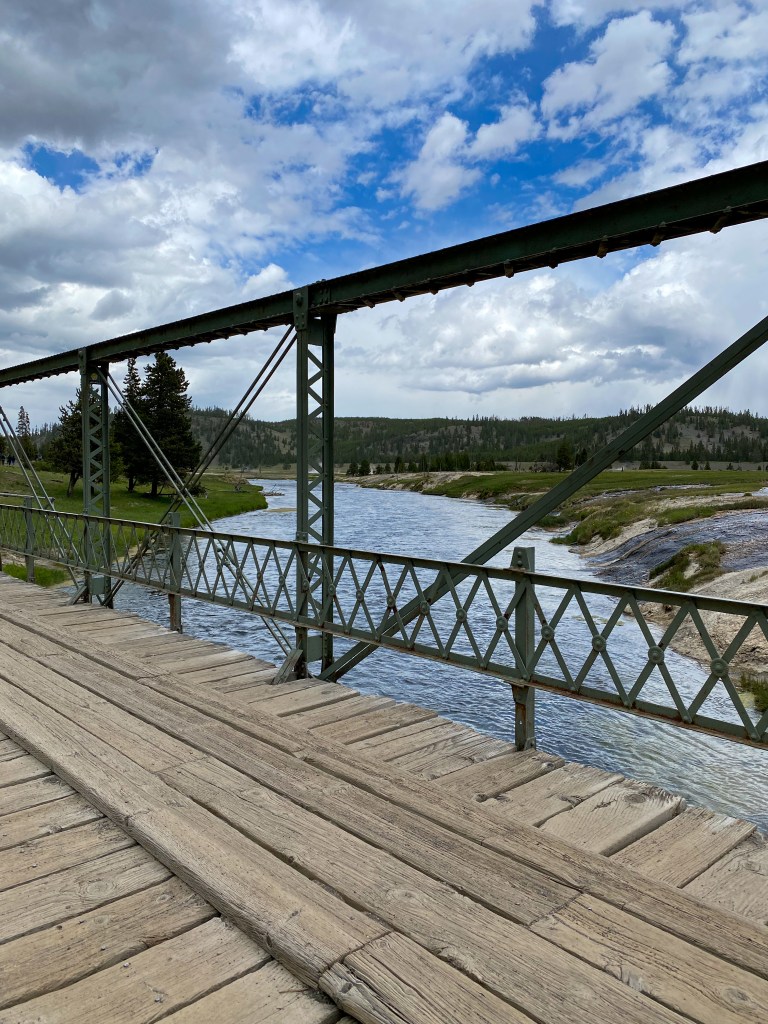
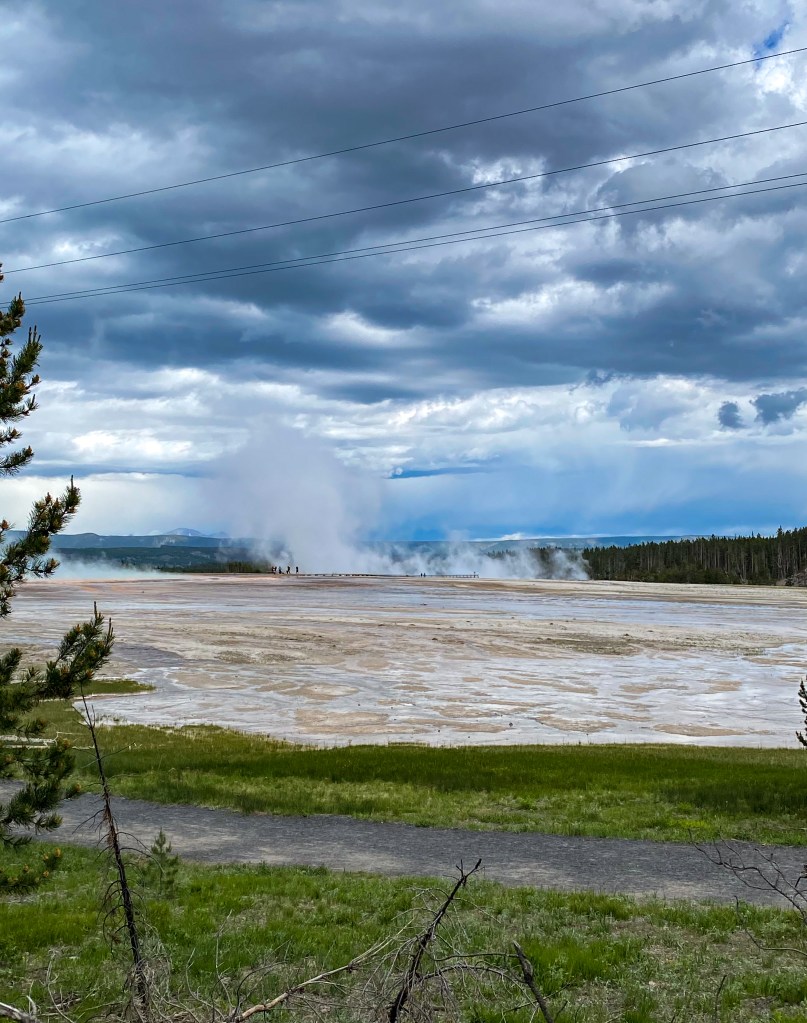
Our first hike! We decided to do the Fairy Falls trail, which includes the overlook for the Grand Prismatic Spring in the Midway Geyser Basin. Get here either early or late in the day – there is very limited parking, even including the street parking. The beginning of the hike crosses a bridge and begins overlooking the Midway Geyser Basin that looked pretty barren to me to be honest – but the thermal activity that’s happening underneath is anything but. Deep underneath the surface, magma from an active volcano (yes, if you didn’t know, Yellowstone is technically an active volcano) heats the water rising to the surface, resulting in this hot spring that pours roughly 500 gallons of water into the Firehole River every minute.
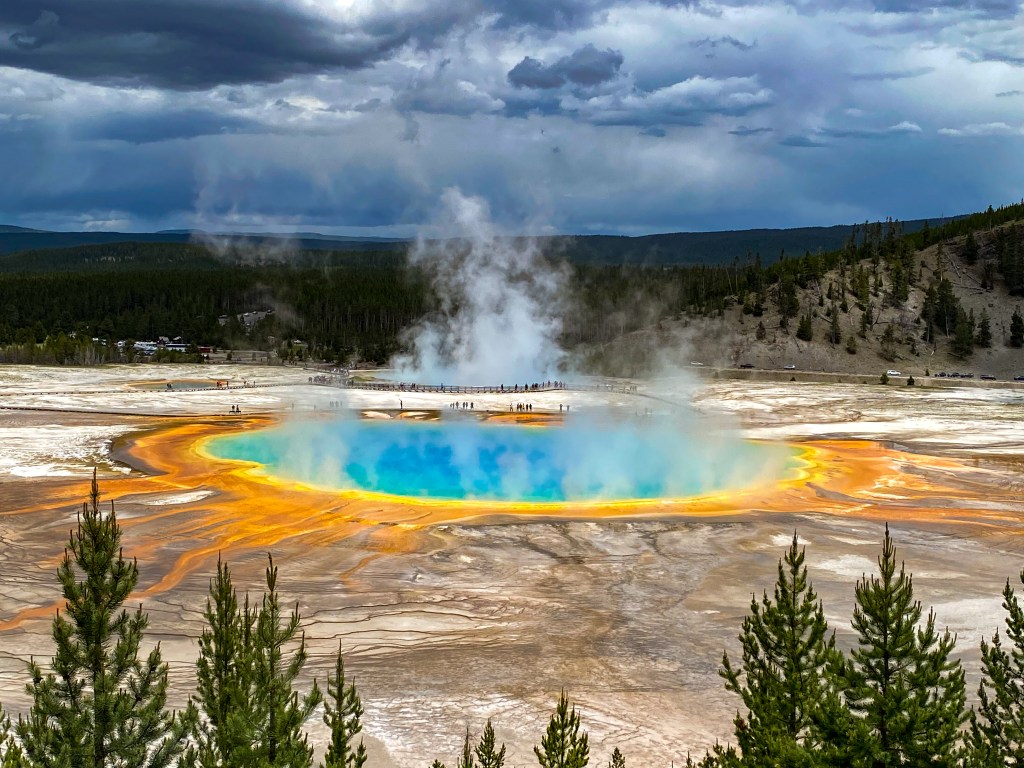
We made it up to the overlook and are rewarded with this amazing hydrothermal rainbow – Grand Prismatic Spring. It is one of the largest and most colorful in Yellowstone – the intense colors are caused by thermophiles, or heat-loving algae that contain colorful pigments. The blue or clear waters are extremely hot, with Grand Prismatic reaching 160 degrees F. So all of these Caribbean blues, while they might look inviting, could kill you if you went for a quick swim.
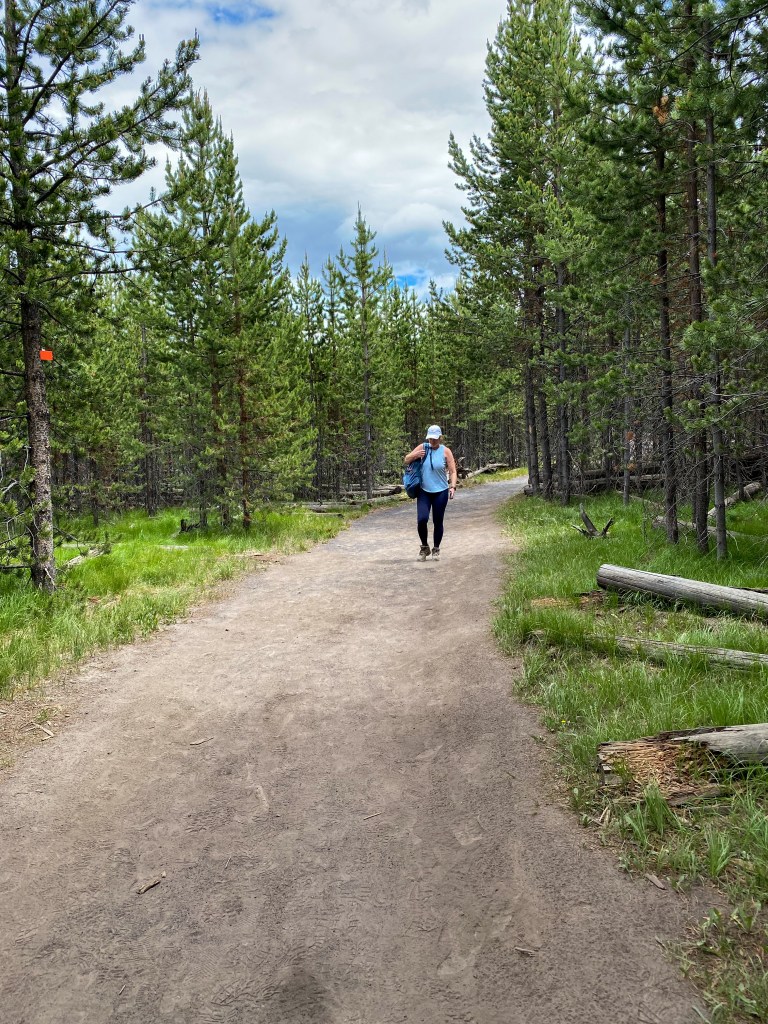
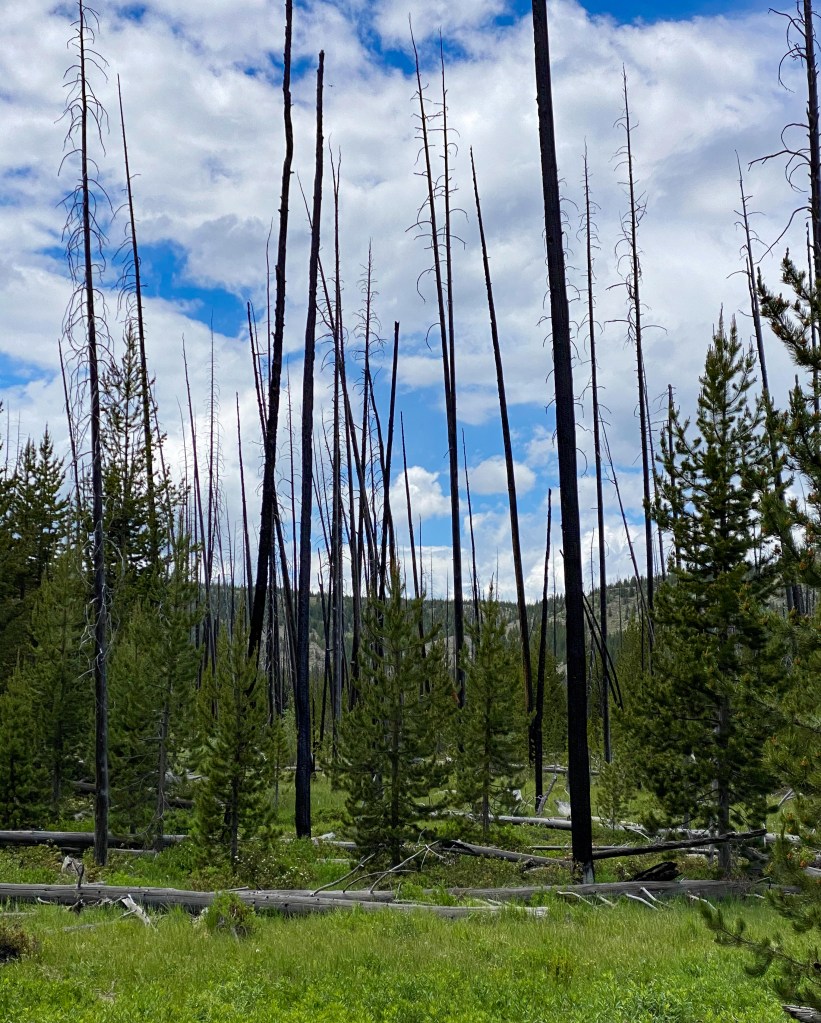
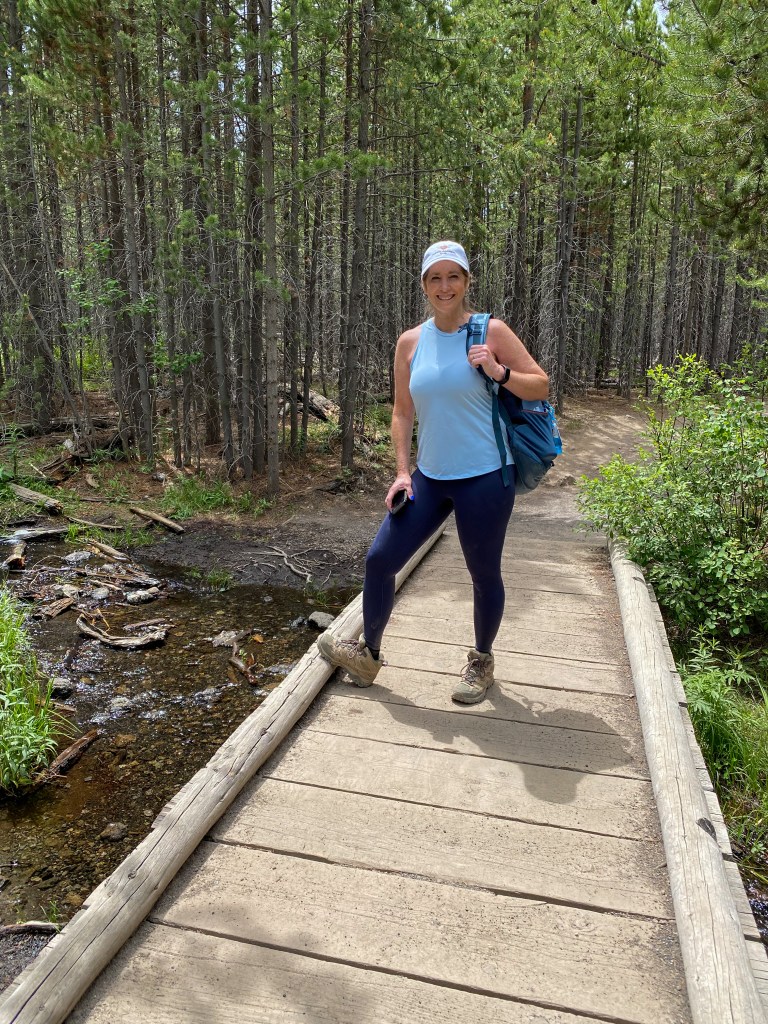
We continued our hike toward Fairy Falls, which was quite a pleasant, relatively flat trail through a forest of these tall skinny trees known as lodgepole pines. Fun fact about these trees: they thrive in forest fires. Their cones are closed tight with a resin that only melts when it reaches a certain heat threshold – during a fire, the seeds are released and successfully grow with the newly open canopy, where plenty of sunlight shines through.
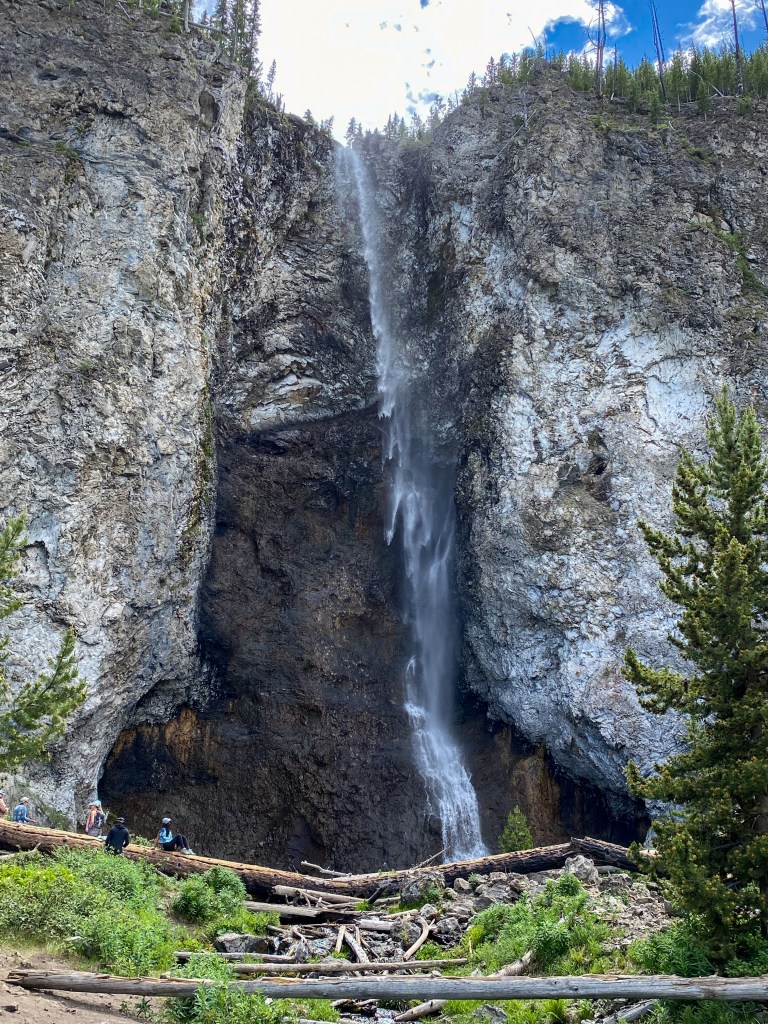
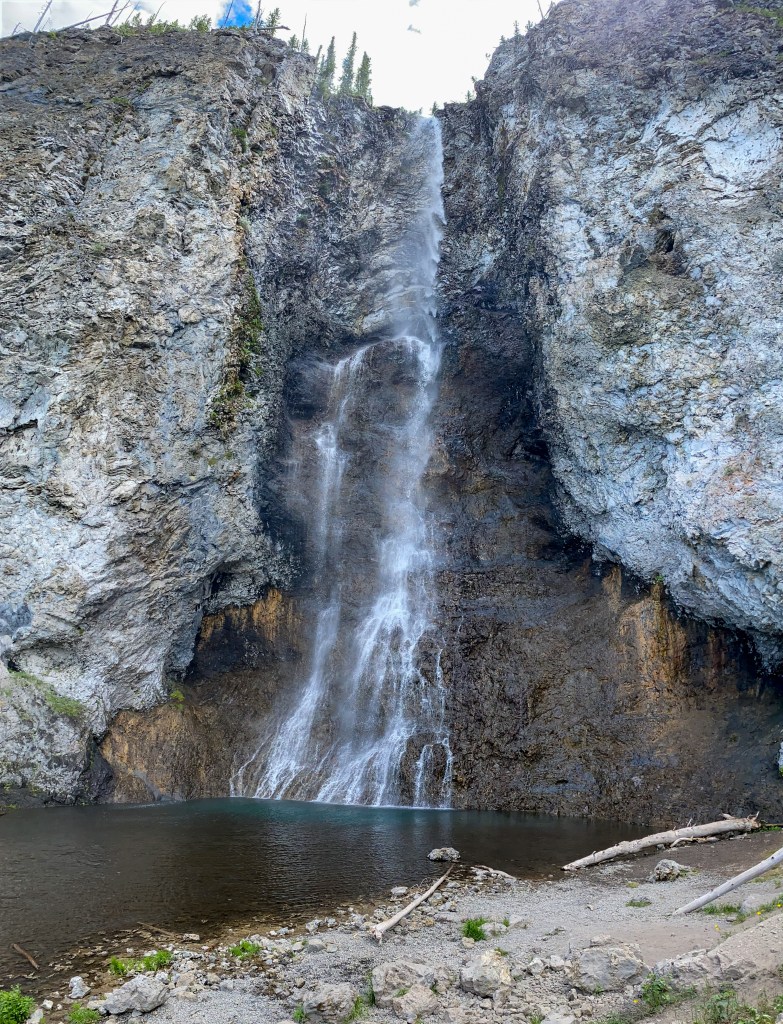
The waterfall was in view, and it was a sight to behold! It is one of Yellowstone’s tallest waterfalls at 200 ft tall. While the pictures may look skimpy, there was actually a lot of water (it just looks like mist in photos).
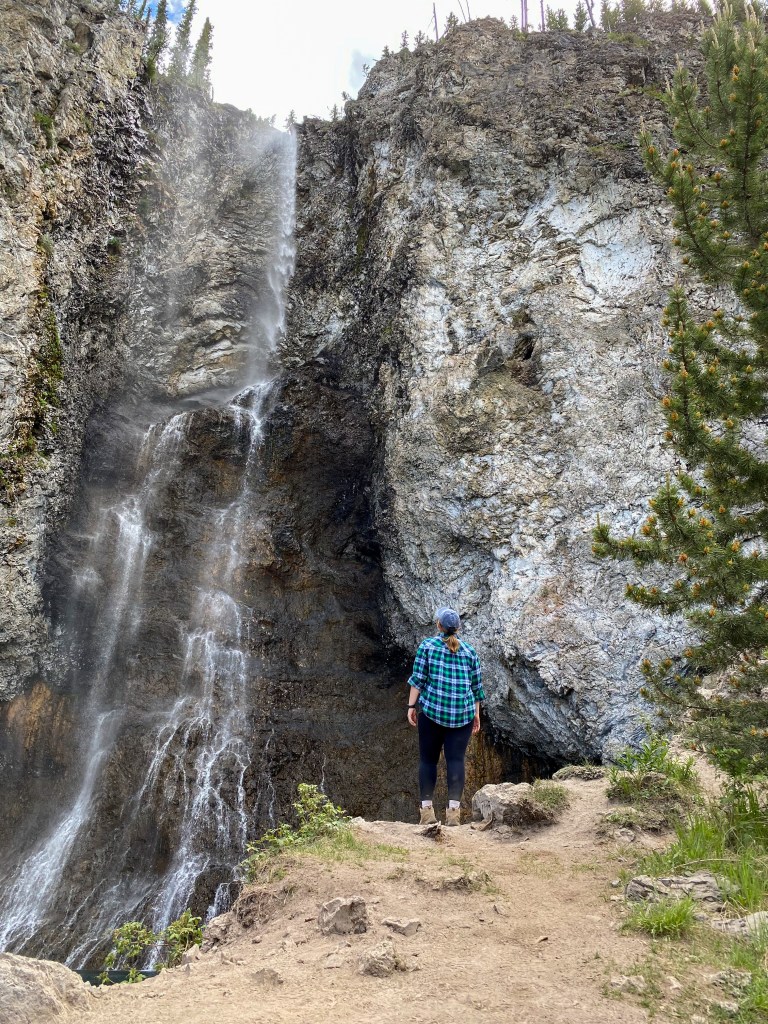
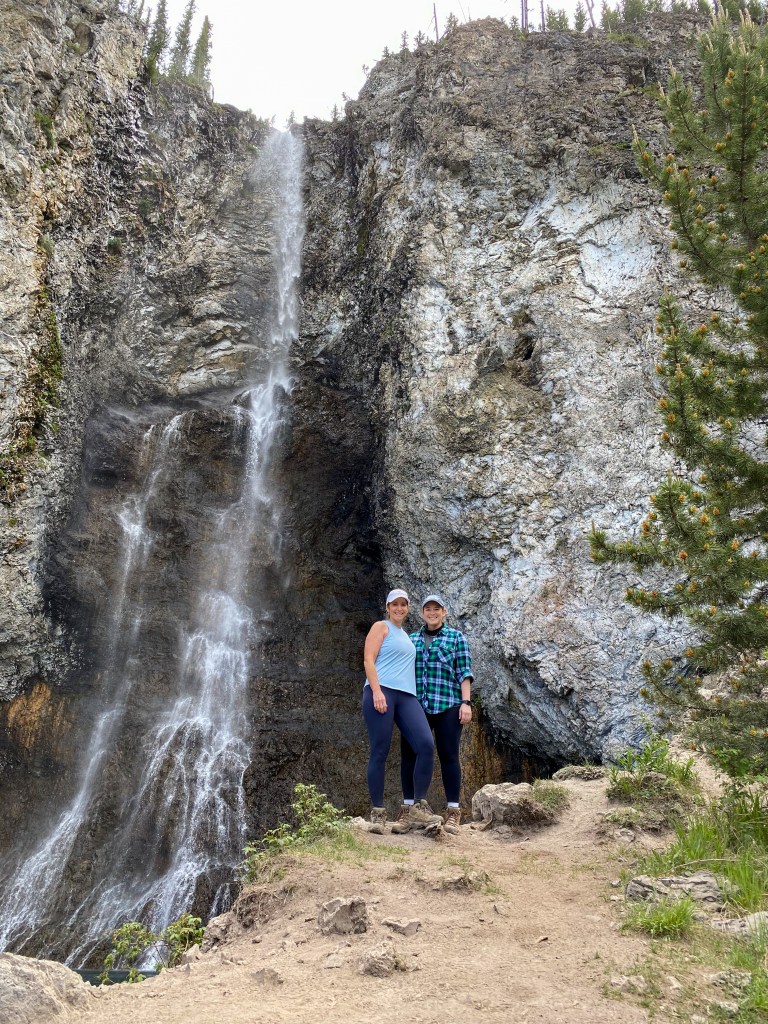
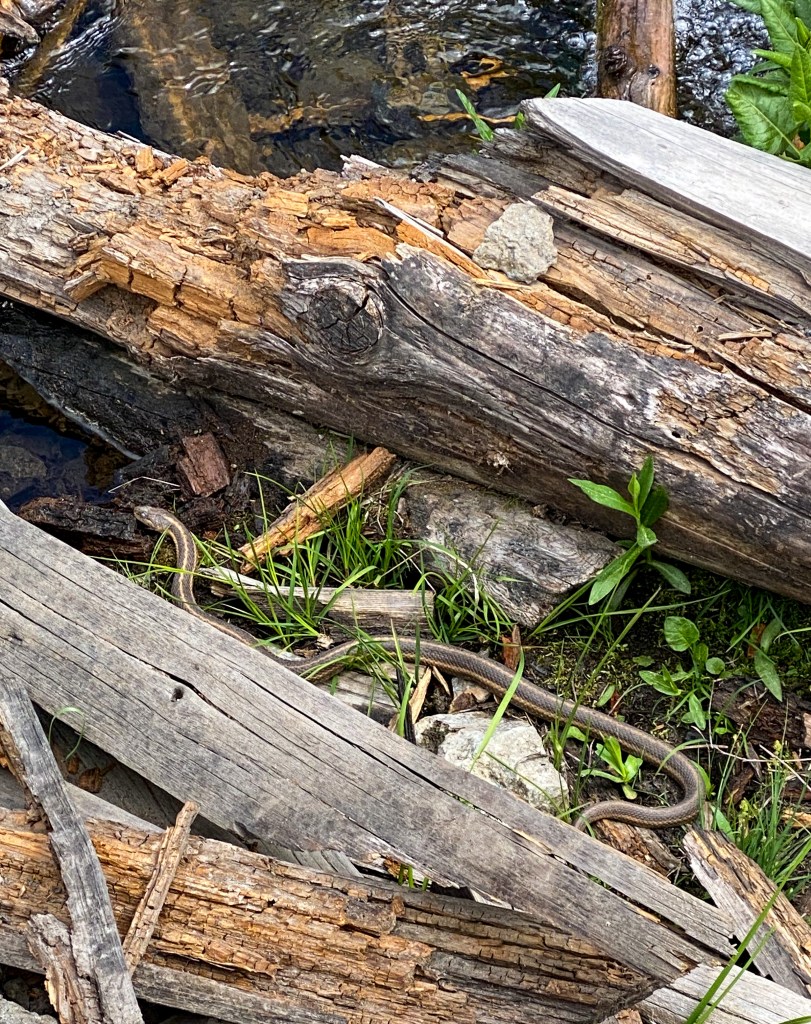
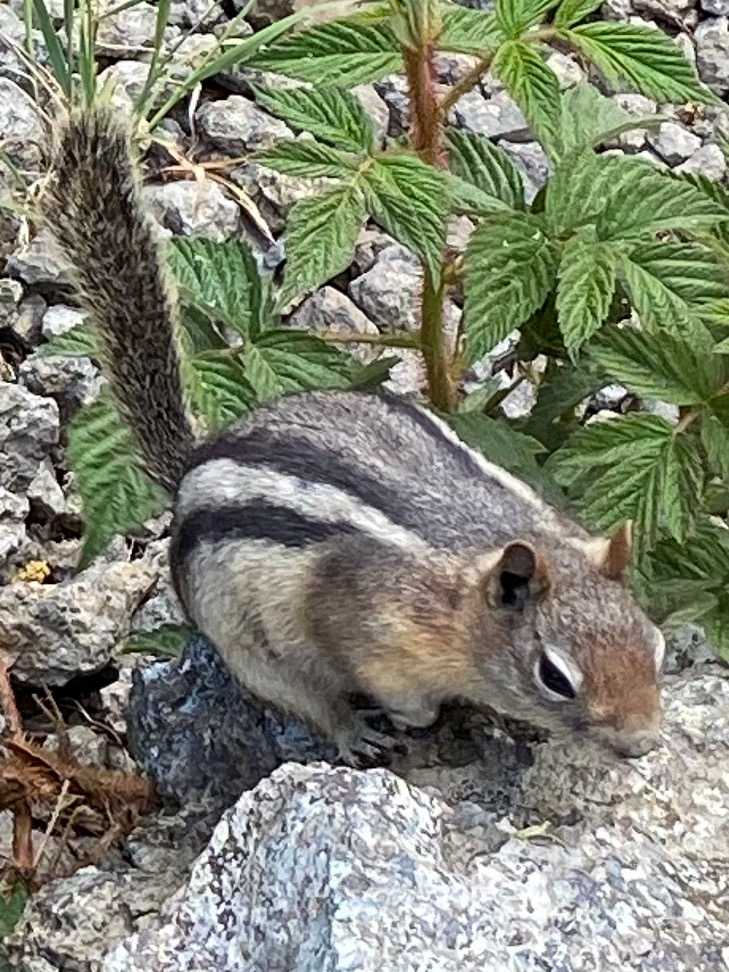
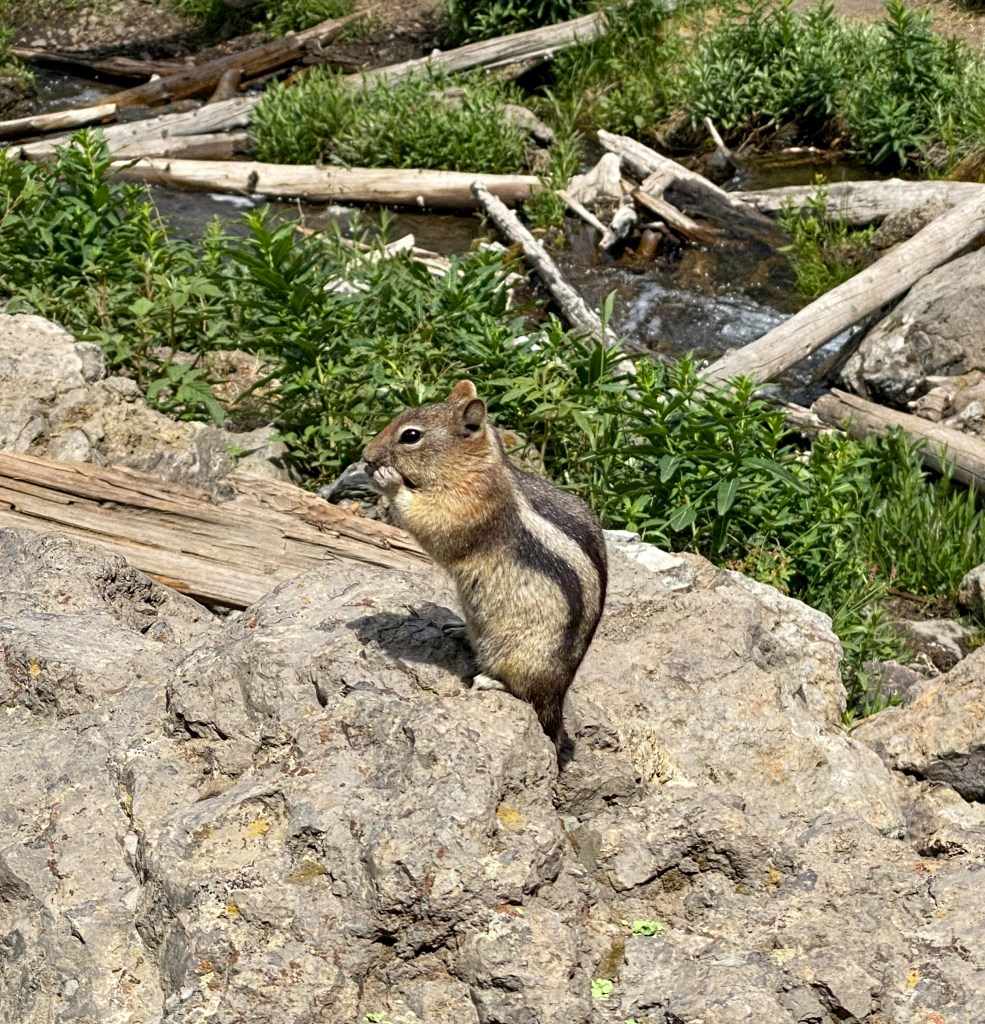
While taking in the views, we were greeted by some wildlife! Chipmunks are everywhere in the parks, and this one decided to strike a pose for us along the rocks, but not before getting spooked by the first (and only) snake we saw on the whole trip!
After seeing the Grand Prismatic Spring from far away, we went to the Midway Geyser Basin to see it and the other hydrothermal features up close.
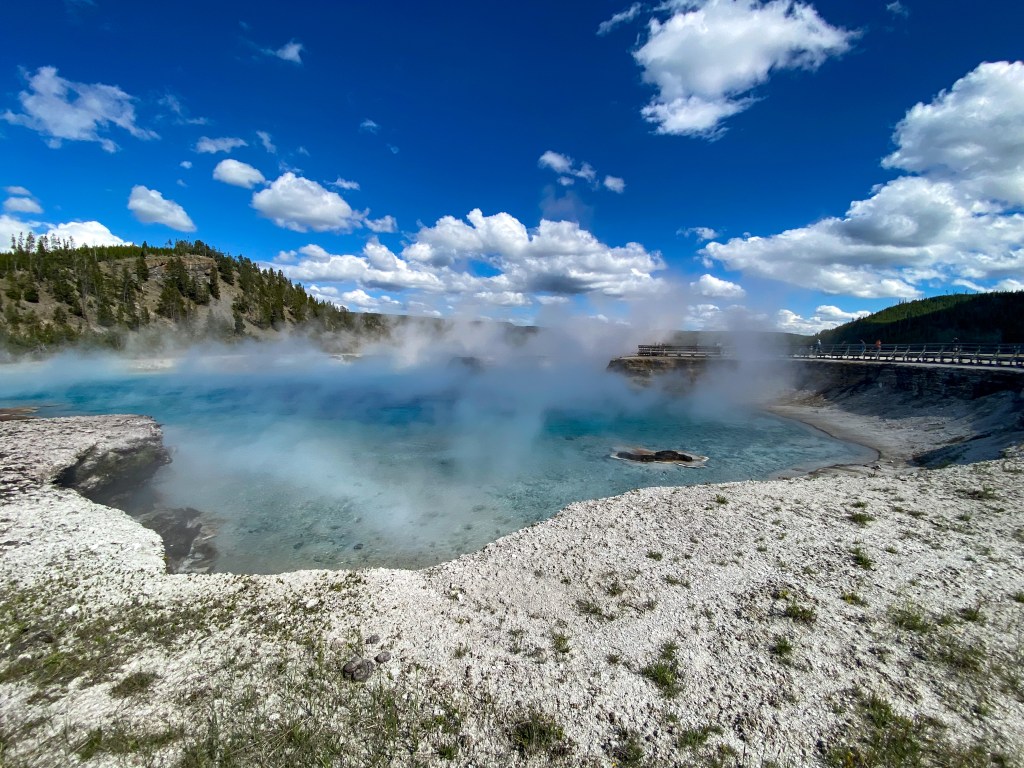
Excelsior Geyser 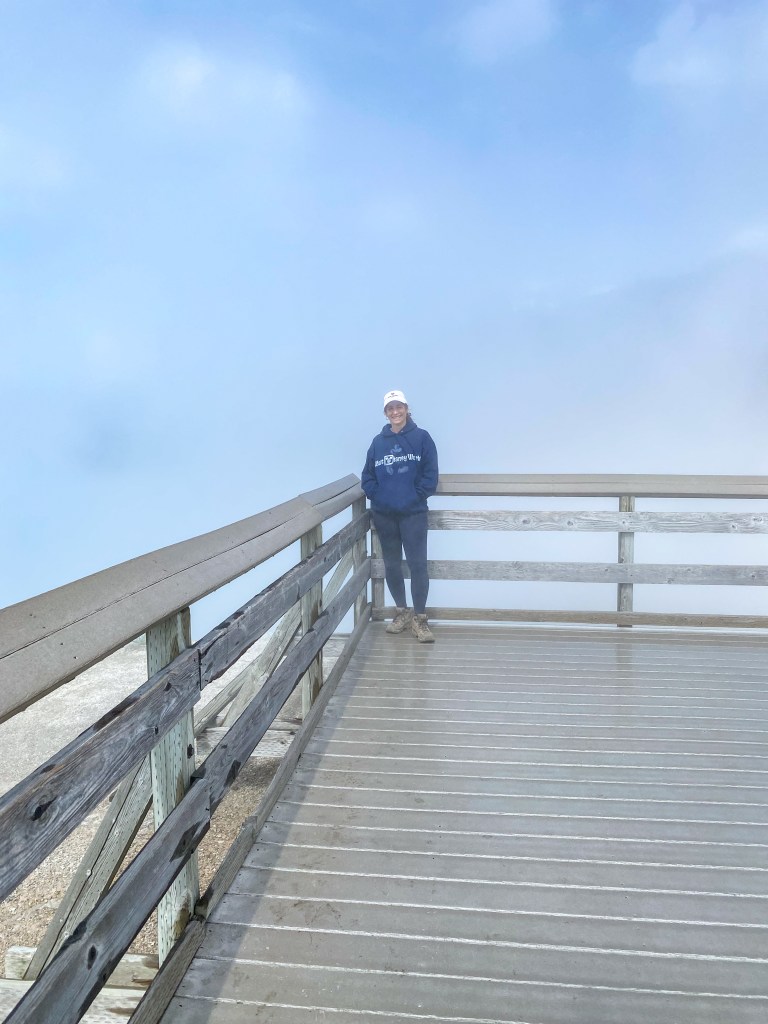
Jill within the steam from Excelsior Geyser 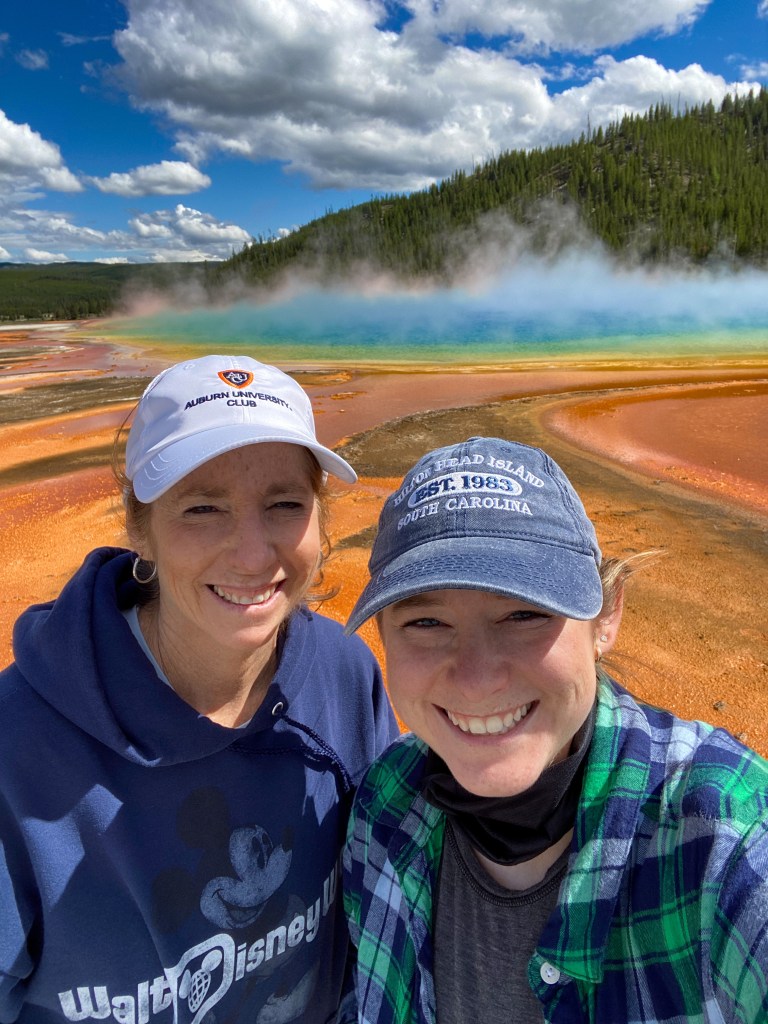
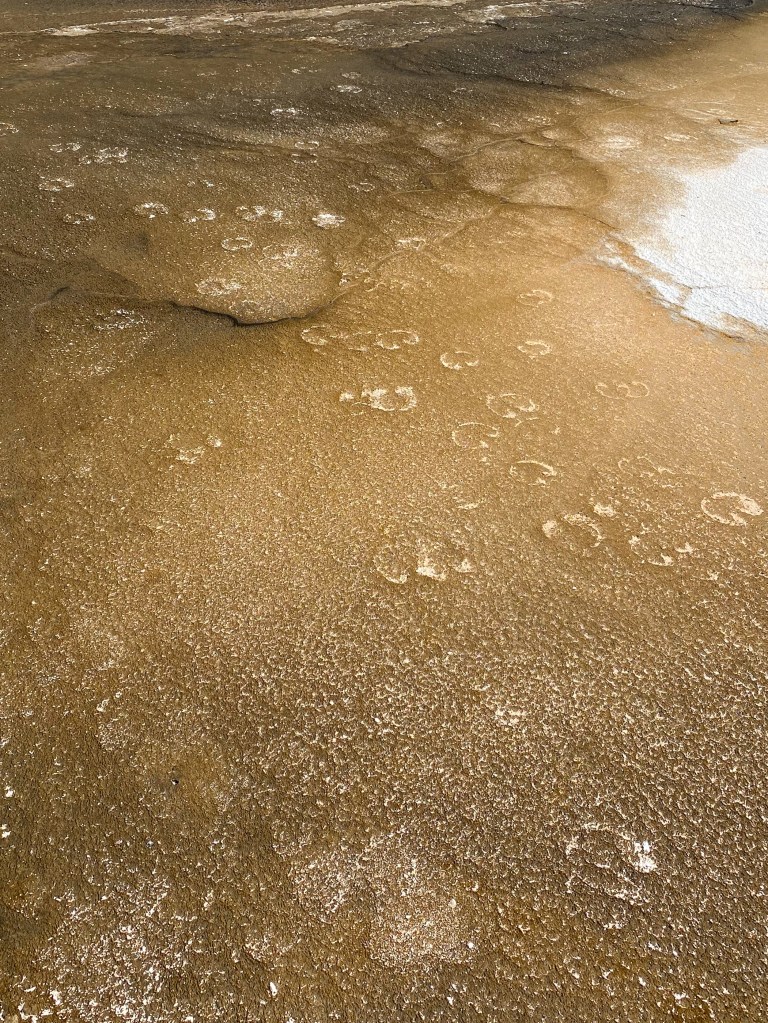
Bison hoof-prints in the geyser basin – on cold mornings, they’re known to stand in the shallow waters to warm up 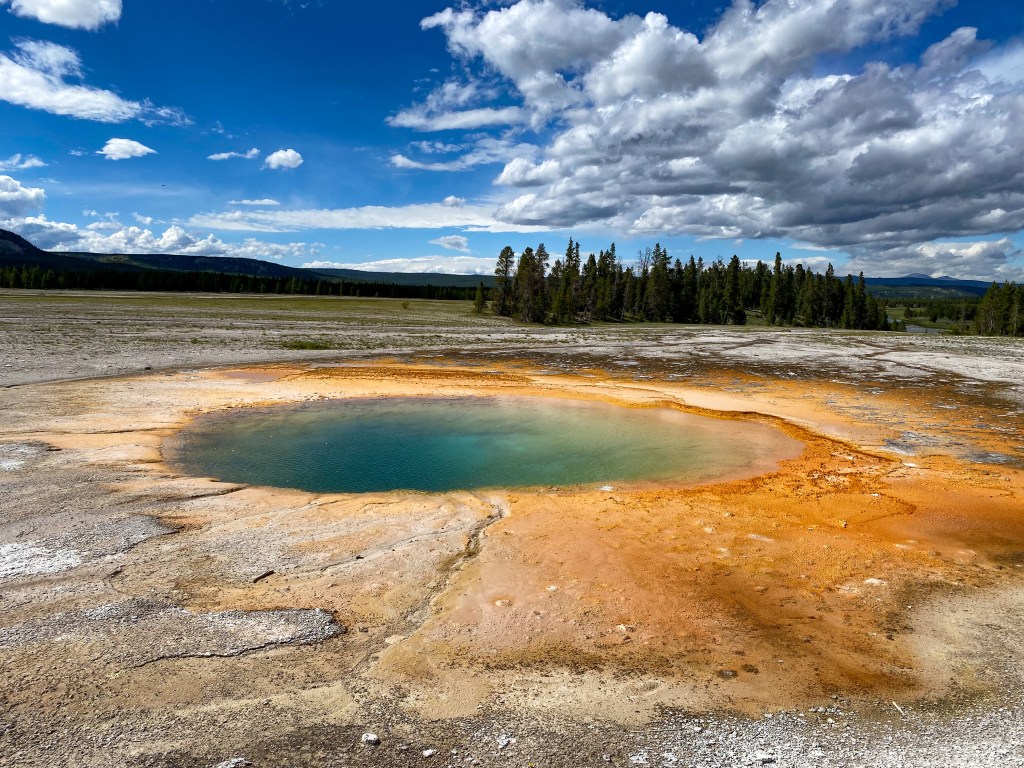
Opal Pool 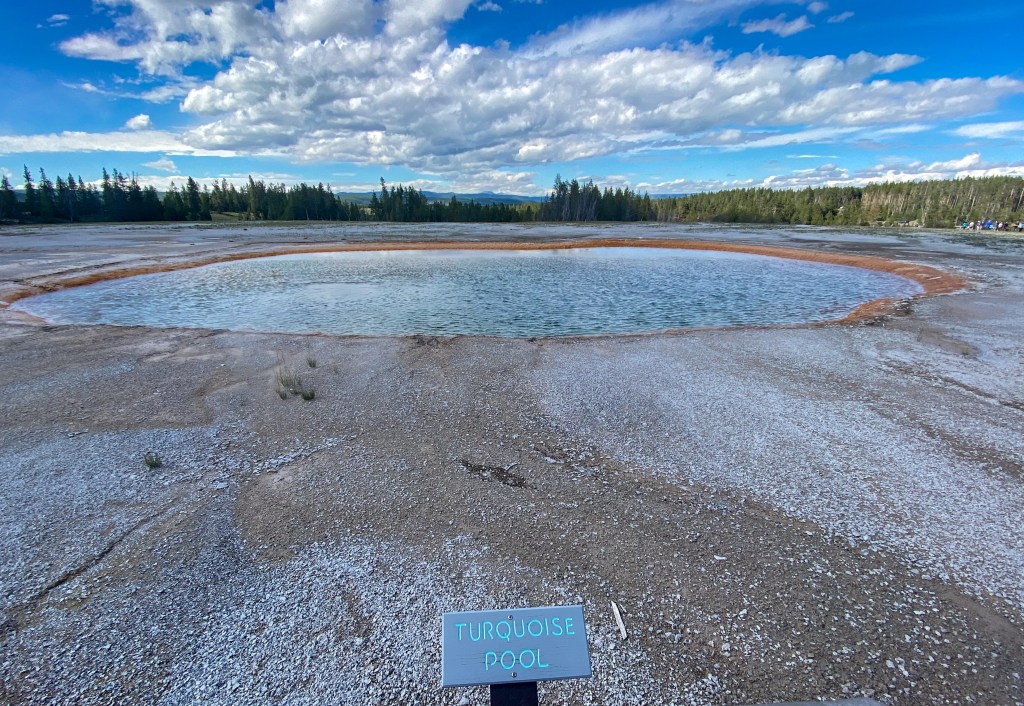
Turquoise Pool 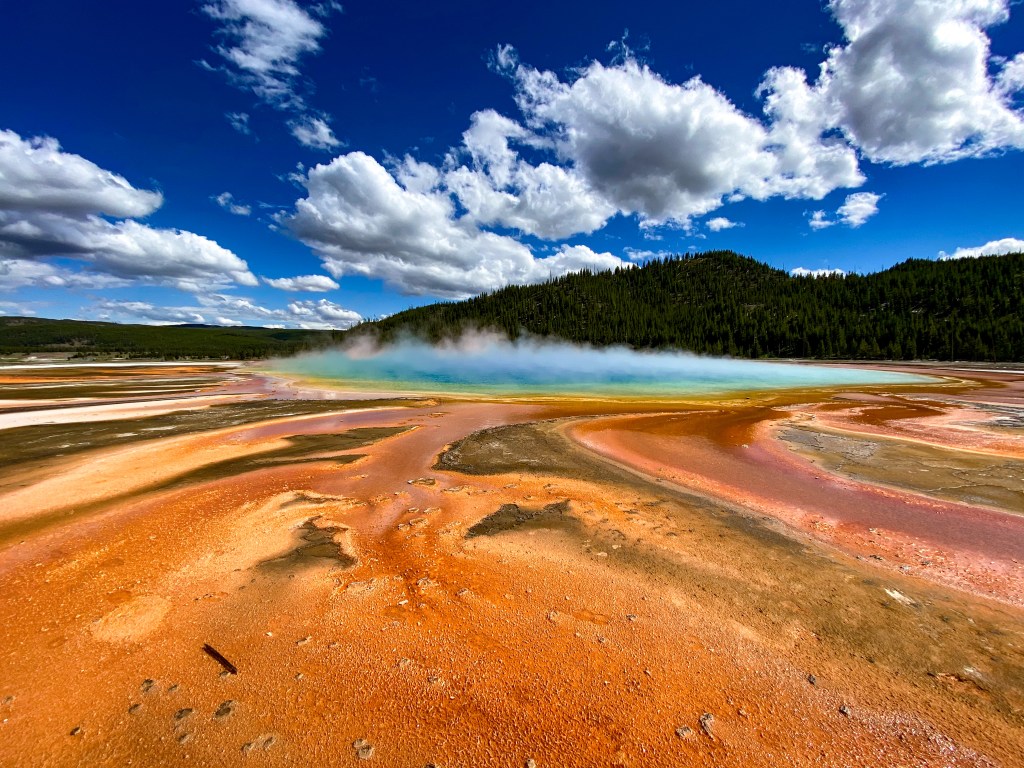
We decided to hit the Lower Geyser Basin today, as well, so we turned down Firehole Lake Drive to admire another whole set of hydrothermal features including the Fountain Paint Pots Trail, where we saw our first mud pots!
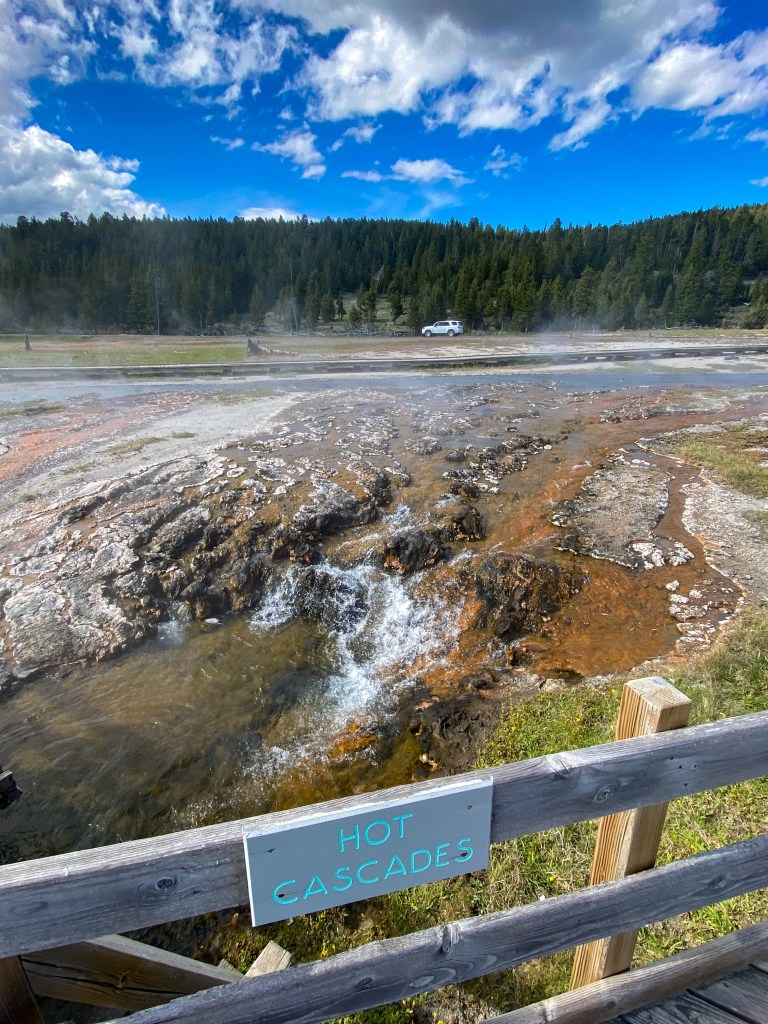
Hot Cascades 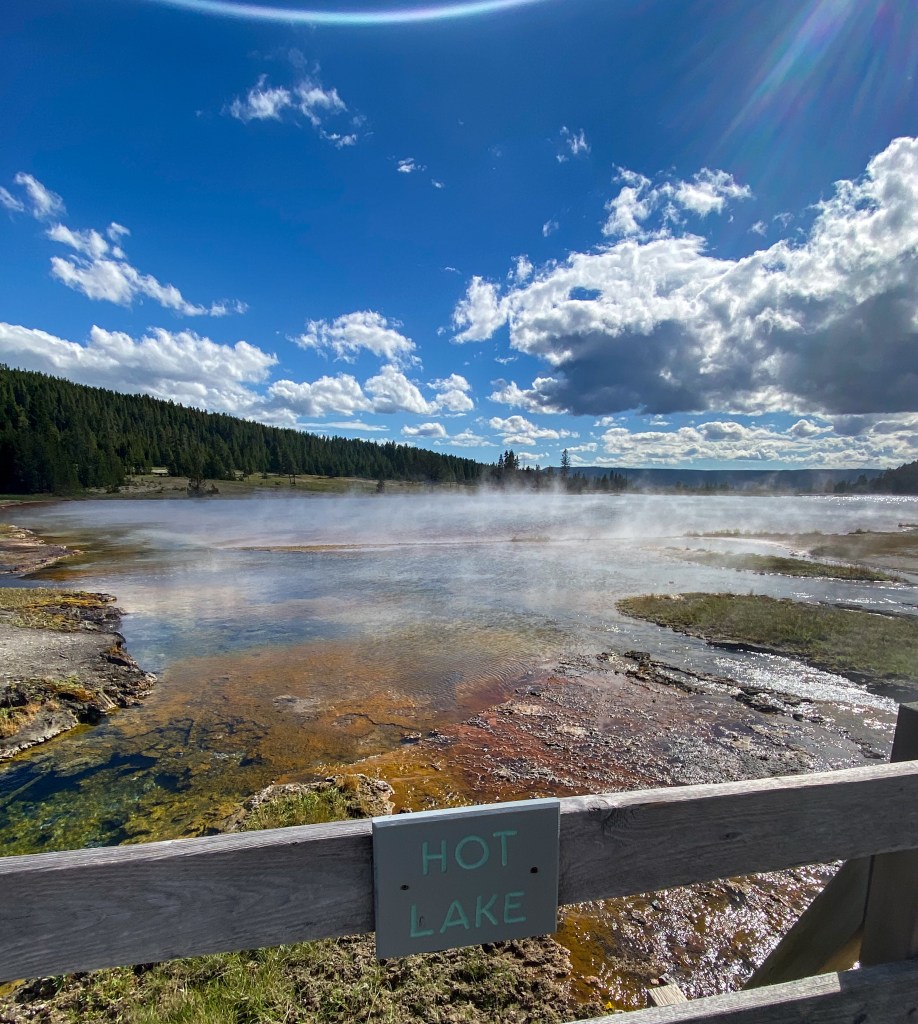
Hot Lake 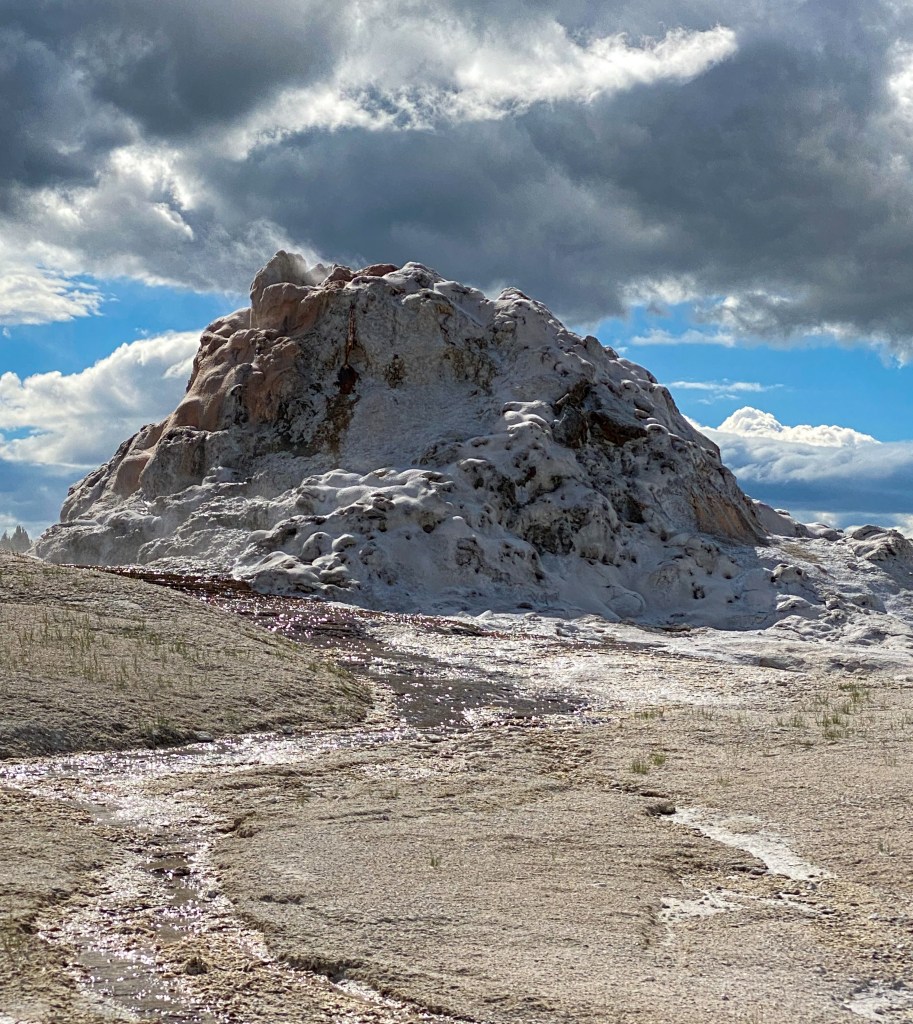
White Dome Geyser 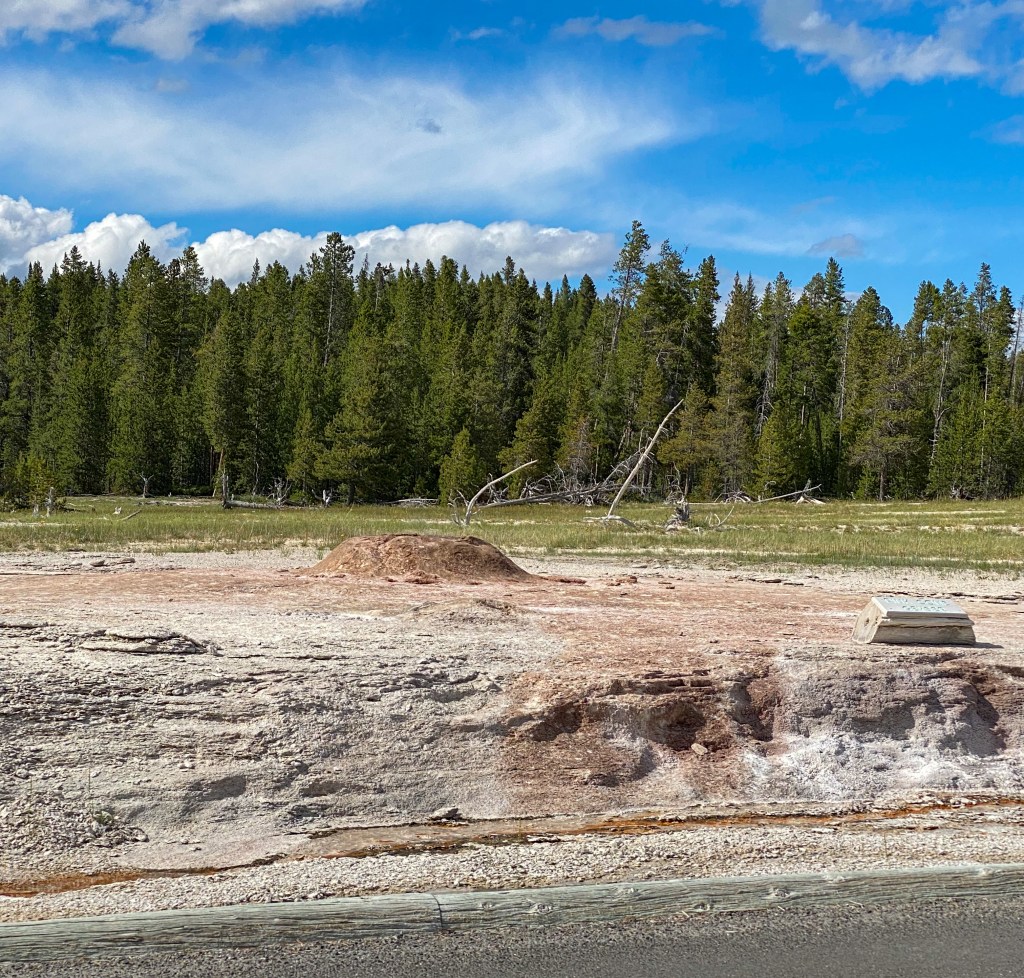
Pink Cone 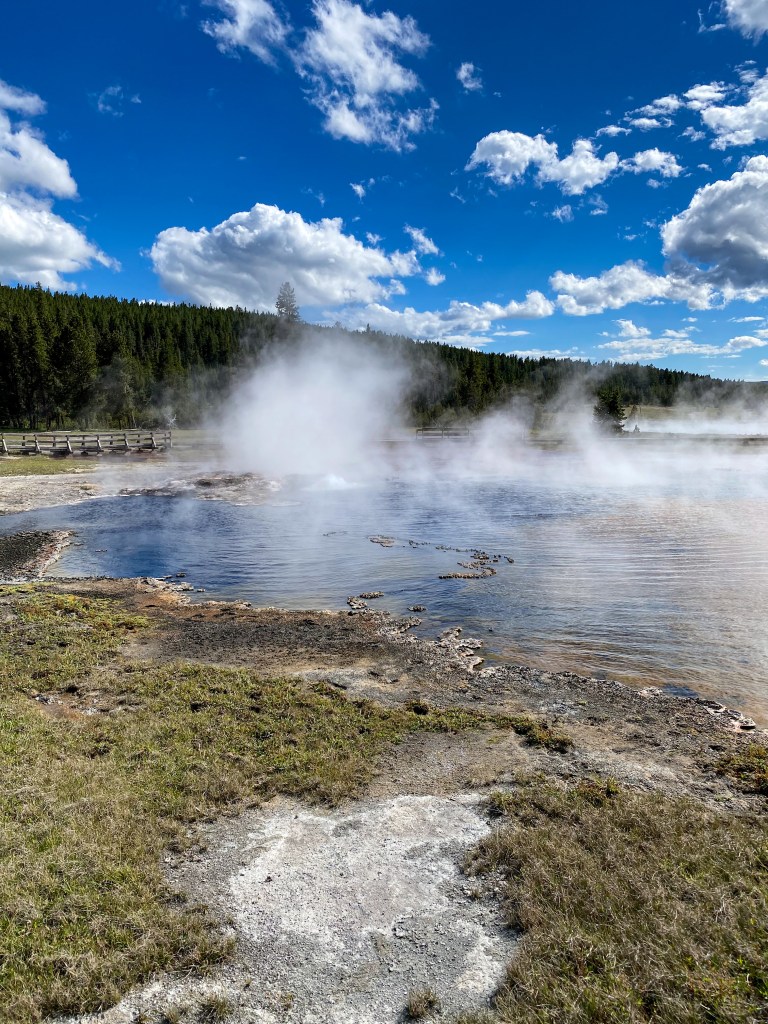
Steady Geyser 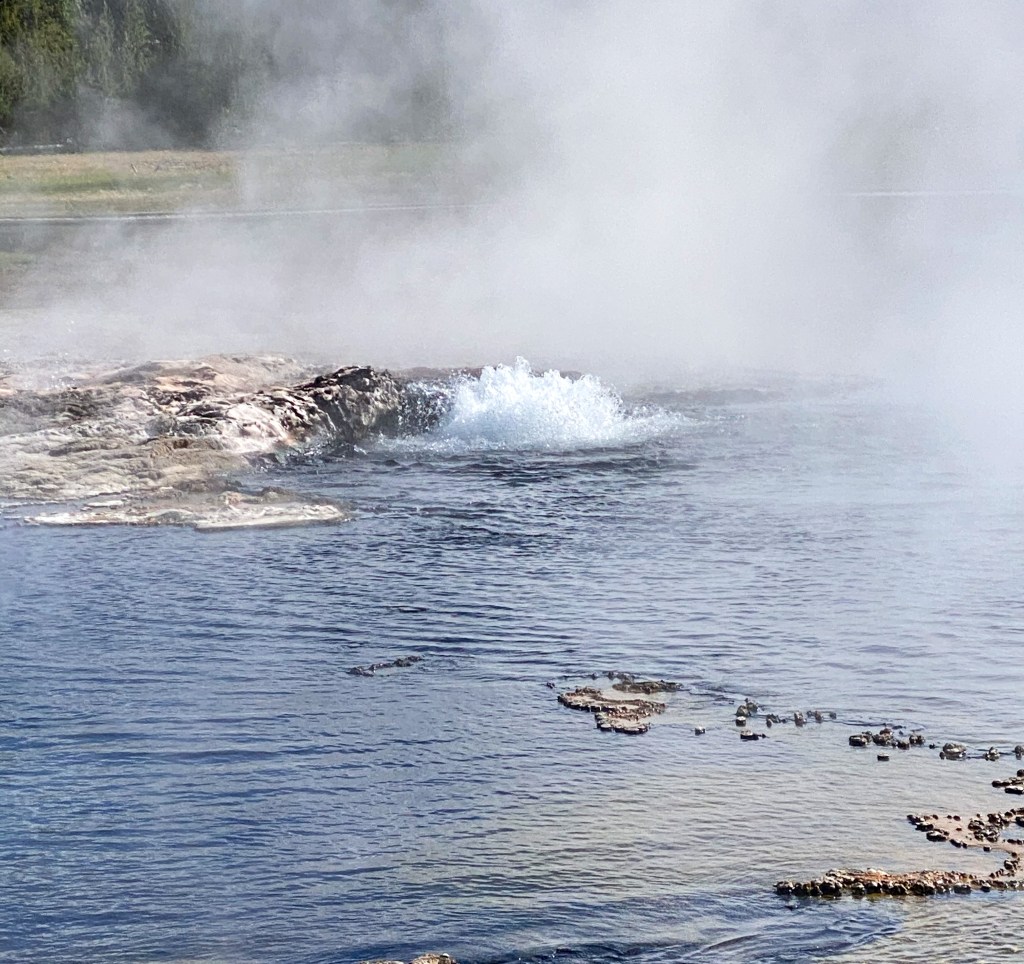
Steady Geyser – a little closer 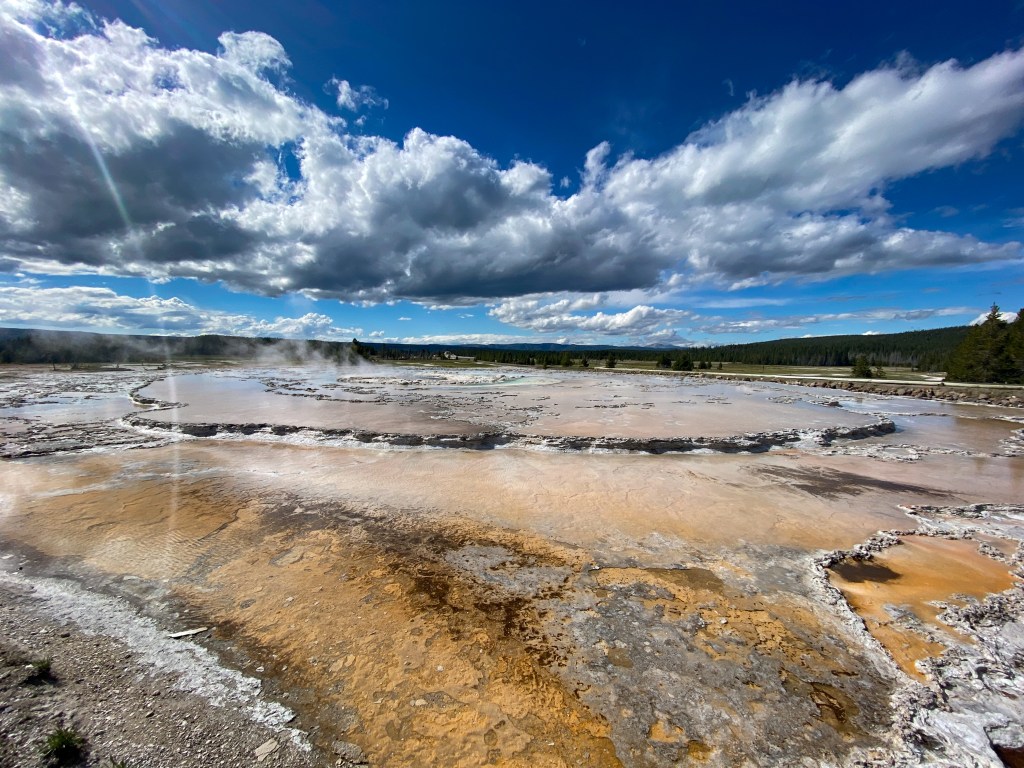
Great Fountain Geyser – one of the active somewhat predictable geysers in the park, with eruptions every 10-14 hours
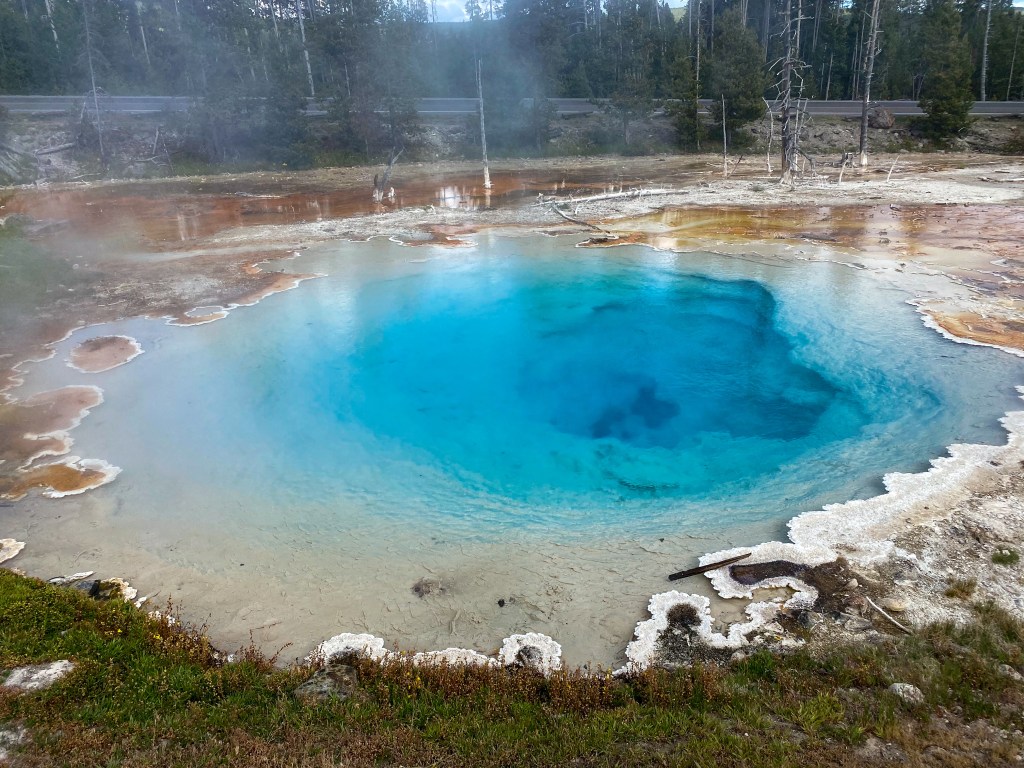
Silex Spring 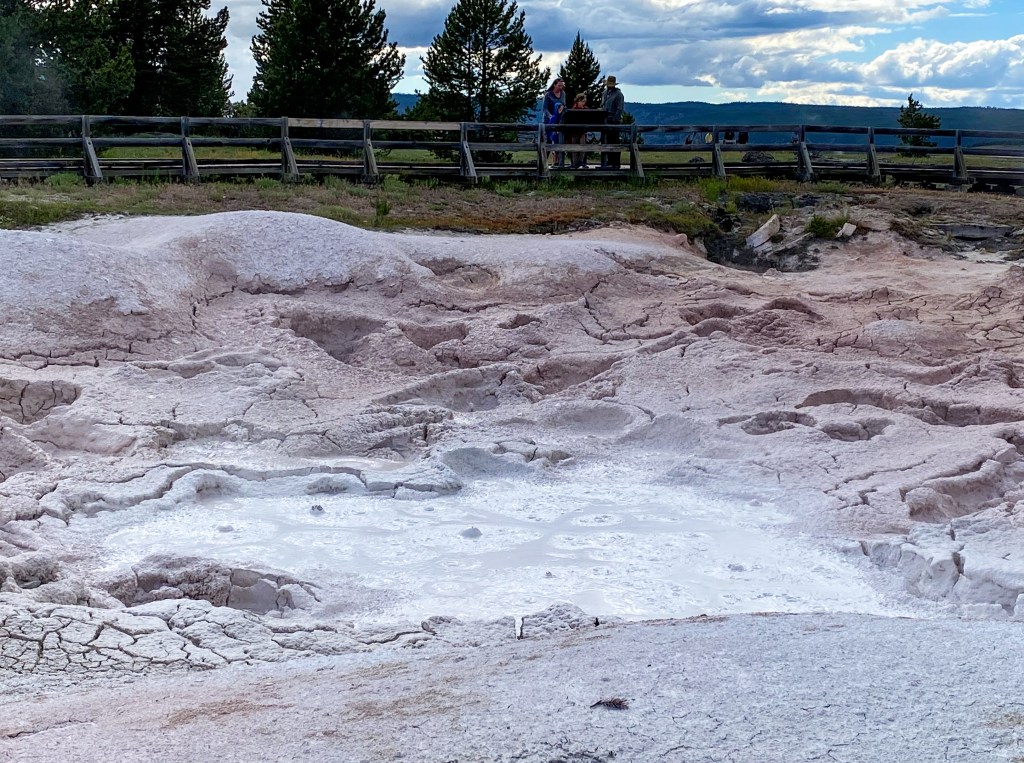
Fountain Paint Pots – mud pots 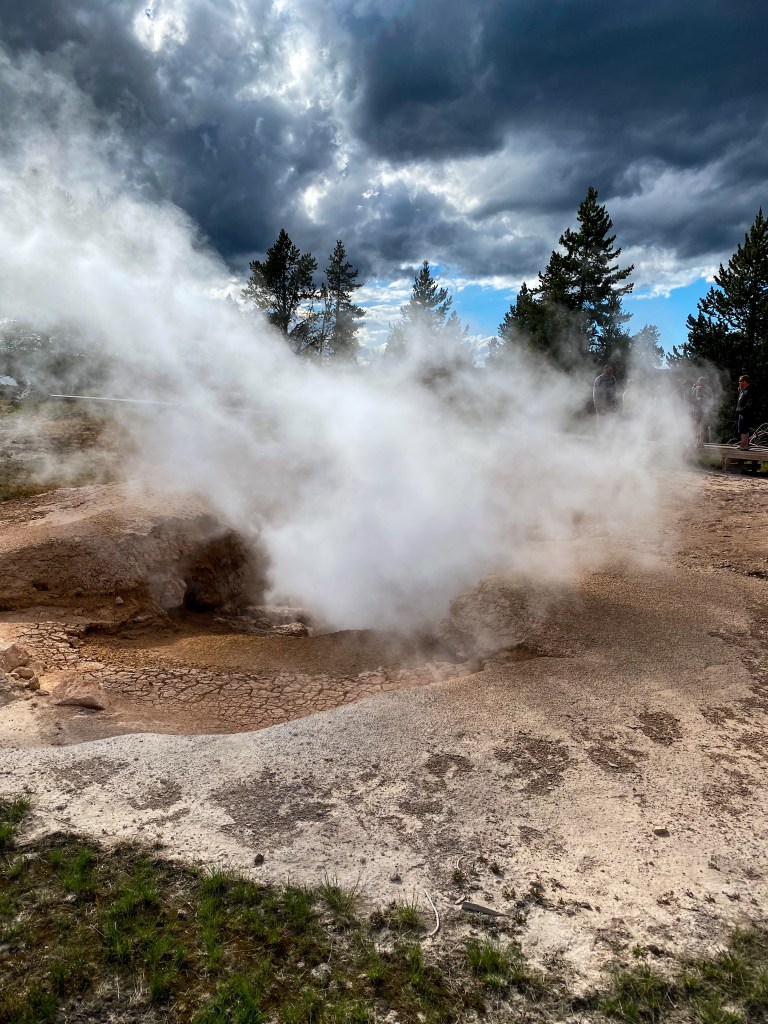
Red Spouter 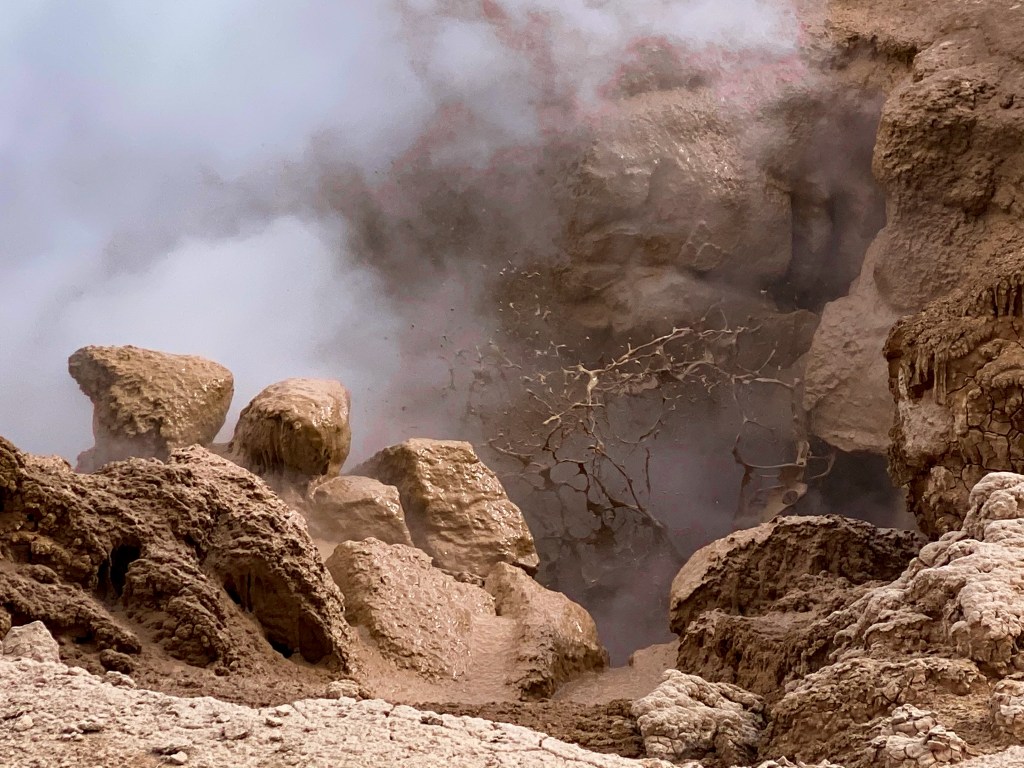
The mud spouting from the Red Spouter 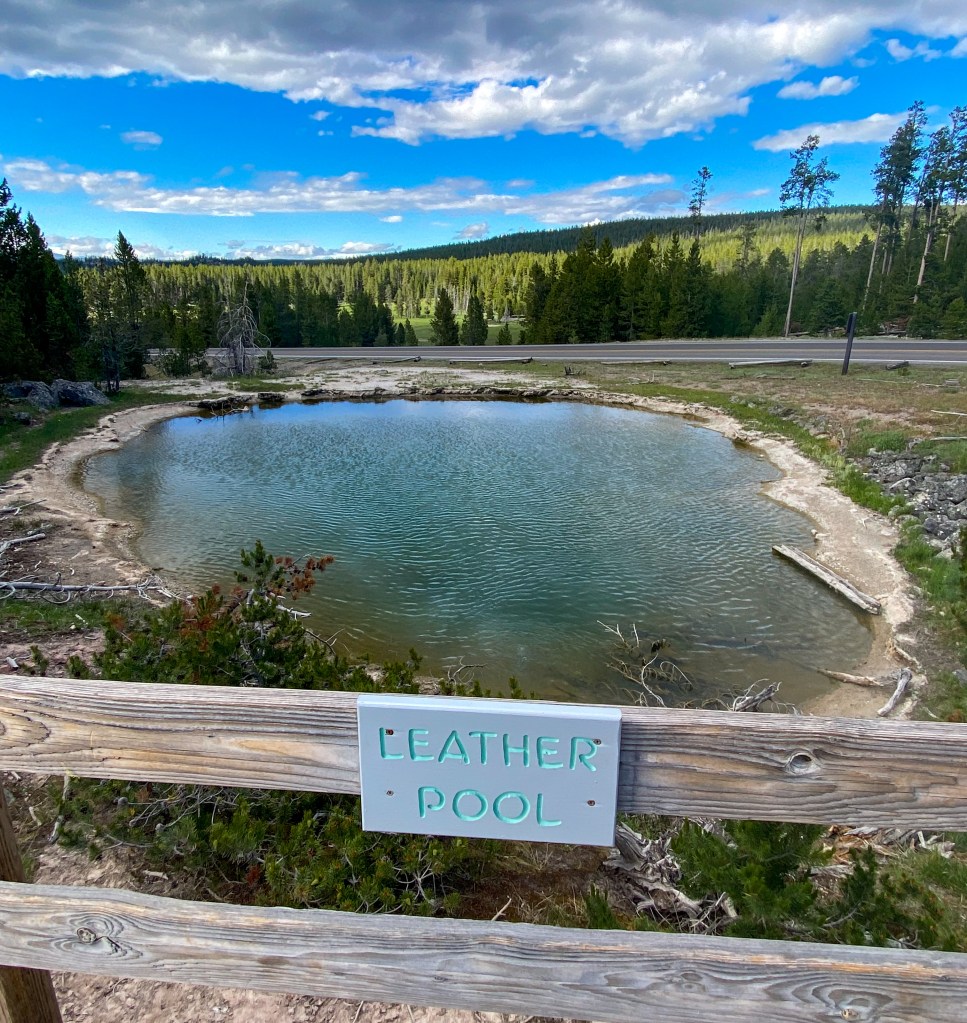
Leather Pool 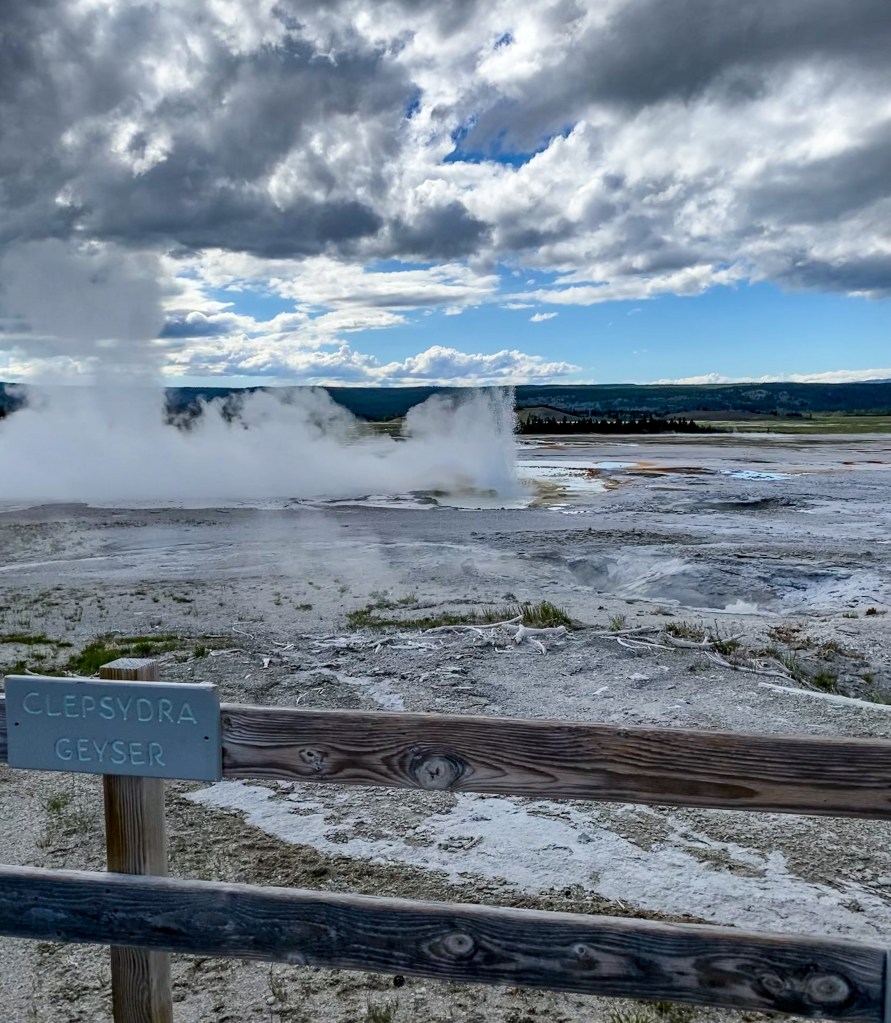
Clepsydra Geyser 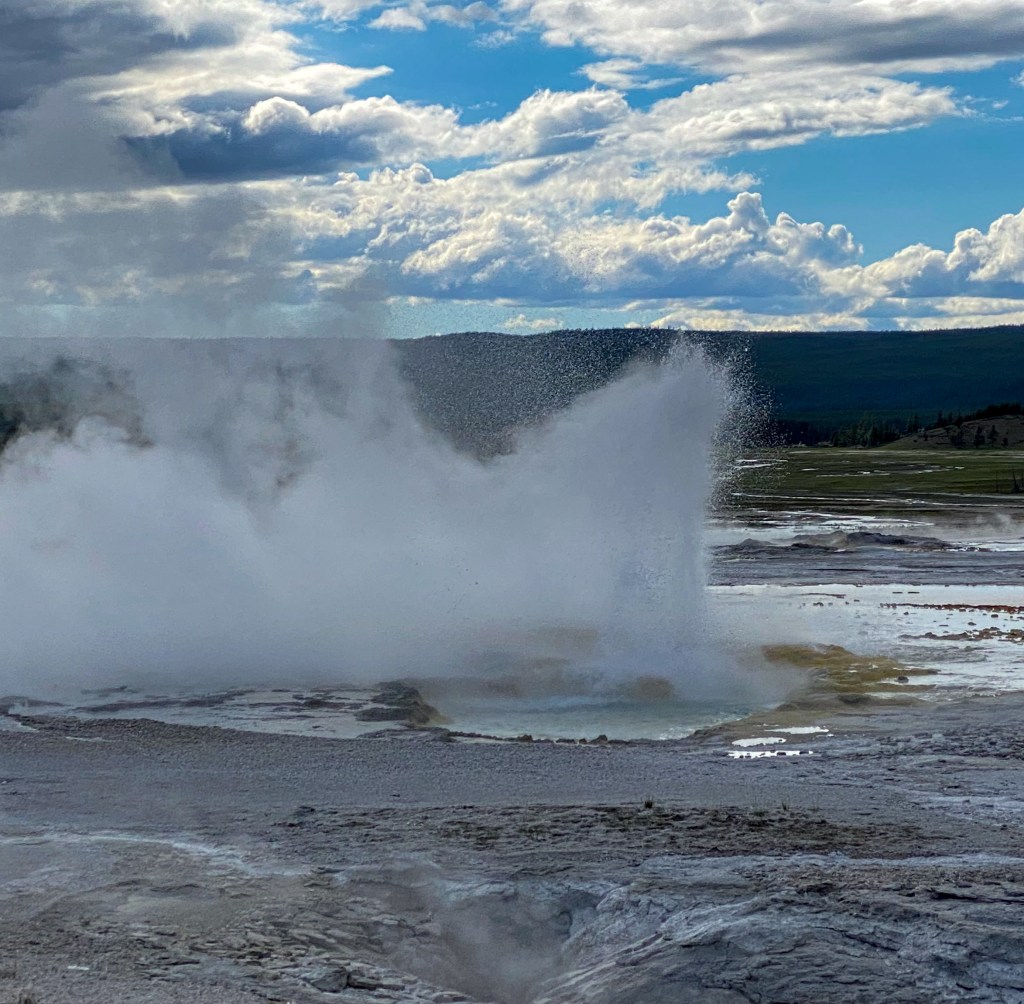
Clepsydra Geyser erupting
On our way out of the park, there were two more side roads we ventured on – Fountain Flat Drive and Firehole Canyon Drive in hopes to see some more wildlife. The first offered amazing open fields with grazing buffalo. The second had yet another beautiful waterfall – Firehole Falls – but sadly no wildlife (for comparison, Firehole Falls is only 40 ft tall!).
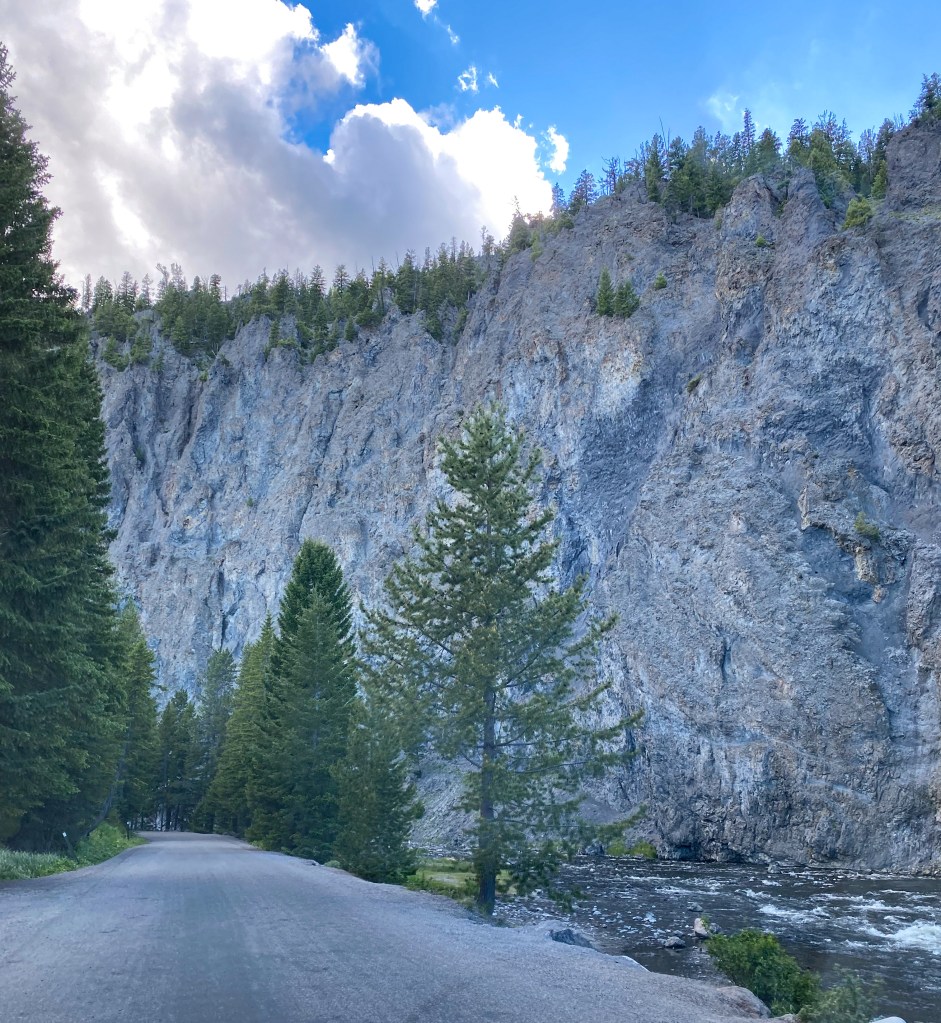
Firehole Canyon 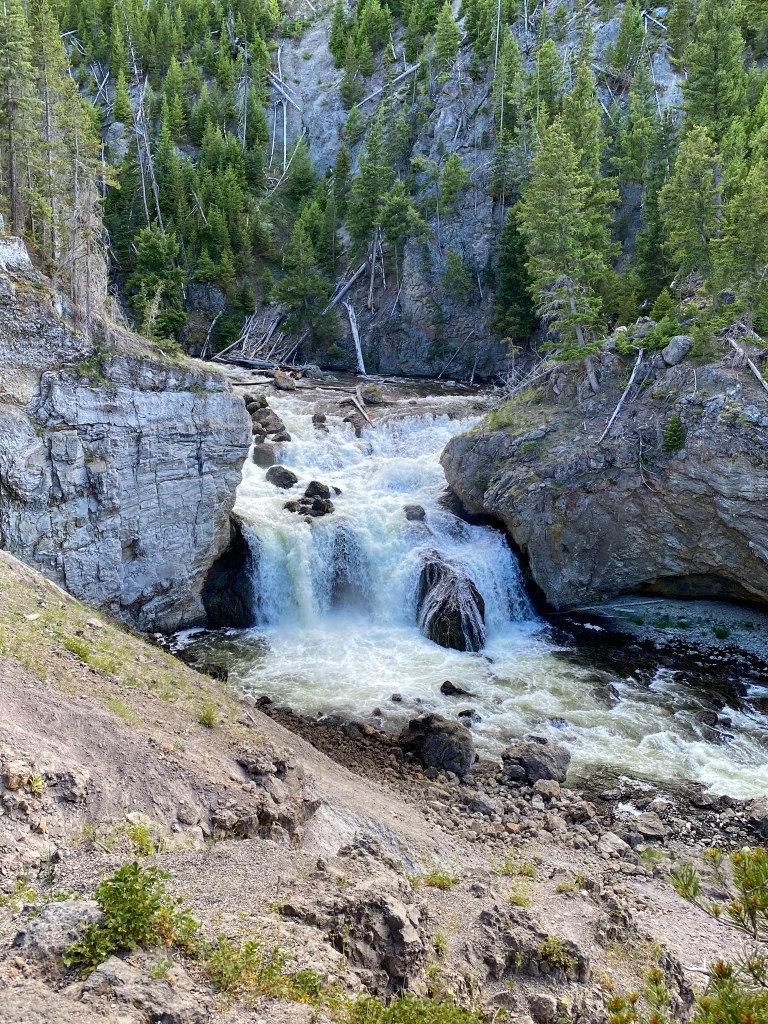
Firehole Falls 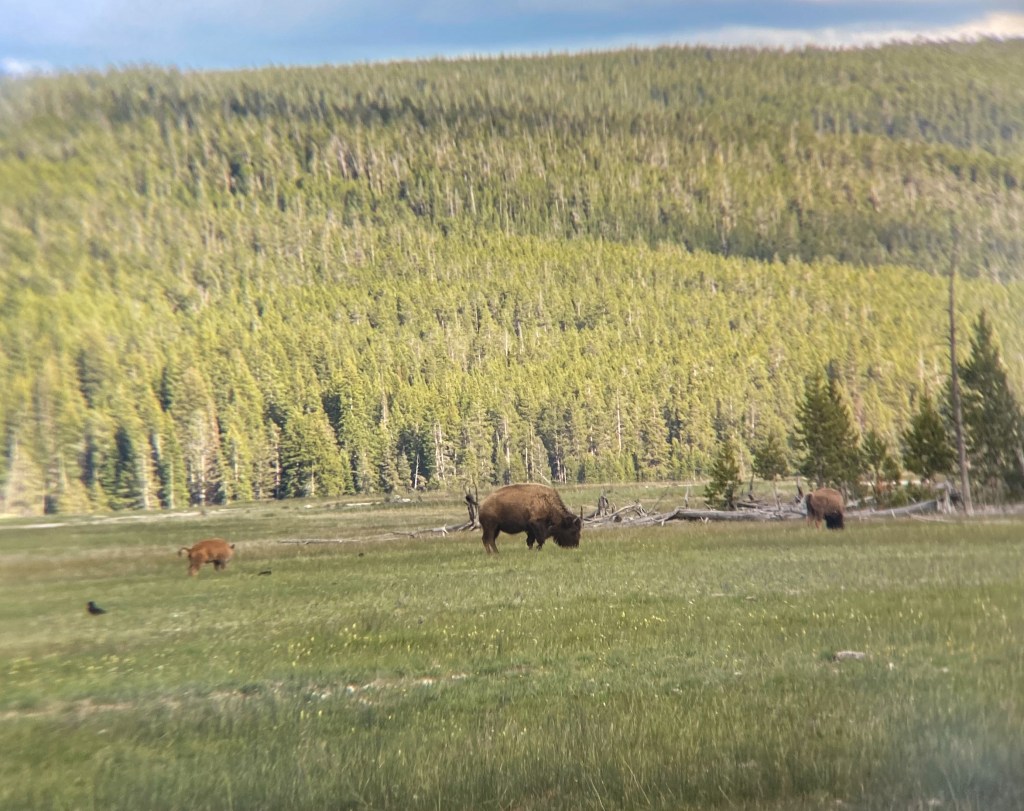
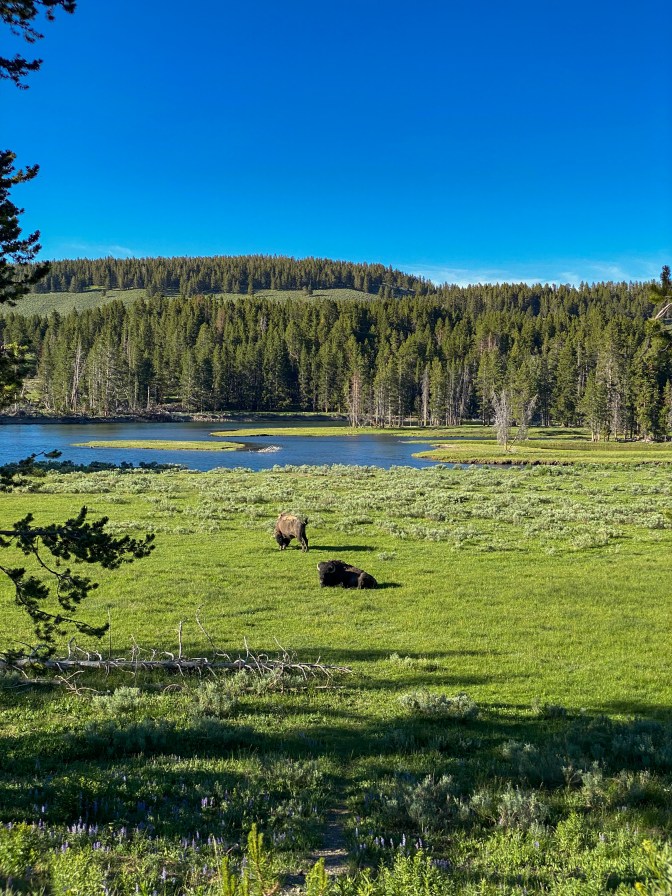
Buffalo off of Fountain Flat Drive with a baby calf!
We arrived in West Yellowstone for our first night at the Kelly Inn, this quaint hotel with a rustic feel – (can you see the pattern in the Western-style hotels yet?). Dinner was at the local Buffalo Bar, and while walking back to our car we spotted 3 foxes playing behind someone’s home – not sure if they were pets or what, but wildlife!
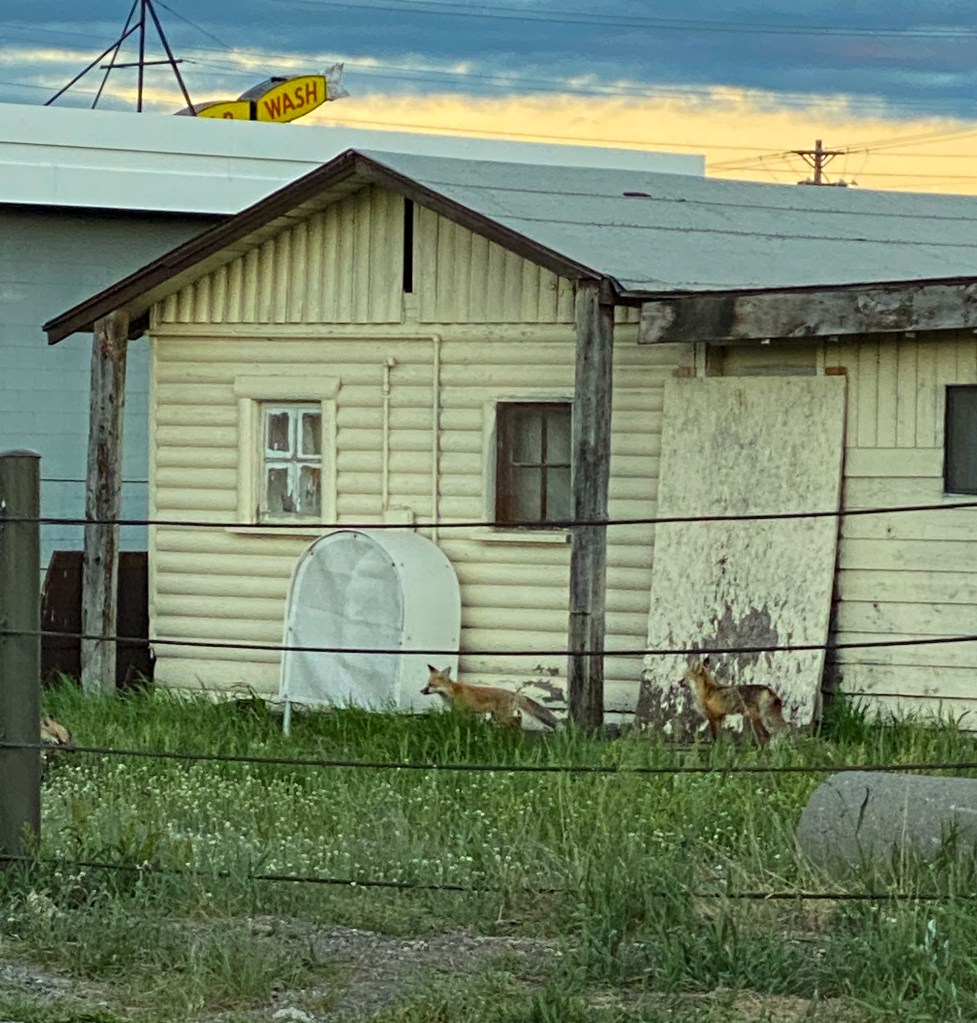
Family of foxes 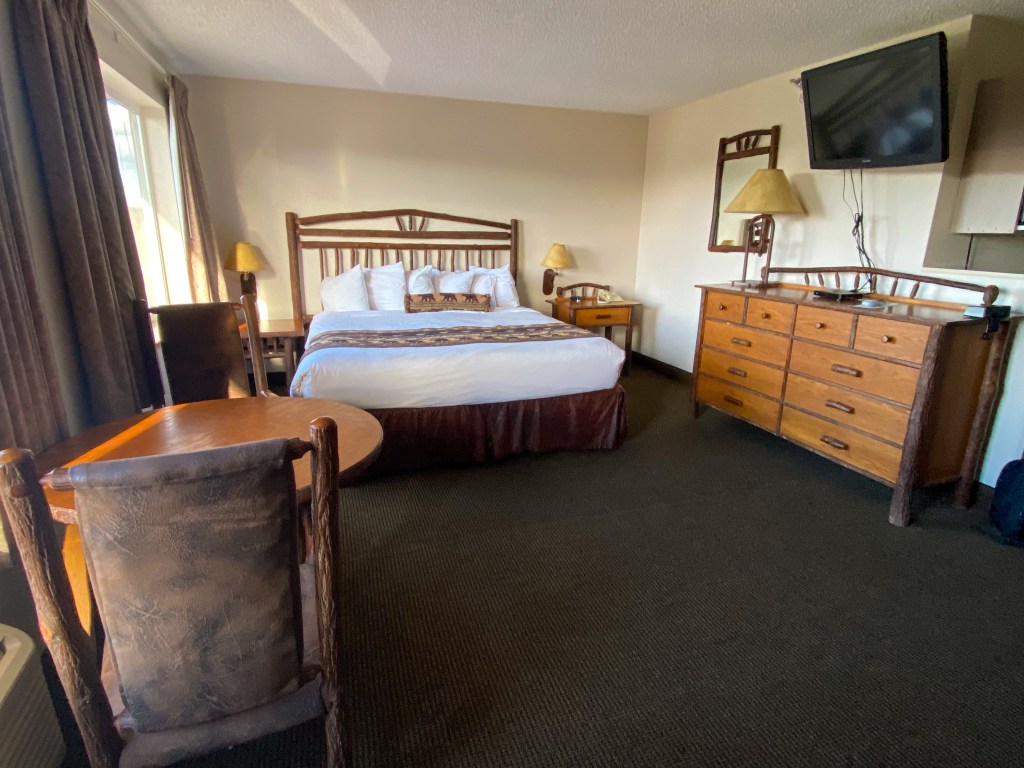
The rustic Kelly Inn
Day Two
While I did not love waking up to below 40 degrees F, we were able to see Yellowstone on a cold morning, which felt other-worldly. Because all of the thermal features’ waters are well above 100 degrees, steam rises out of them when the air is cooler. When the air is this much cooler, it creates this ethereal, hazy fog over the rivers and roads.
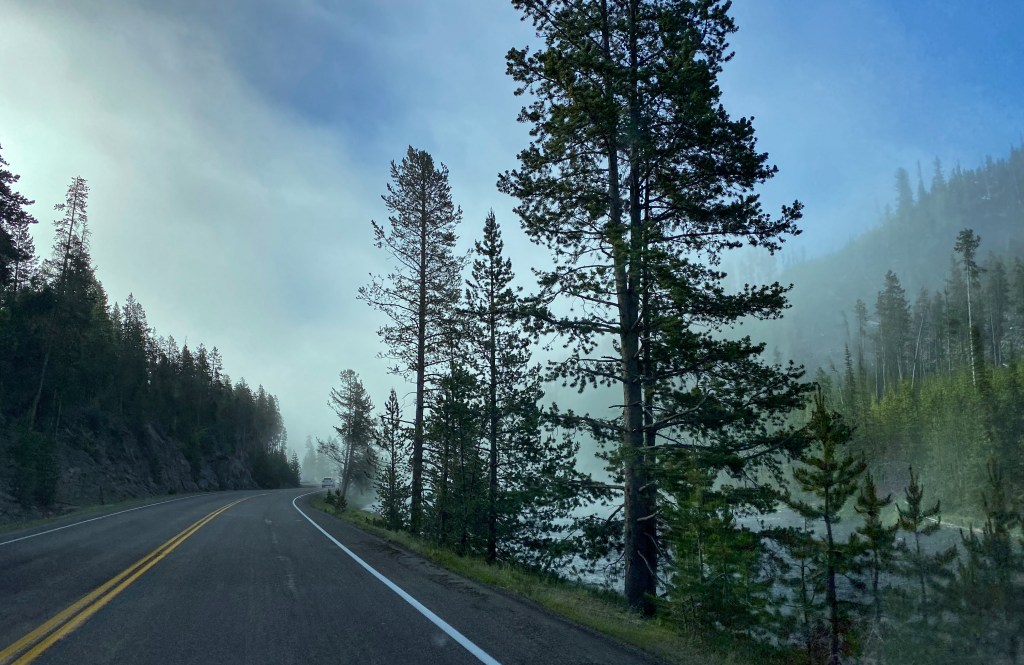
We made our way over to the Old Faithful area and spotted yes, another buffalo!
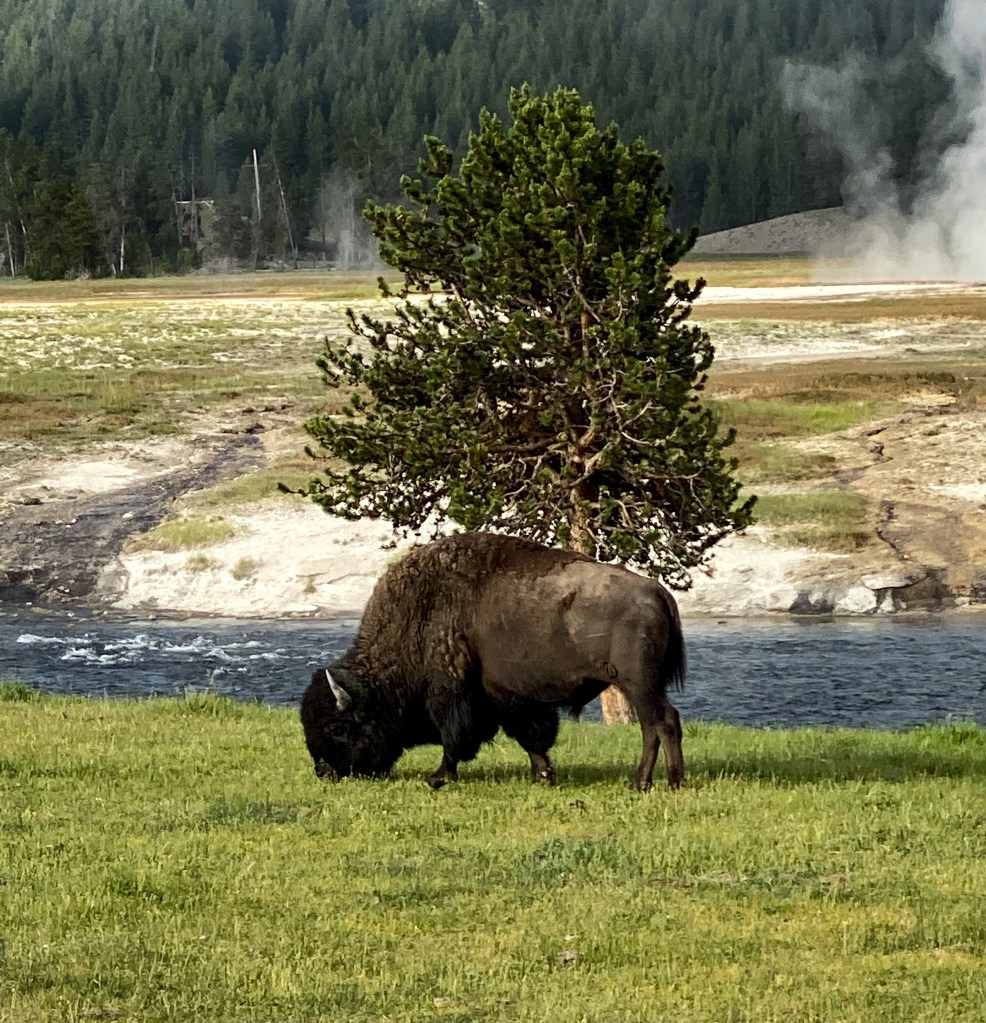
It was finally time for us to see the famous Old Faithful Geyser! We decided to do this first thing because while there is a fairly big parking lot, it will be entirely full by the afternoon, so plan to get here around 9-9:30 am (or earlier!).
There are a few ways to watch the eruption, and because we arrived with about an hour until the next predicted one, we chose to have our first viewing at Observation Point – a lookout spot about 0.8 miles above the geyser, and it made for excellent views to see just how big it really is.
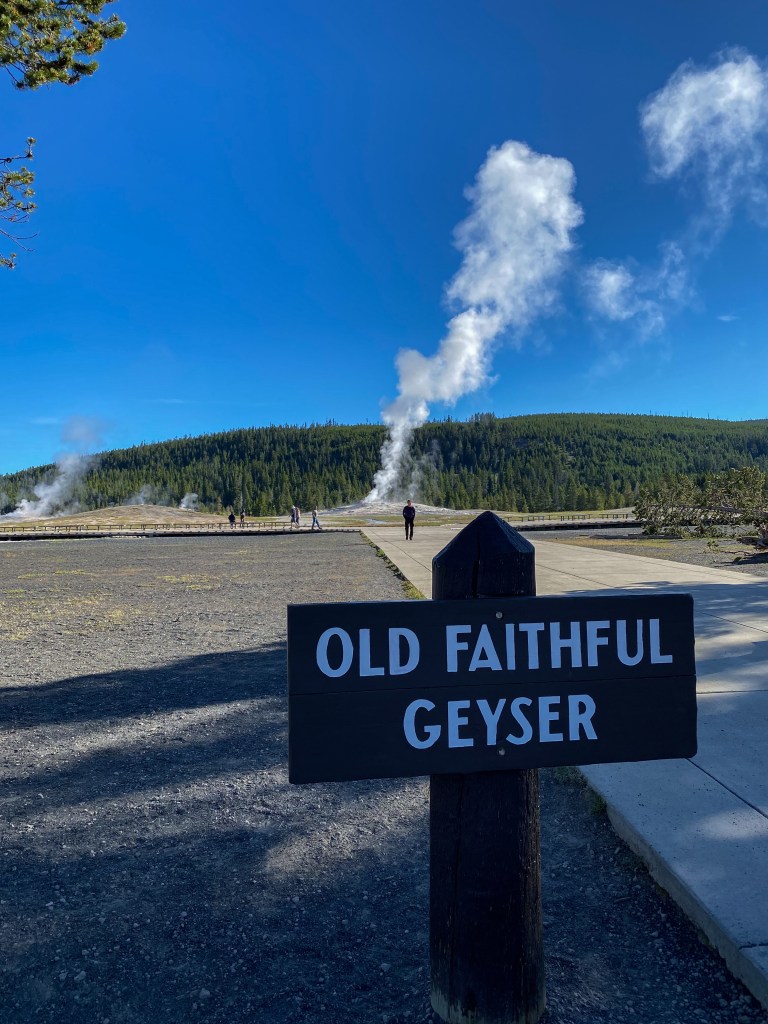
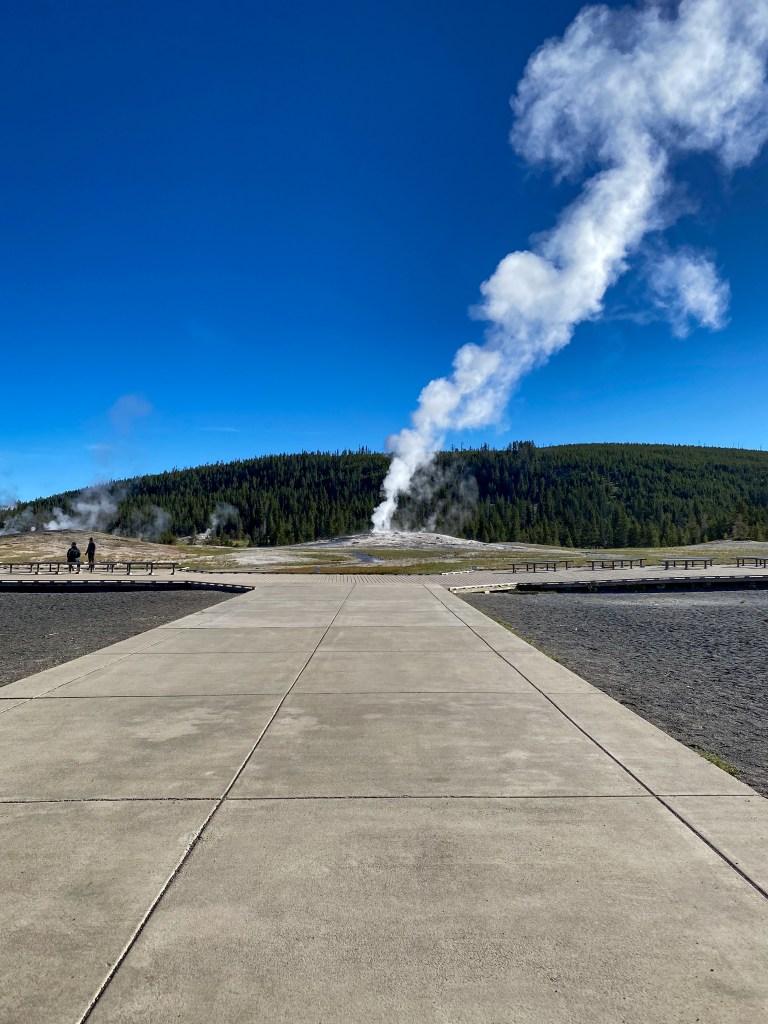
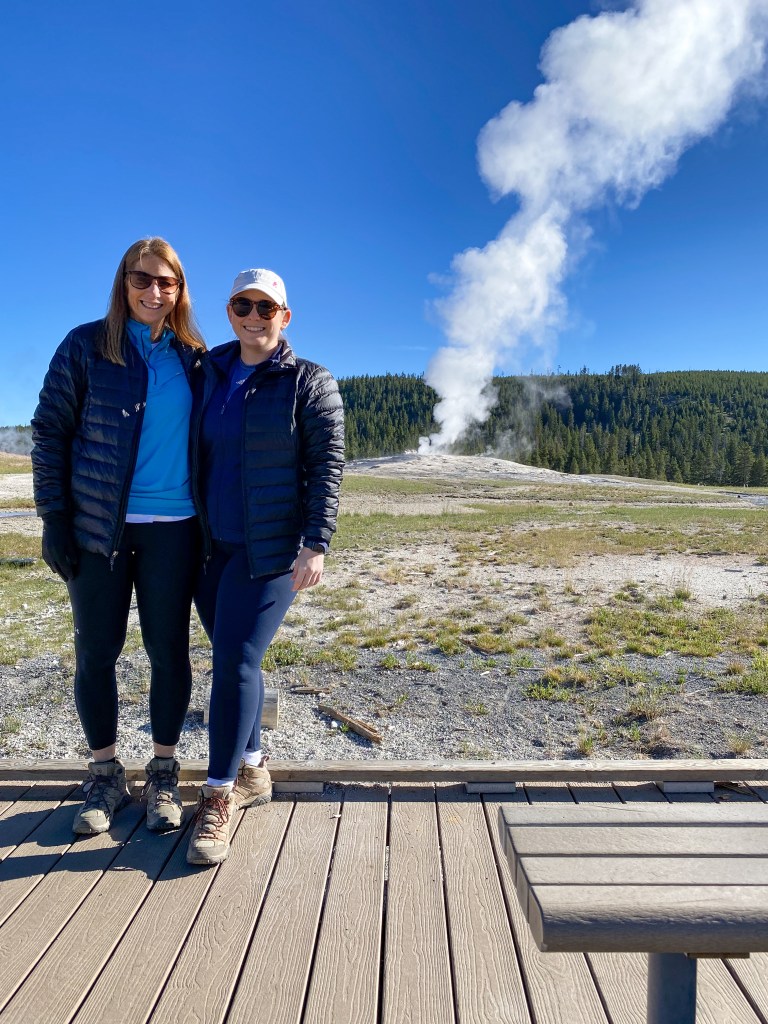
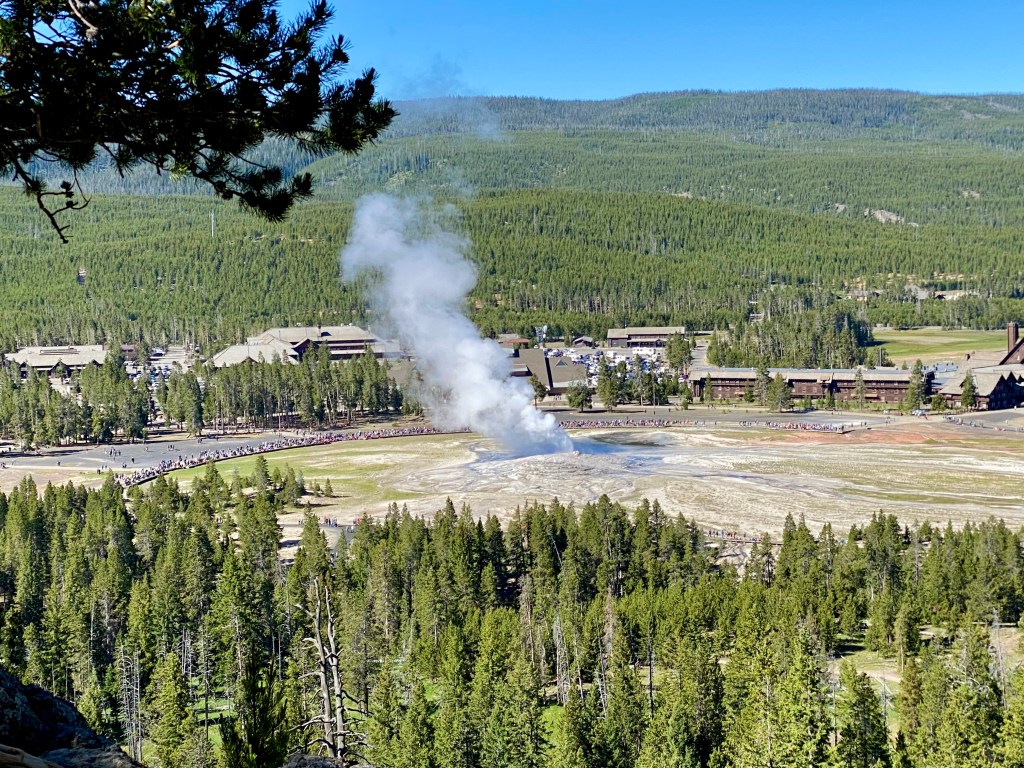
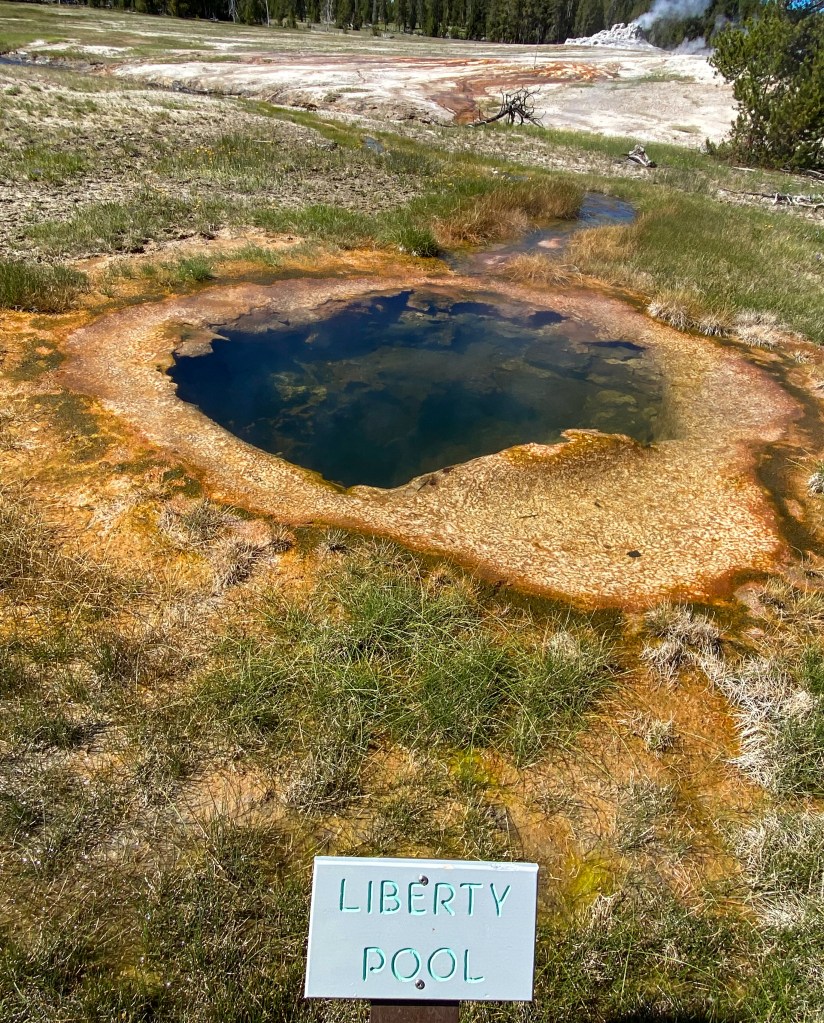
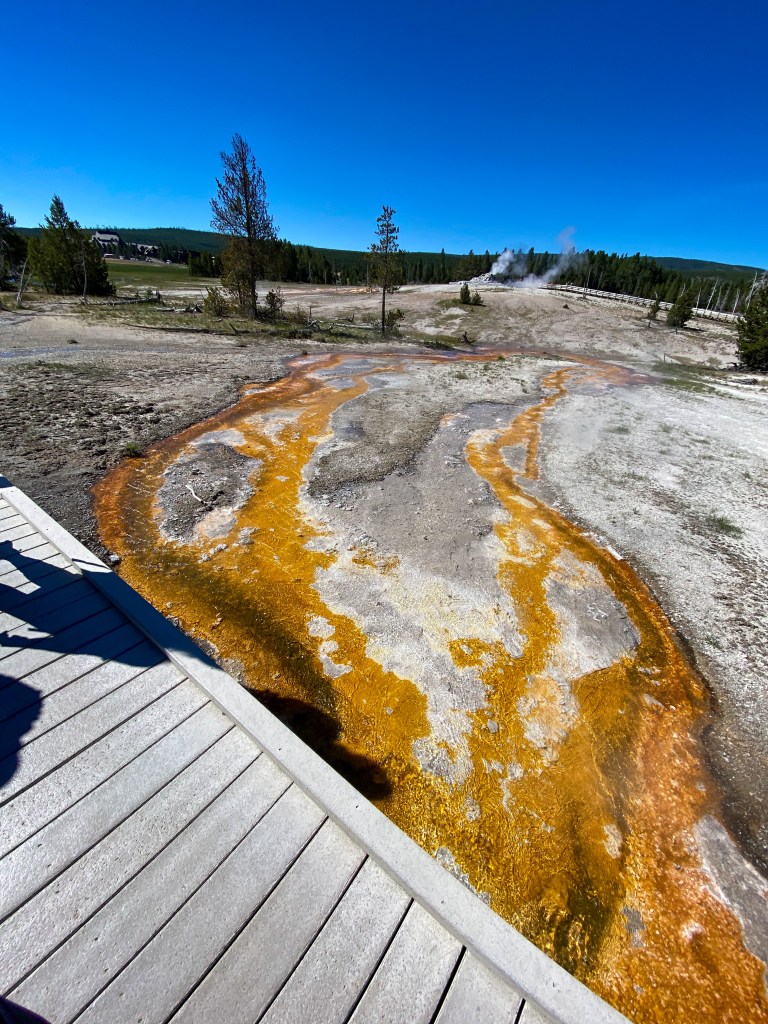
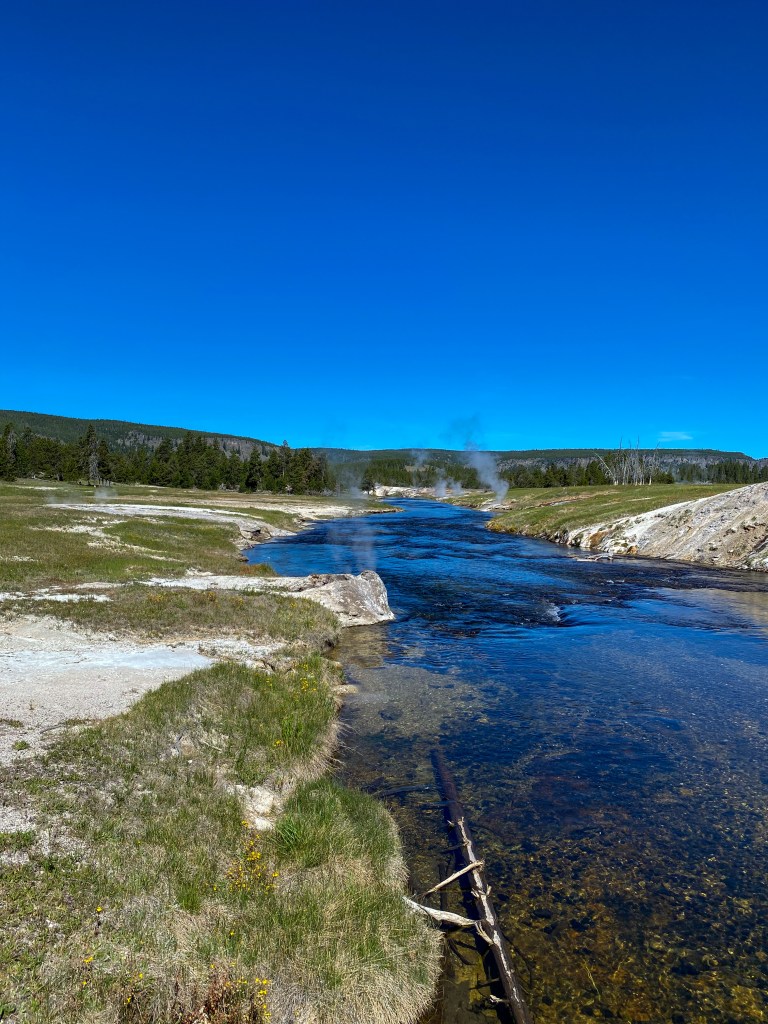
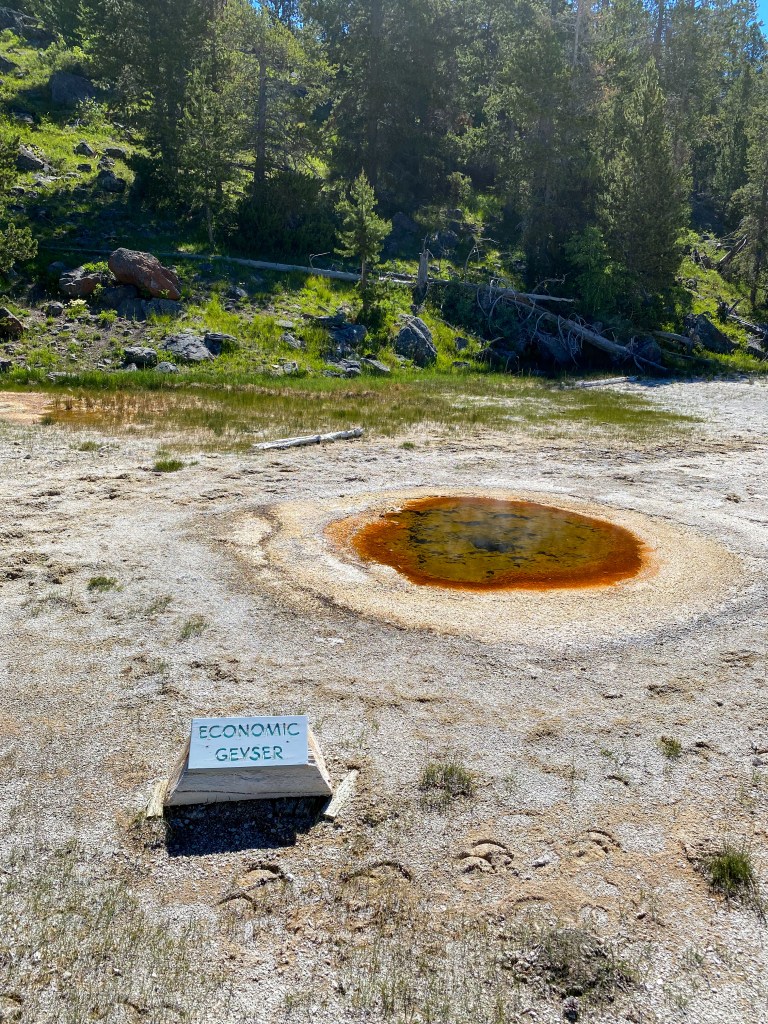
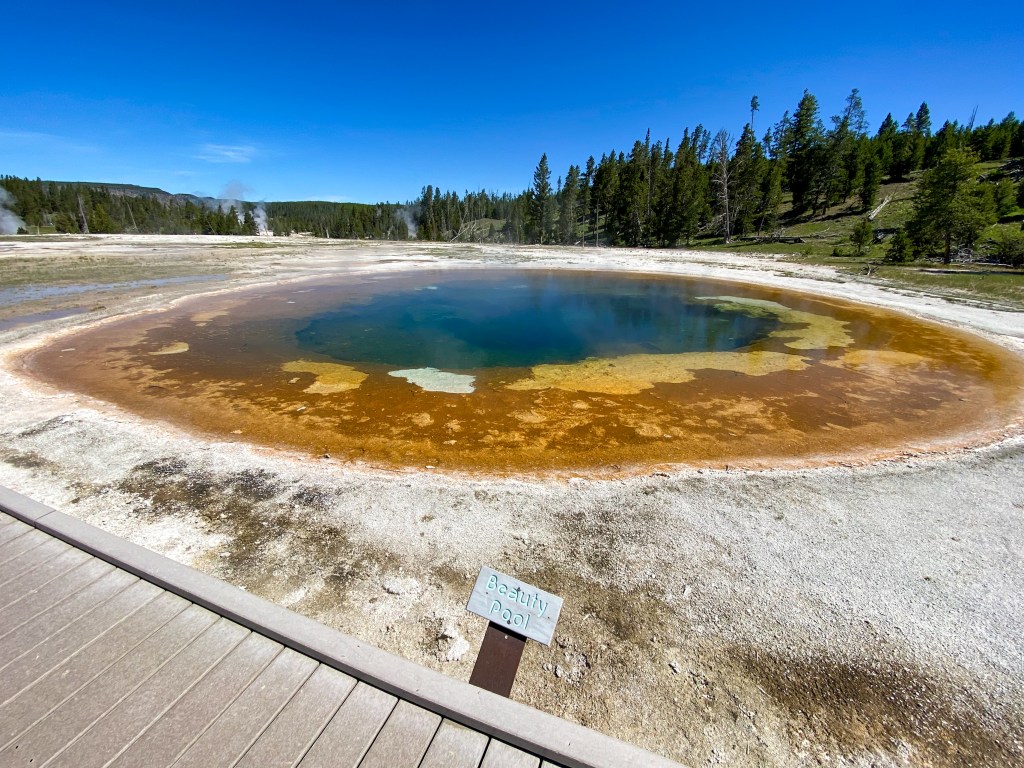
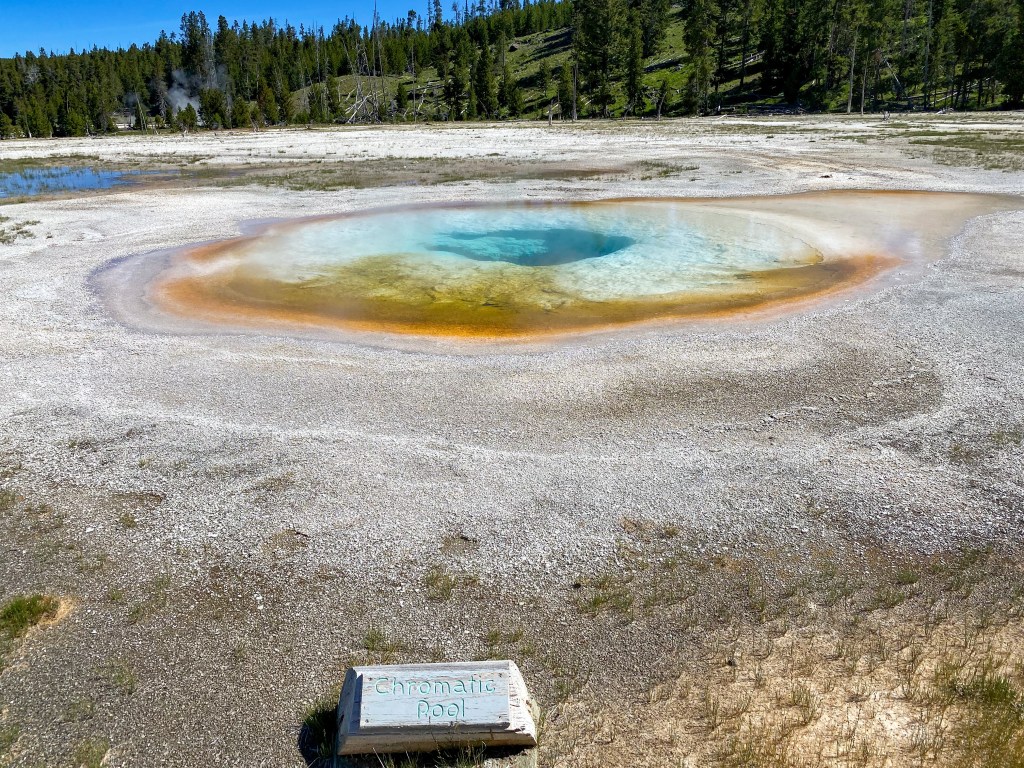
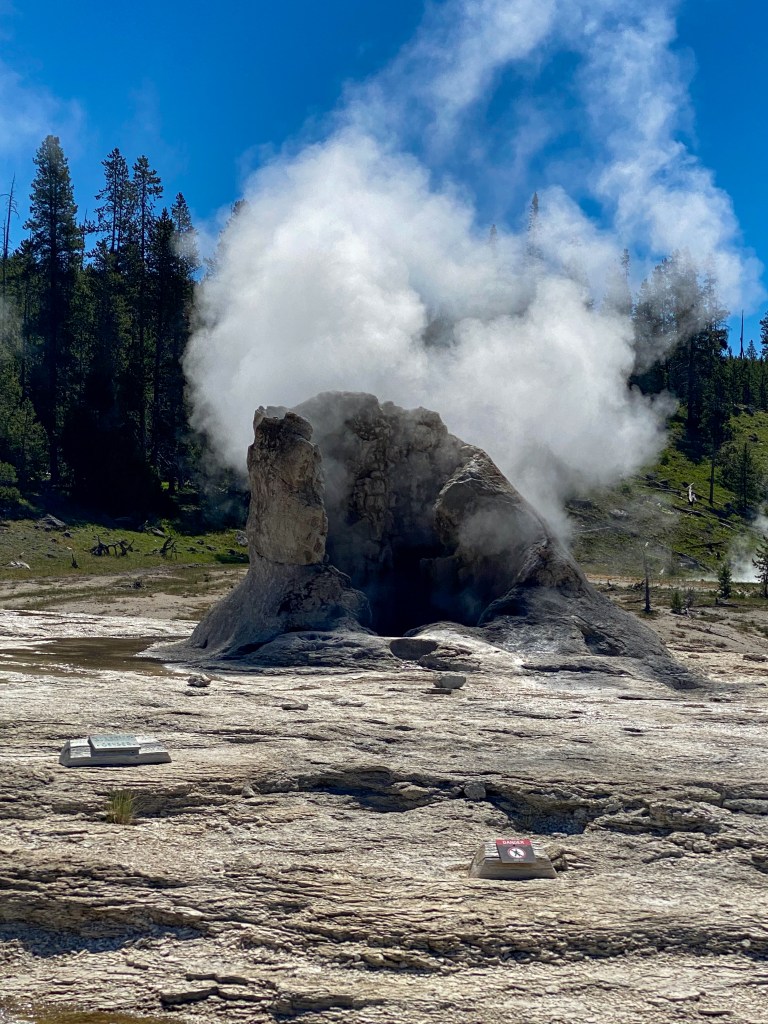
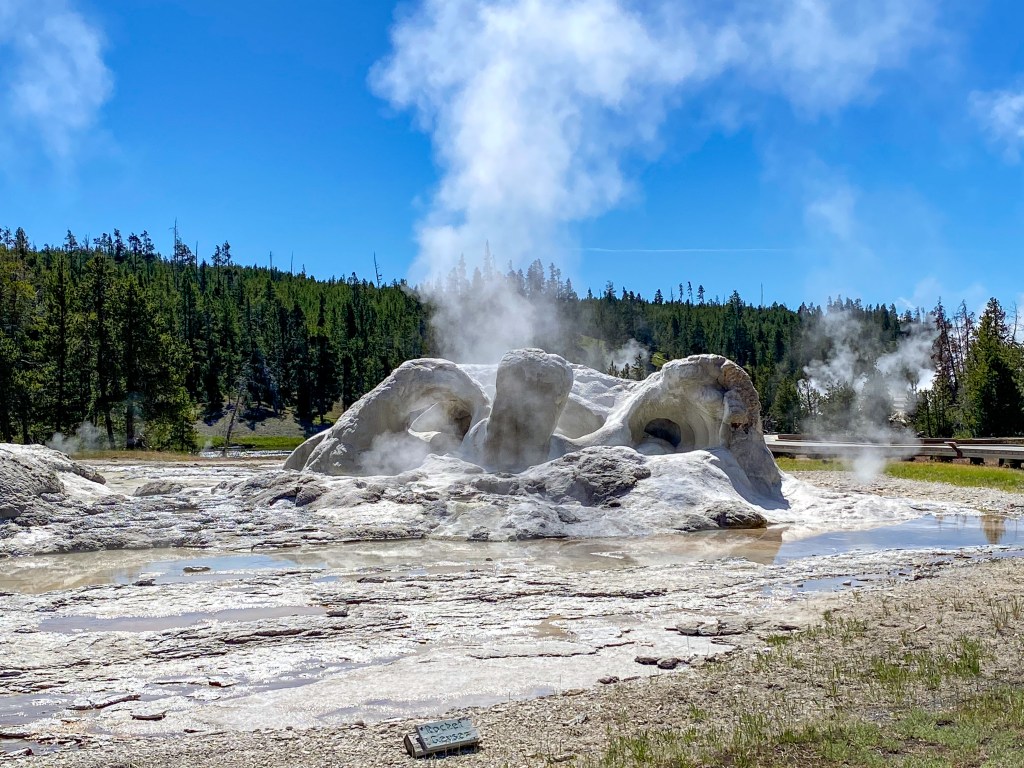
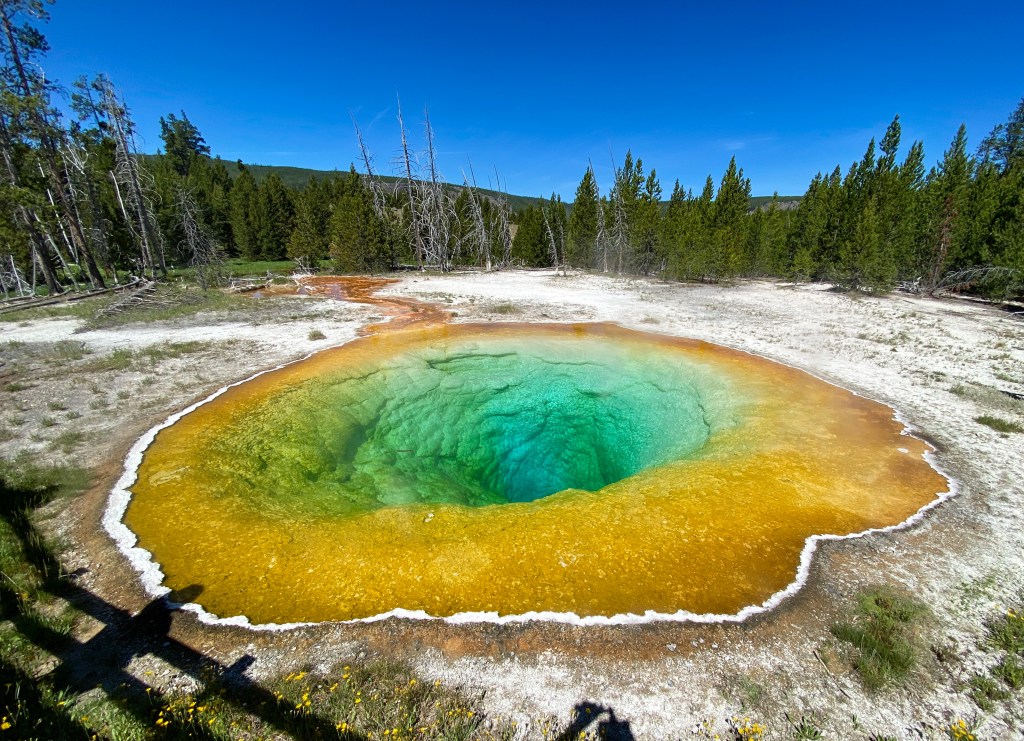
Because Old Faithful is in fact ‘faithful’ and erupts about every hour and half, this was the perfect time to walk the Upper Geyser Basin to Morning Glory Pool – about 4 miles there and back – before seeing it erupt again later in the afternoon. Scroll through the slideshow to get a taste of the different springs, pools, and geysers throughout the Upper Geyser Basin, ending with the beautiful Morning Glory Pool.
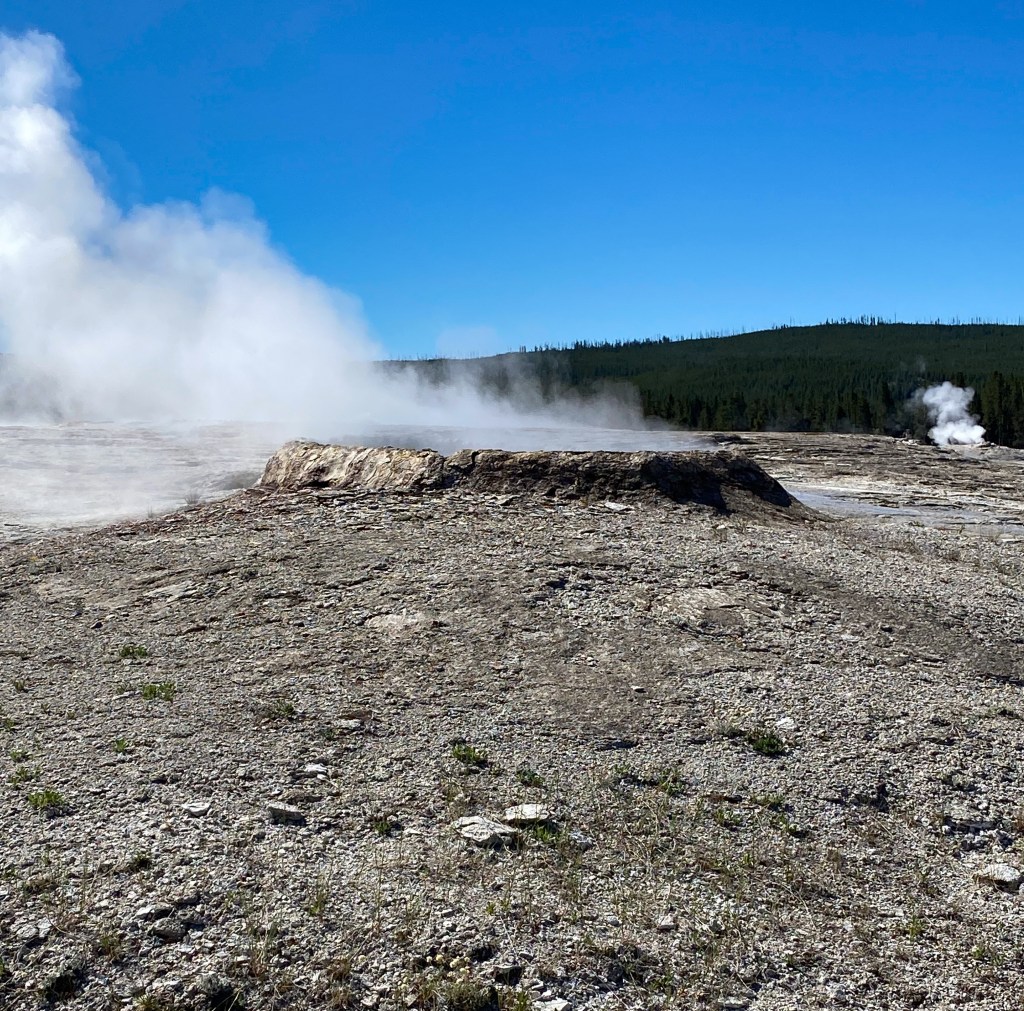
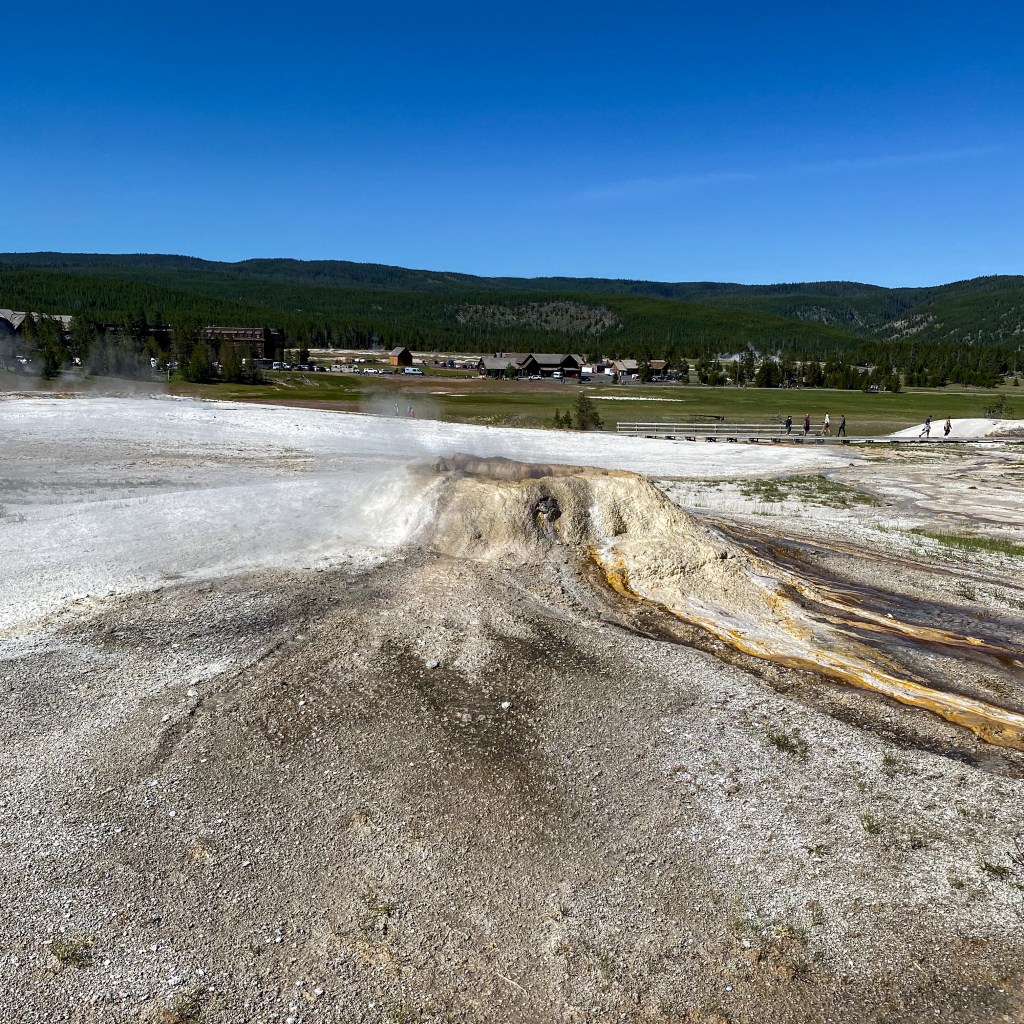
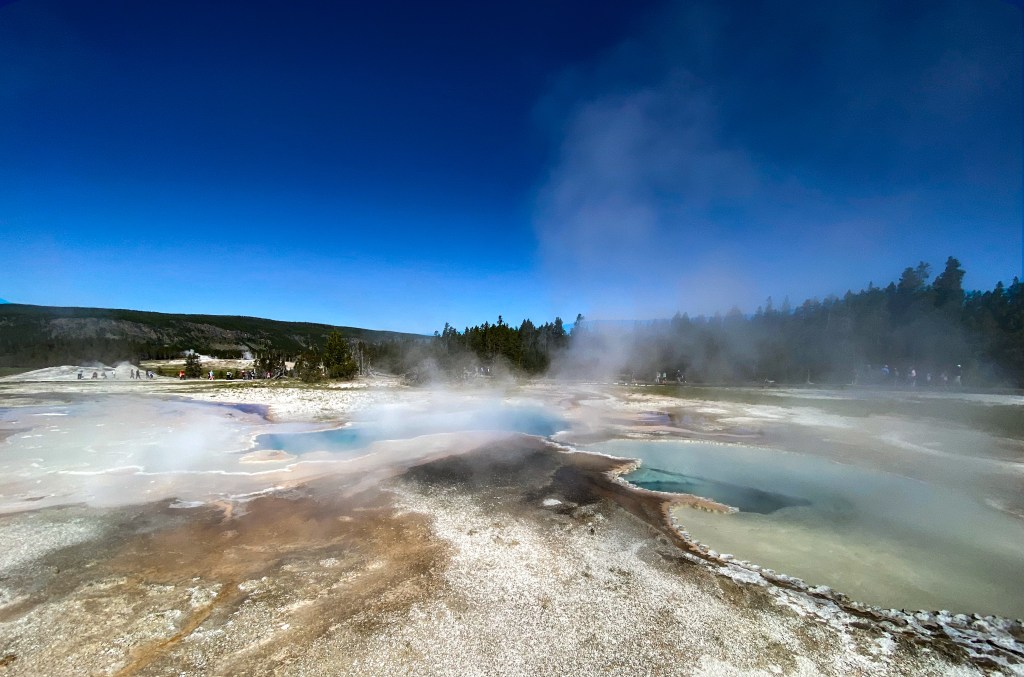
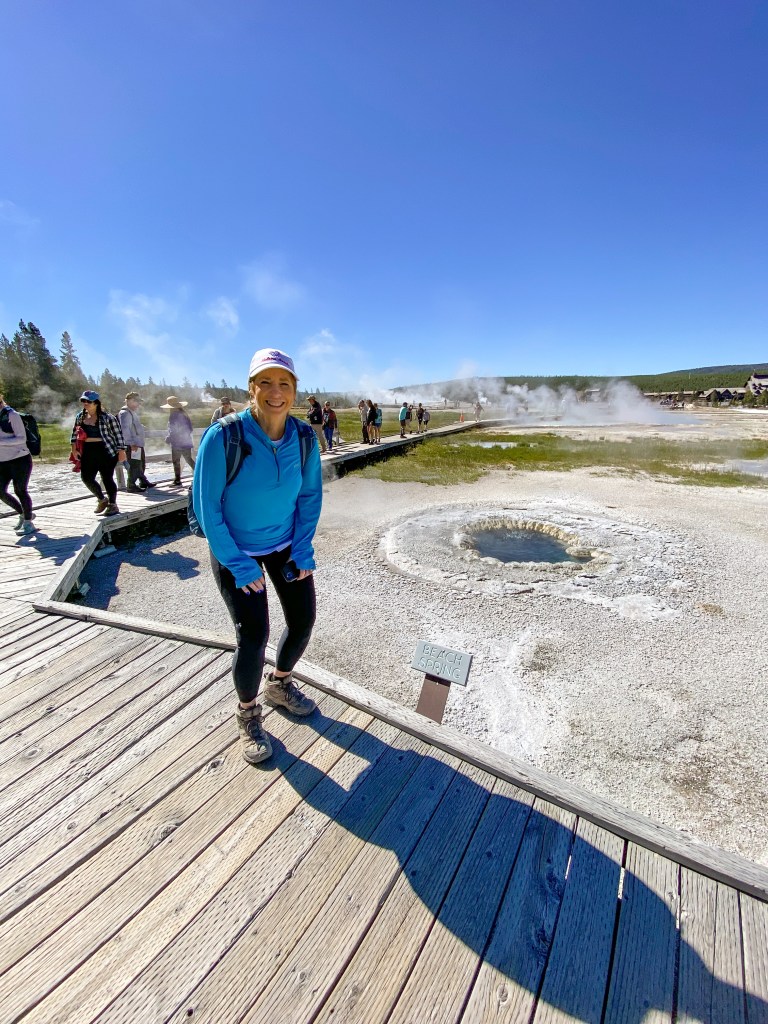
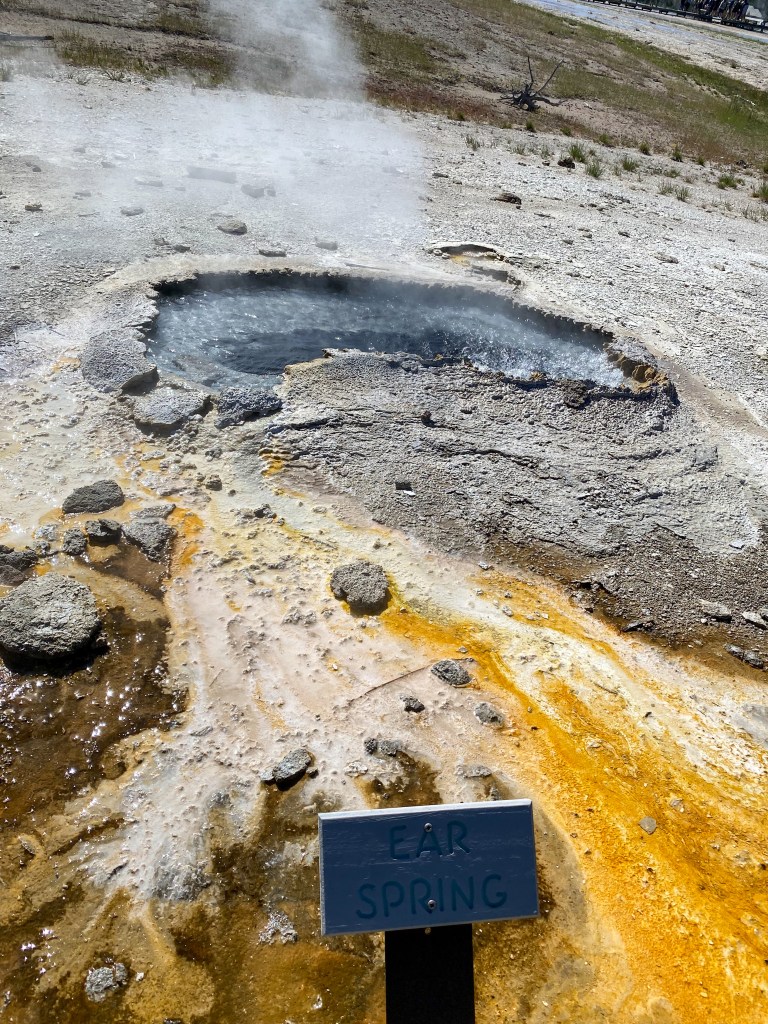
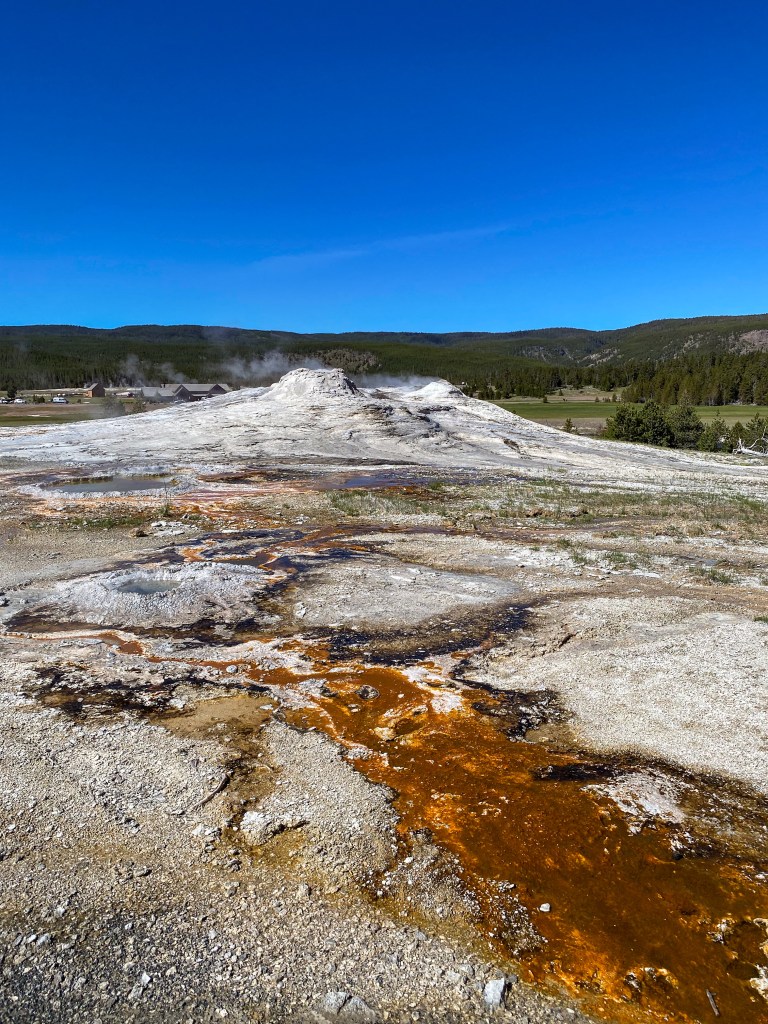
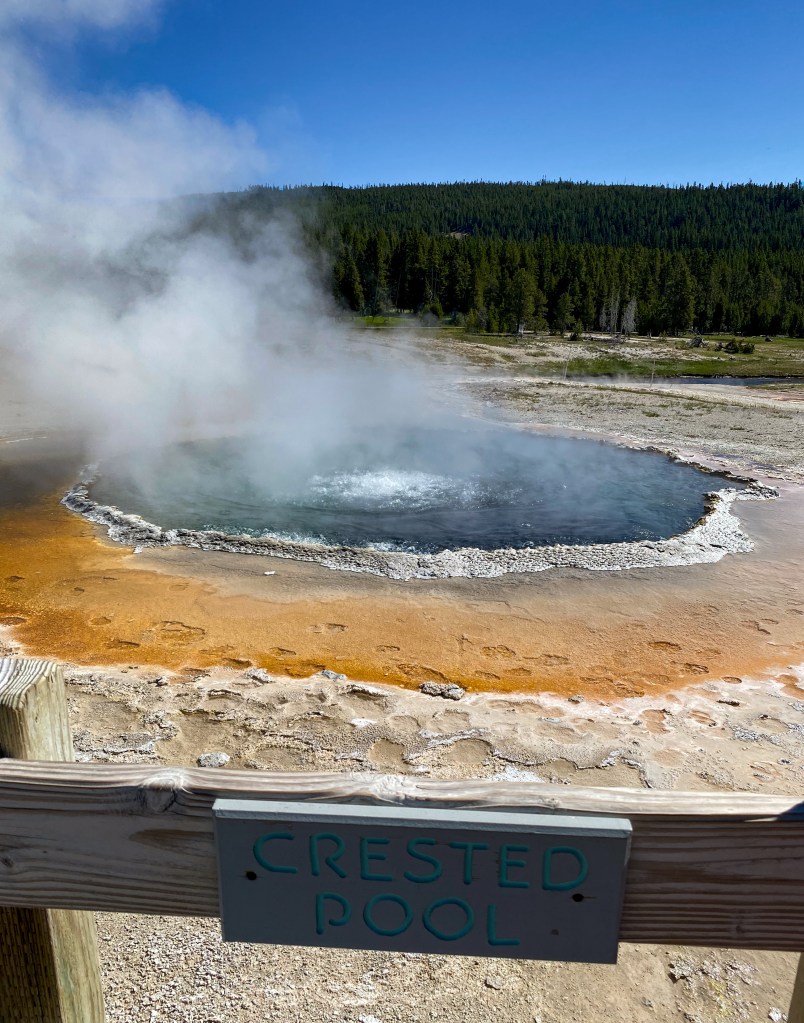
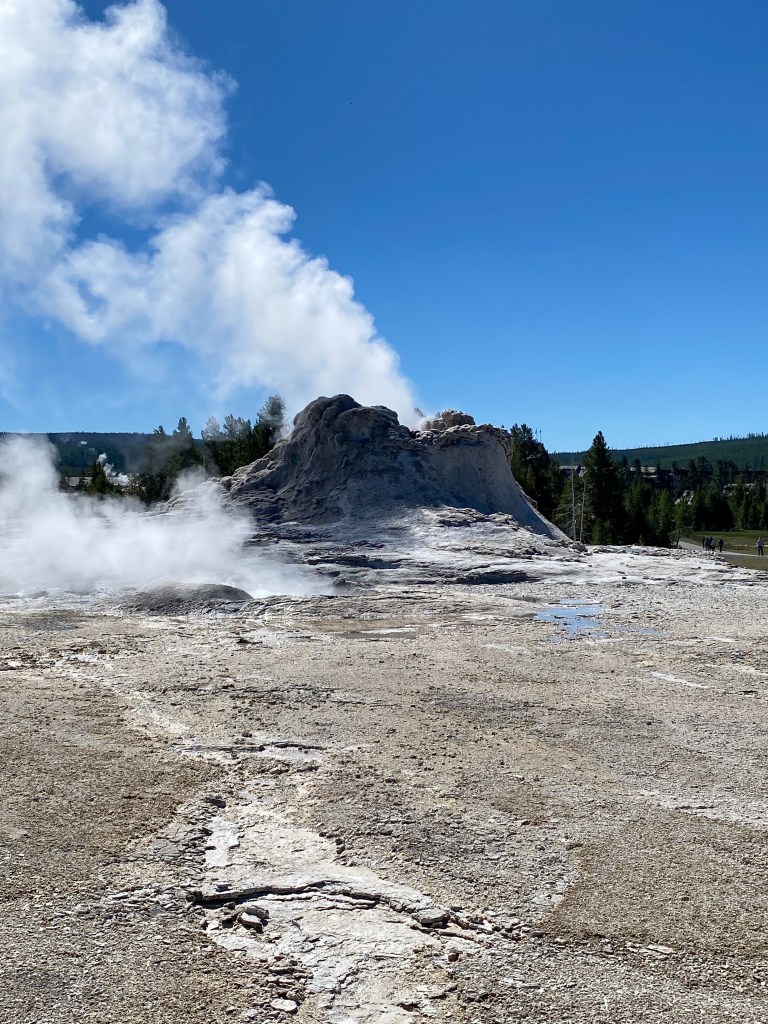
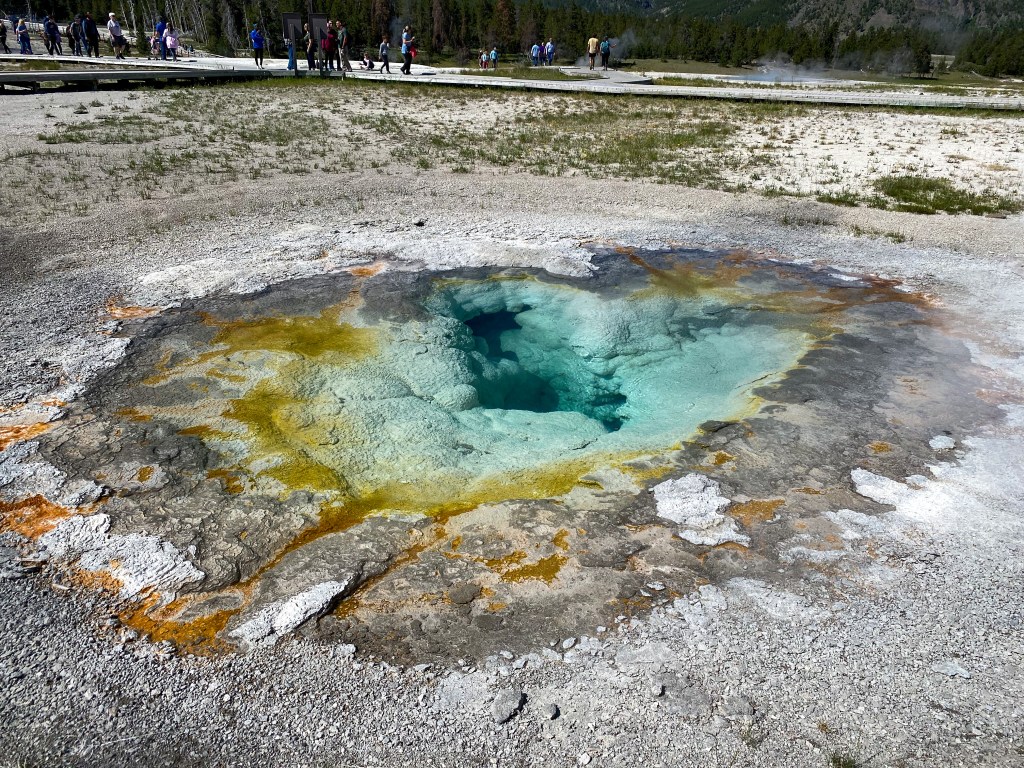
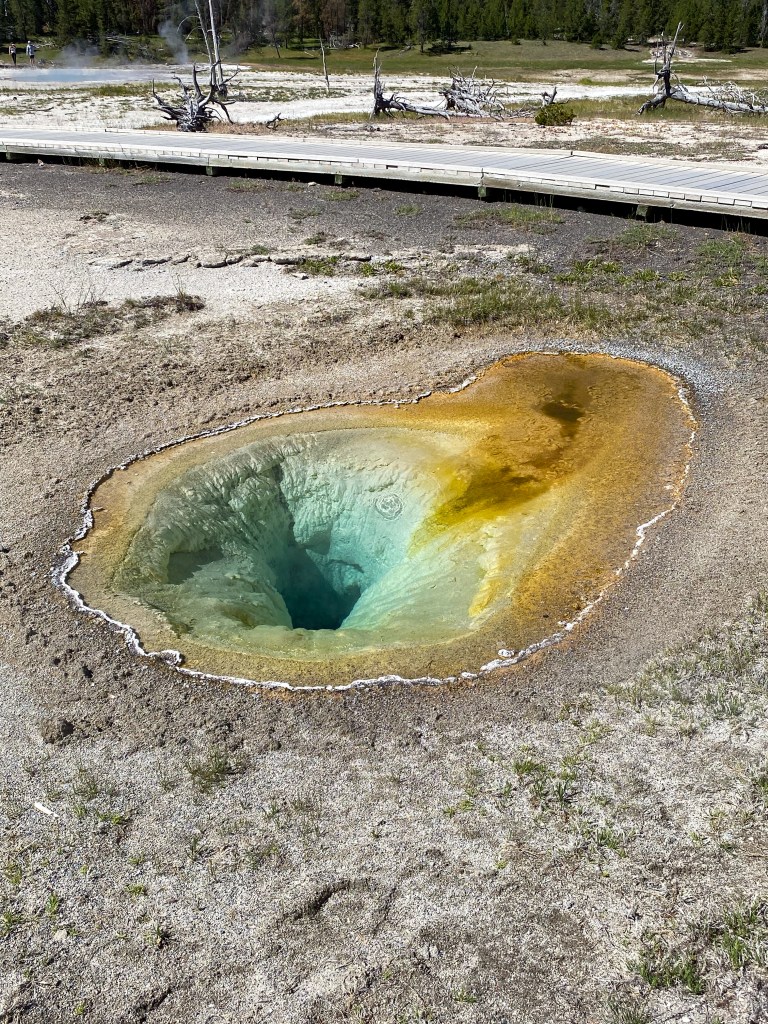
Just before we hunkered down on the boardwalk to see the geyser from up close, we went into the lobby of the historic Old Faithful Inn, and it is gorgeous! The third option for viewing the geyser is from Old Faithful viewing deck relaxed with a drink in your hand – we unfortunately didn’t get to experience this, but it sounds lovely.
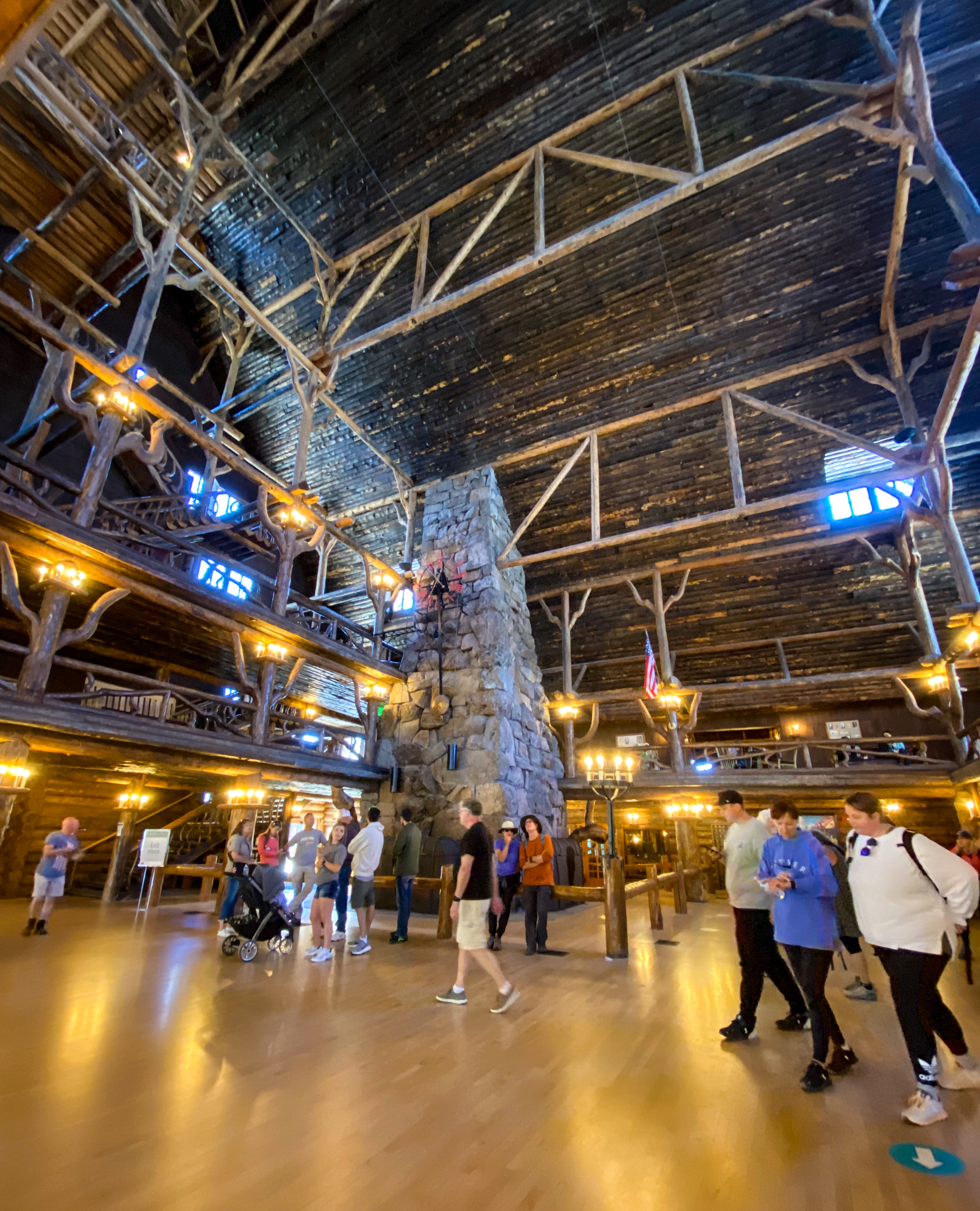
The lobby of Old Faithful Inn 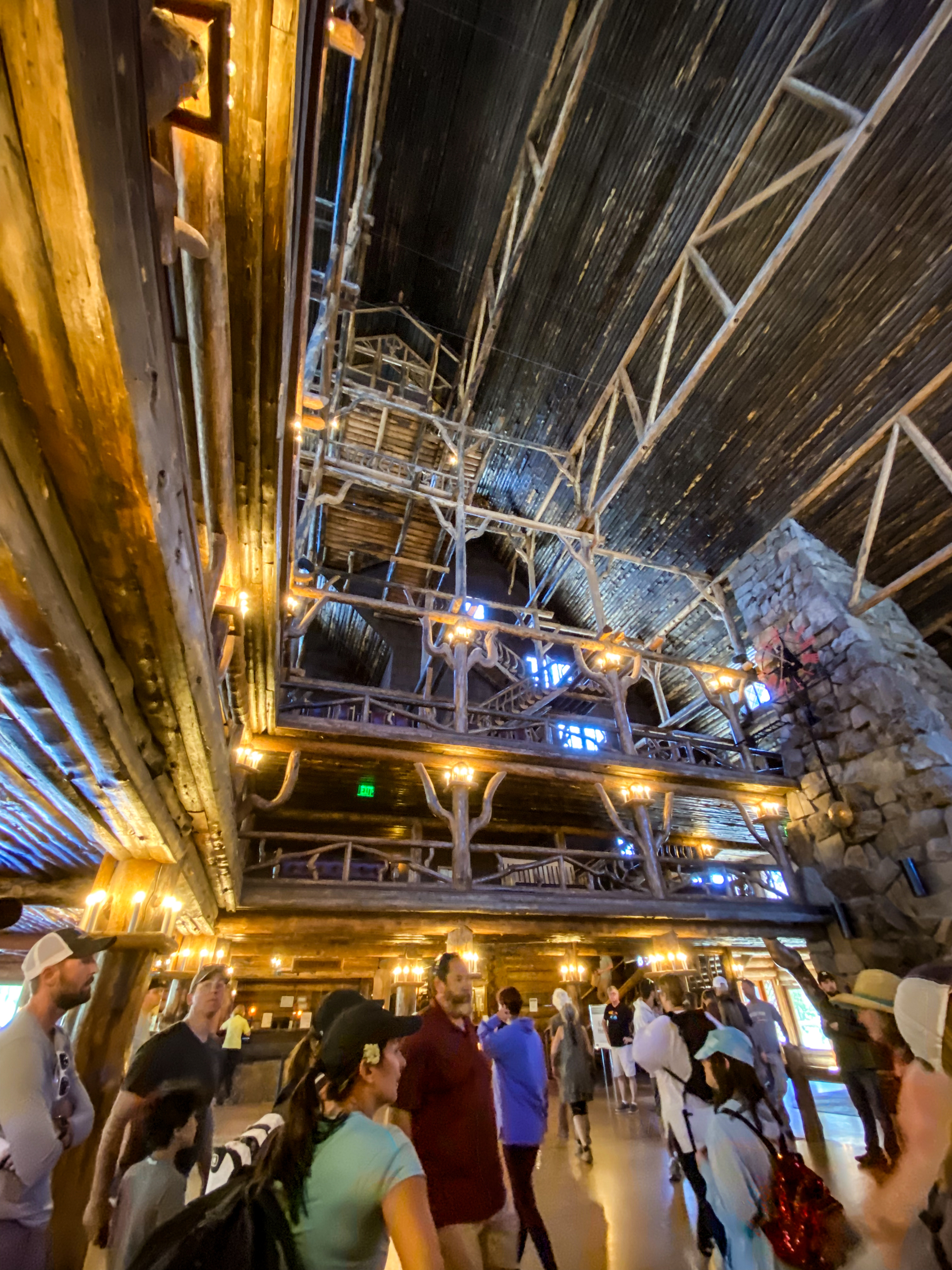
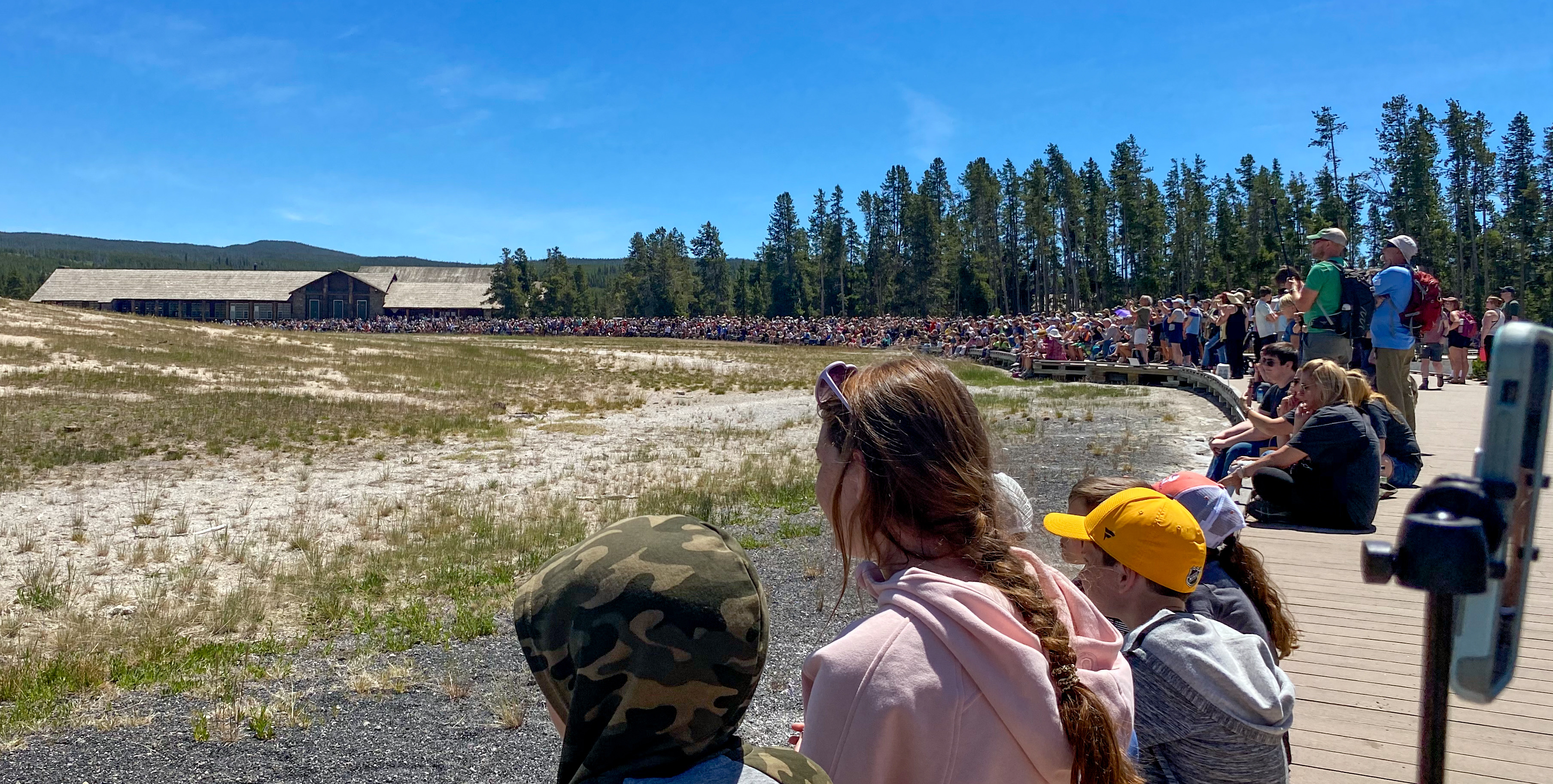
The insane boardwalk crowd 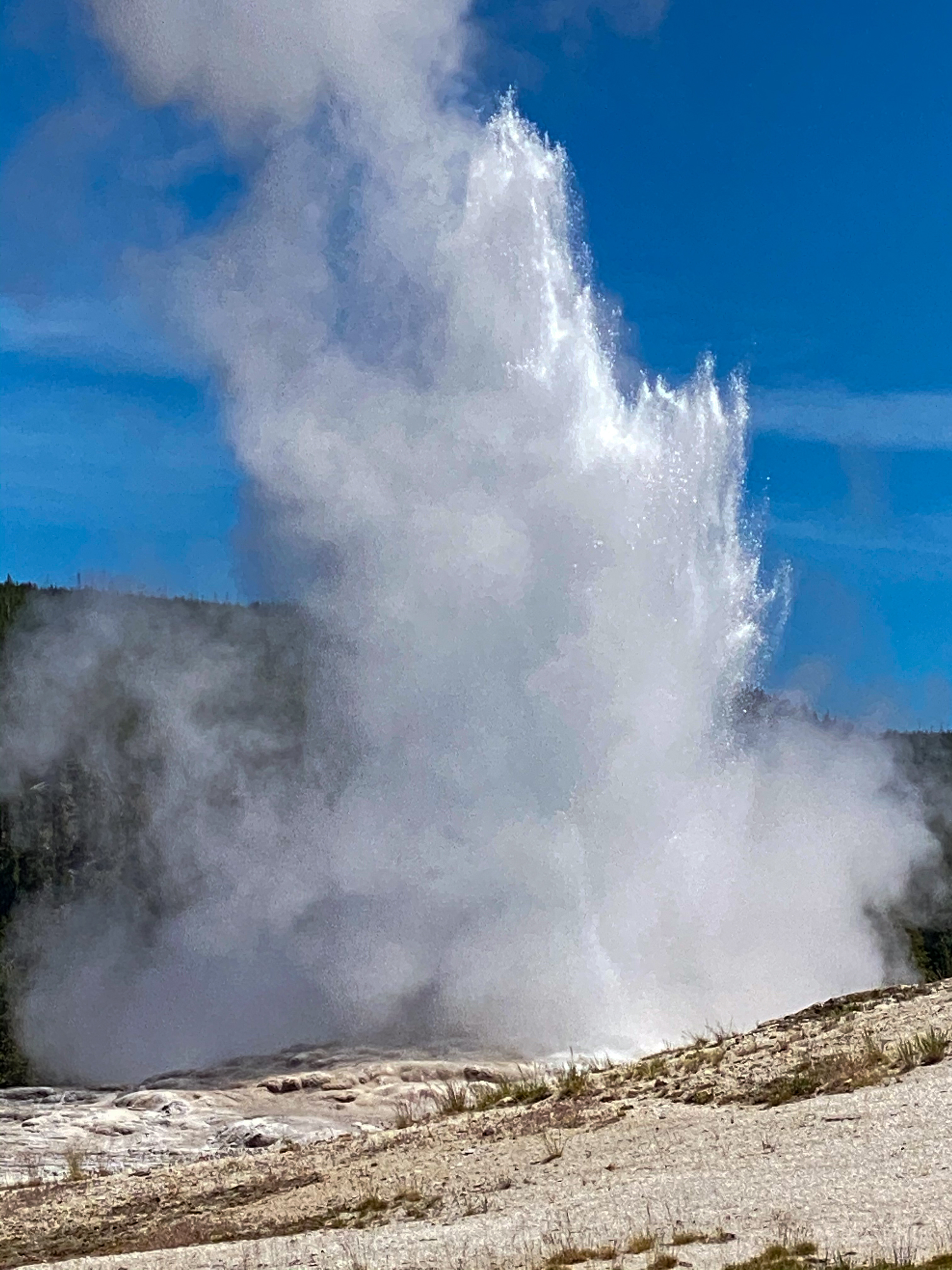
Old Faithful up close!
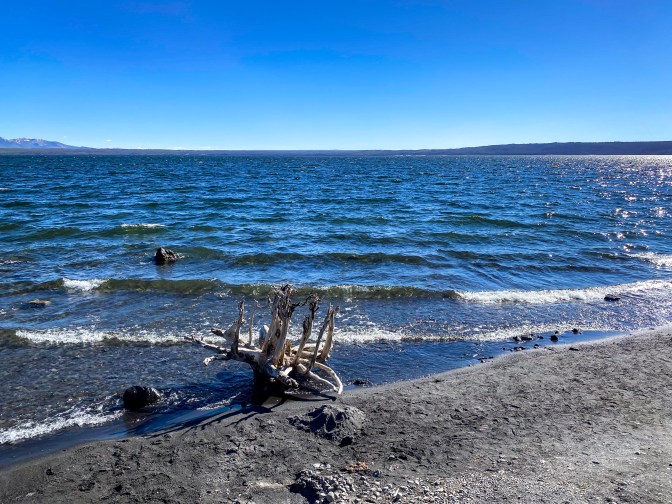
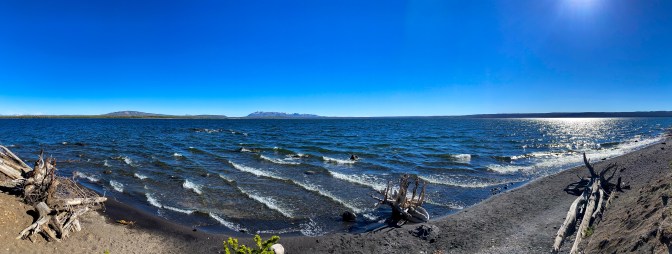
After seeing the towering geyser, it was time to venture onto the next one! We kept traveling back south on the Grand Loop to visit the West Thumb Geyser Basin – pools, springs, and geysers galore! This basin is right off the West Thumb Bay of Yellowstone Lake. Oddly enough it looked like we were at the beach.
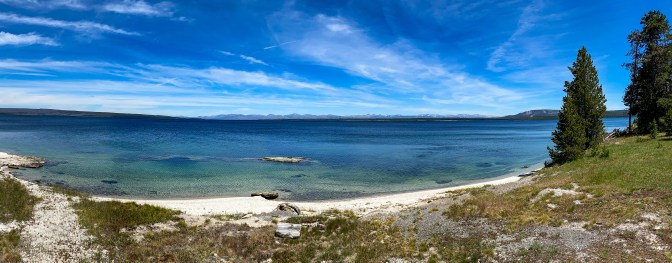
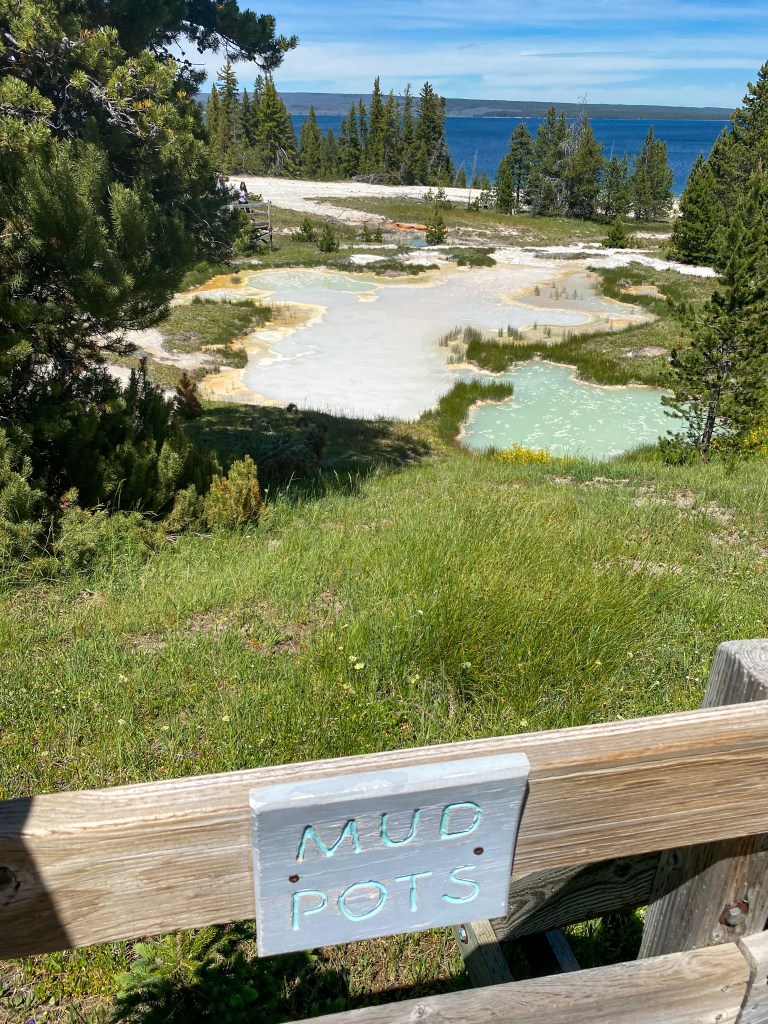
more mud pots! 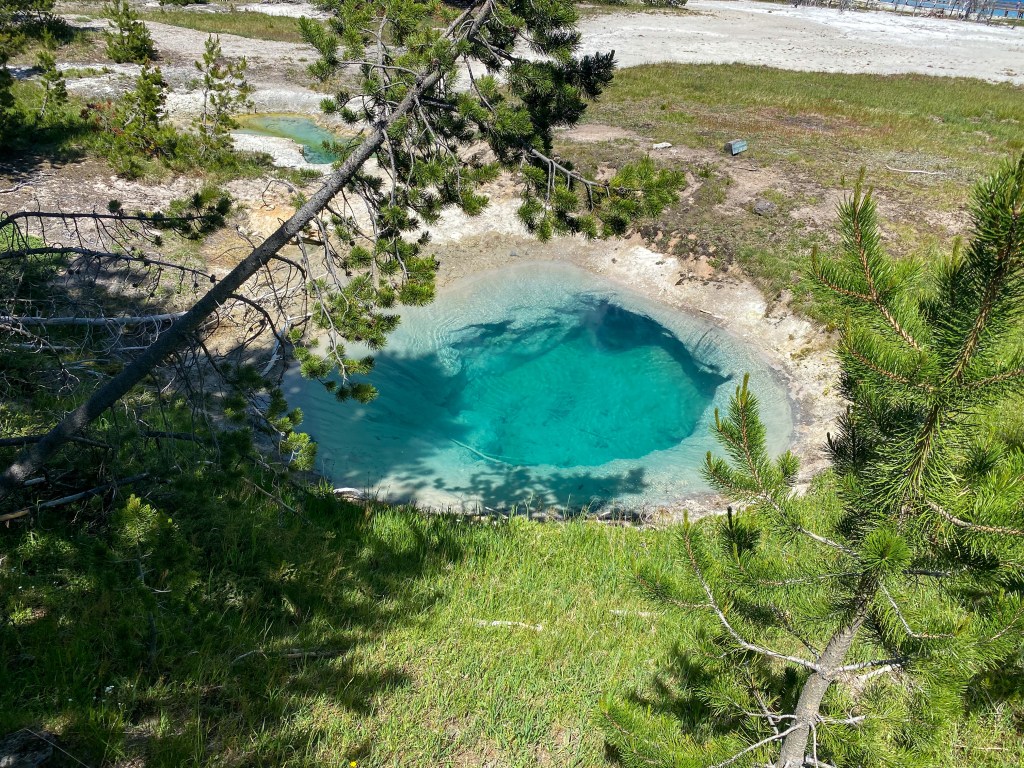
Bluebell Pool 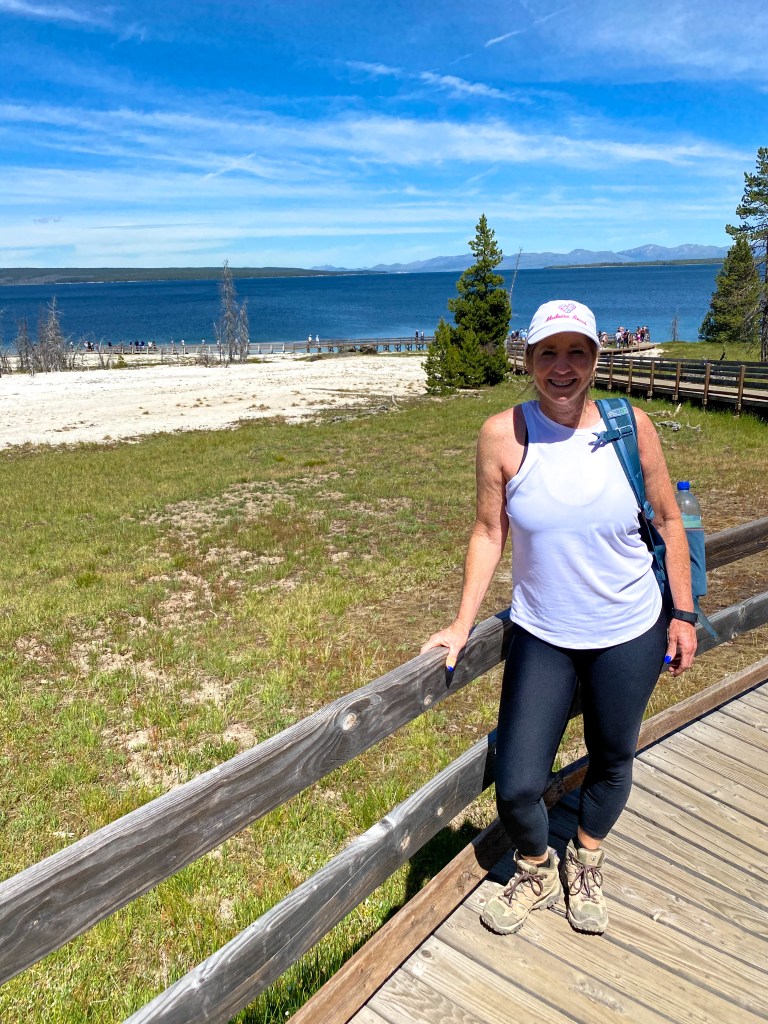
Jill at ‘the beach’ 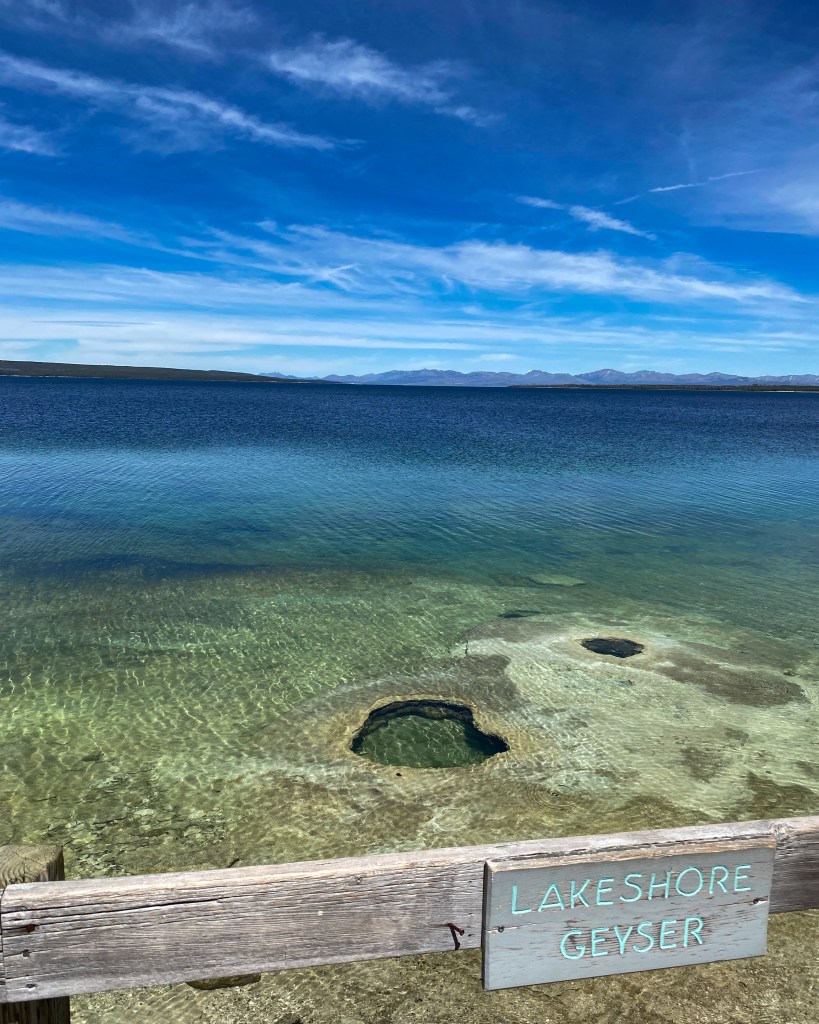
Lakeshore Geyser 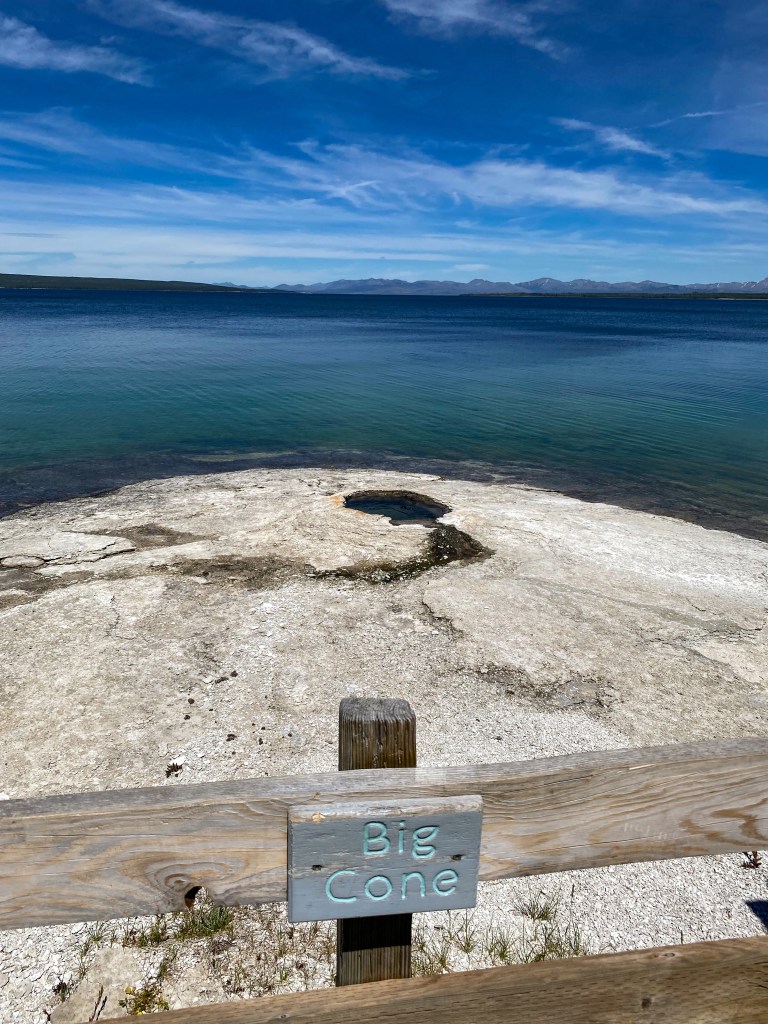
Big Cone 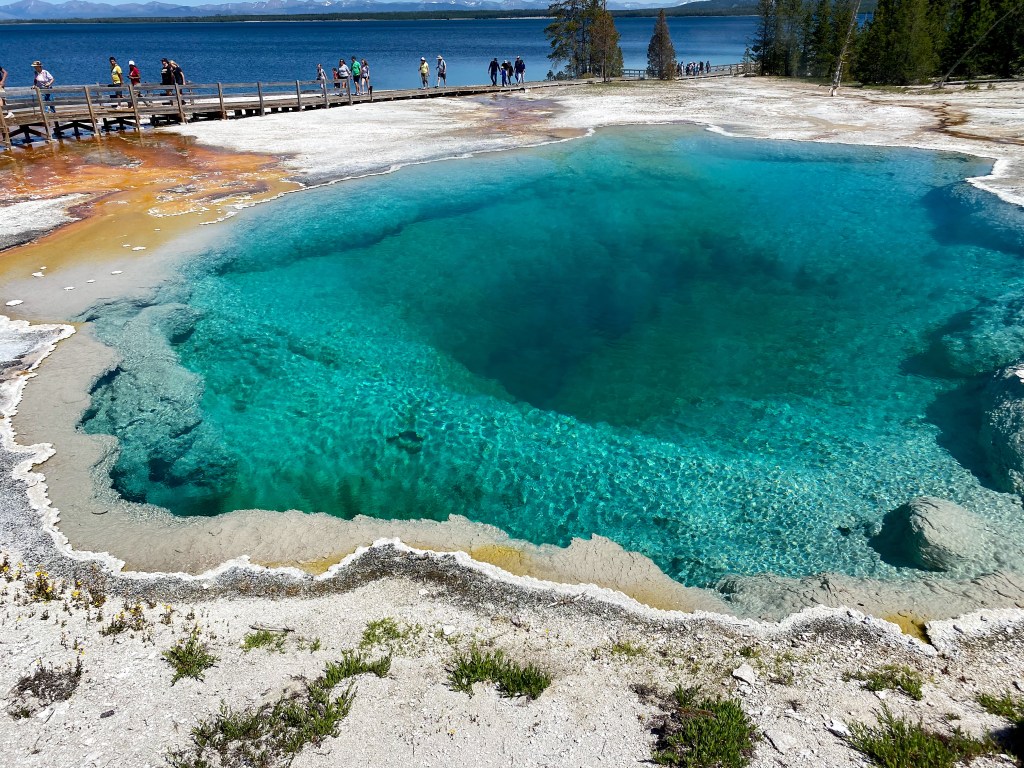
Black Pool 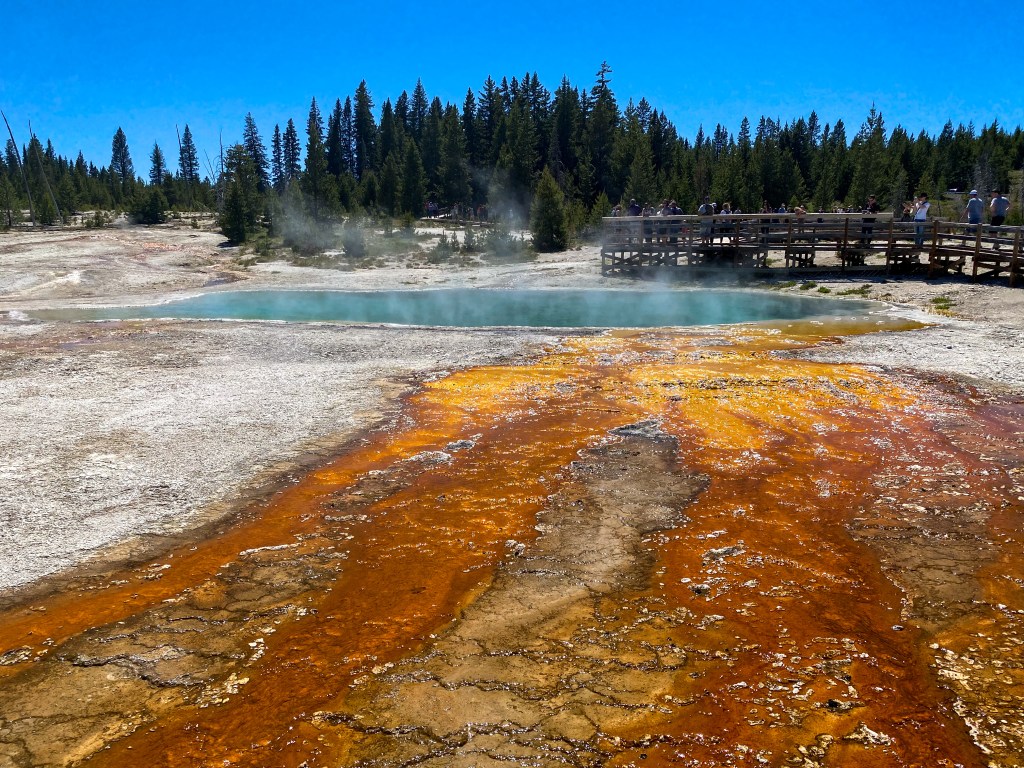
Colorful runoff from Black Pool 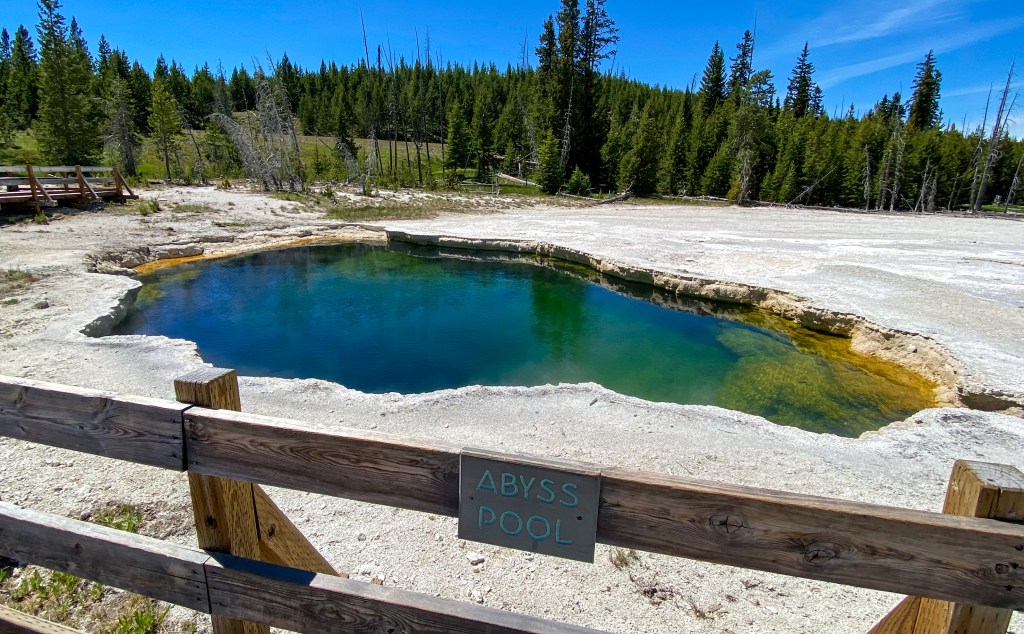
Abyss Pool
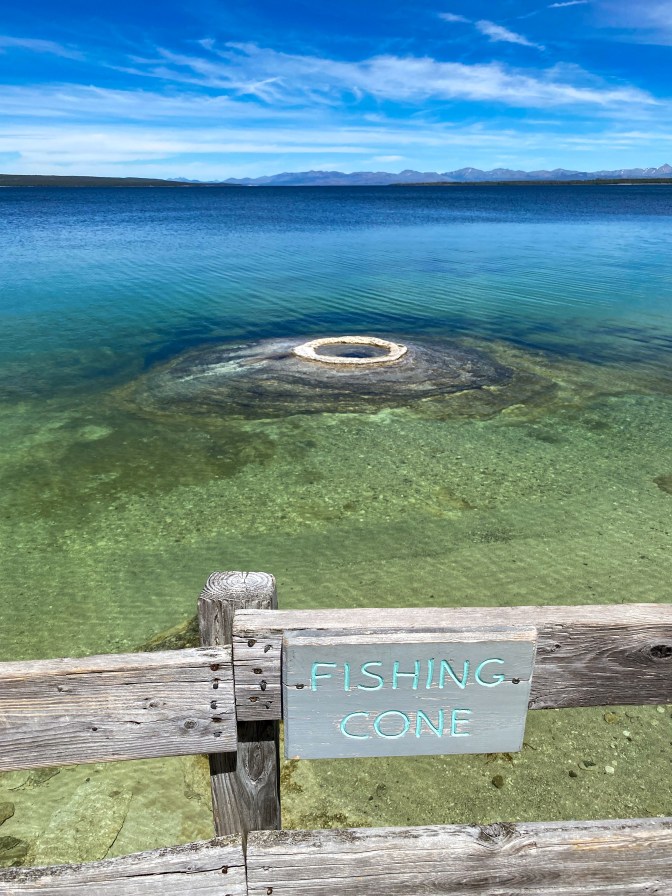
But the highlight was this one cone called the Fishing Cone. We learned that back in the day, it was nicknamed ‘Hook n’ Cook’. Fisherman would bring their catch still on the hook and dunk it into the cone. Because the waters are so hot, the fish would just cook right there!
Onto the next hike, which was just across the street – the Yellowstone Lake Overlook Trail. It’s a short 1.7 mile hike that climbs steeply up a hill in the middle of this open meadow, but it is worth the climb! The views from the top are incredible, and we had the hike all to ourselves!
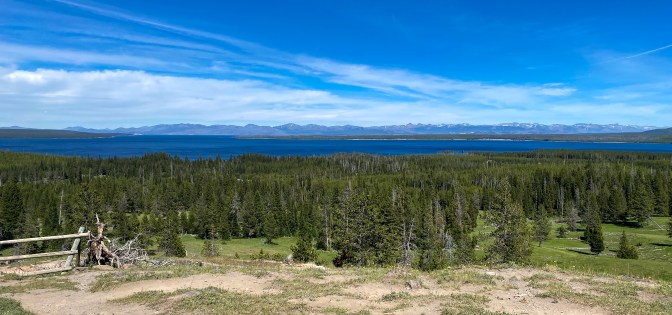
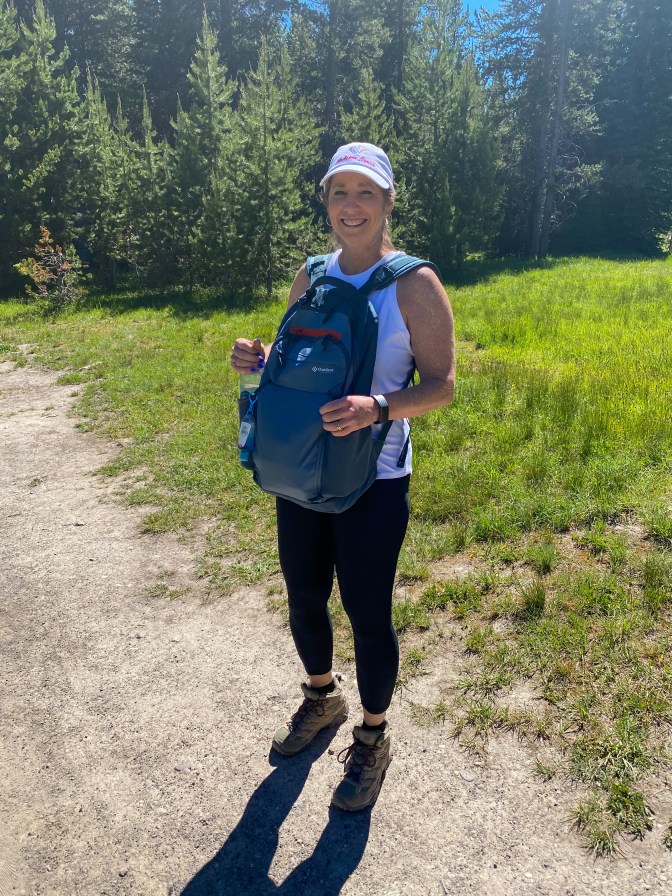
Jill’s preferred way to carry her backpack 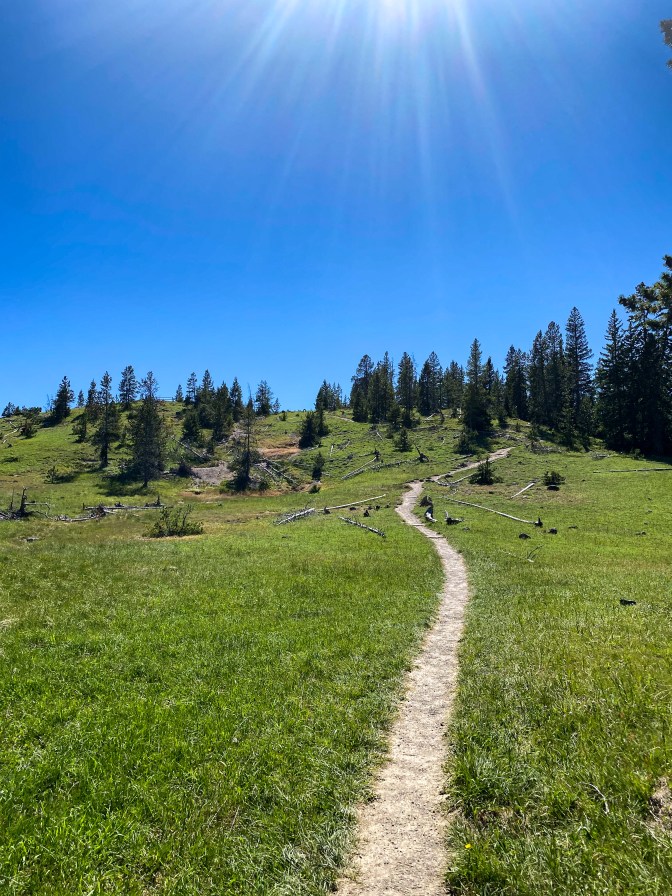
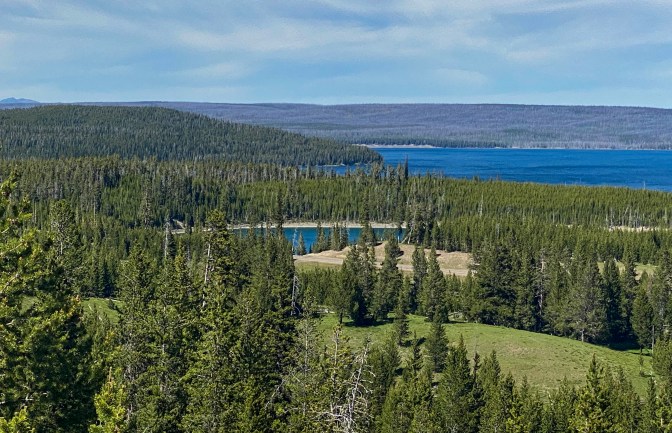
Duck Lake from the overlook
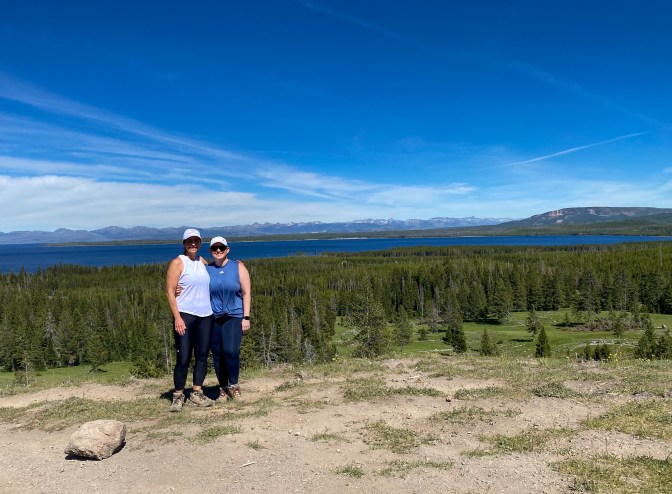
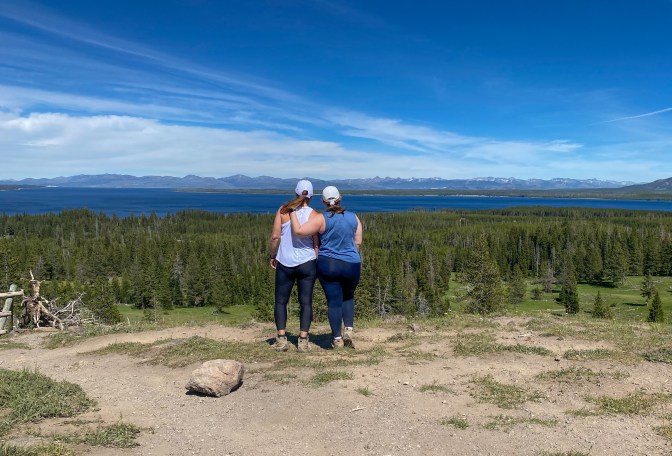
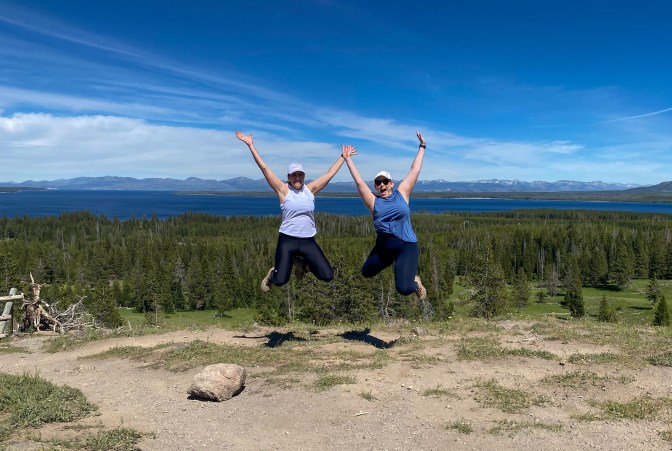
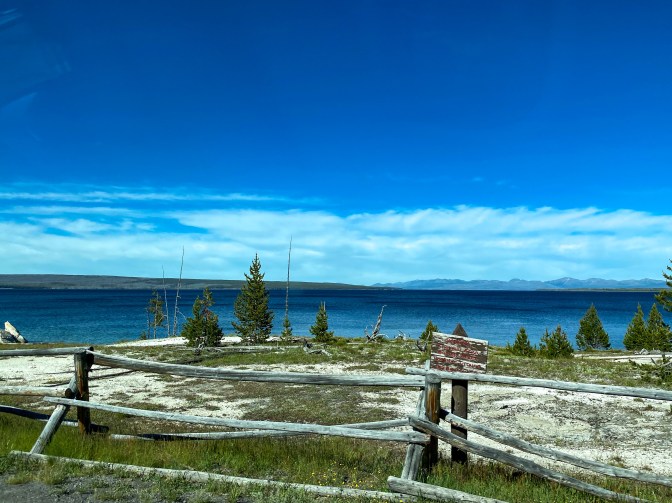
The rest of the day was spent mostly driving and stopping at pullovers to take in the views, see if we can spot some more wildlife, and find a good place to have dinner in the park.
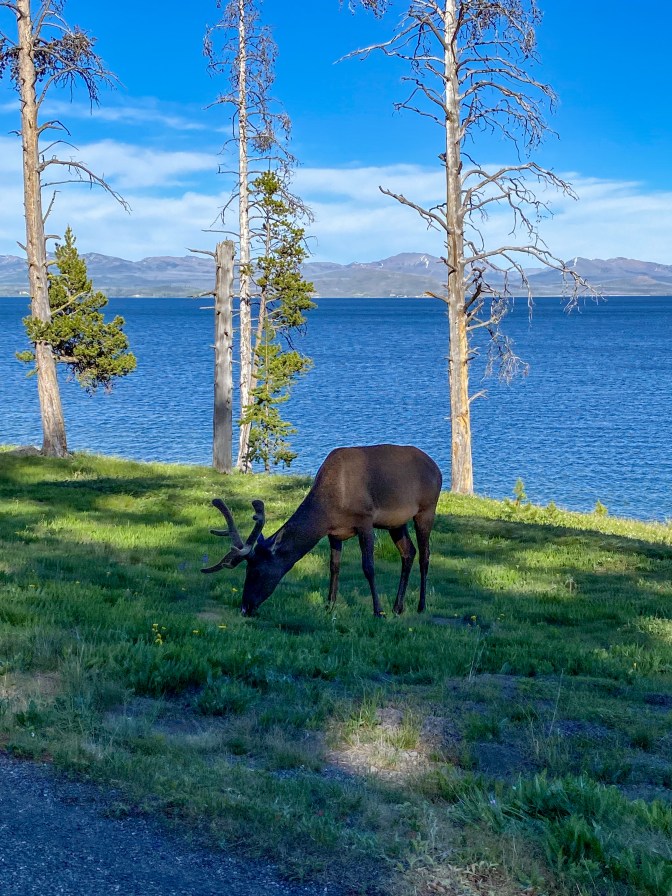
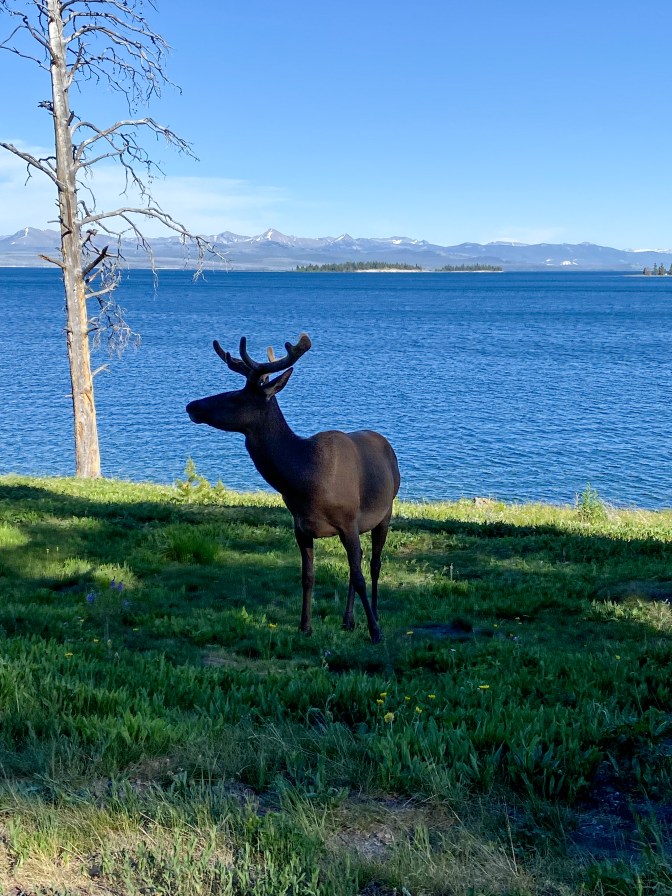
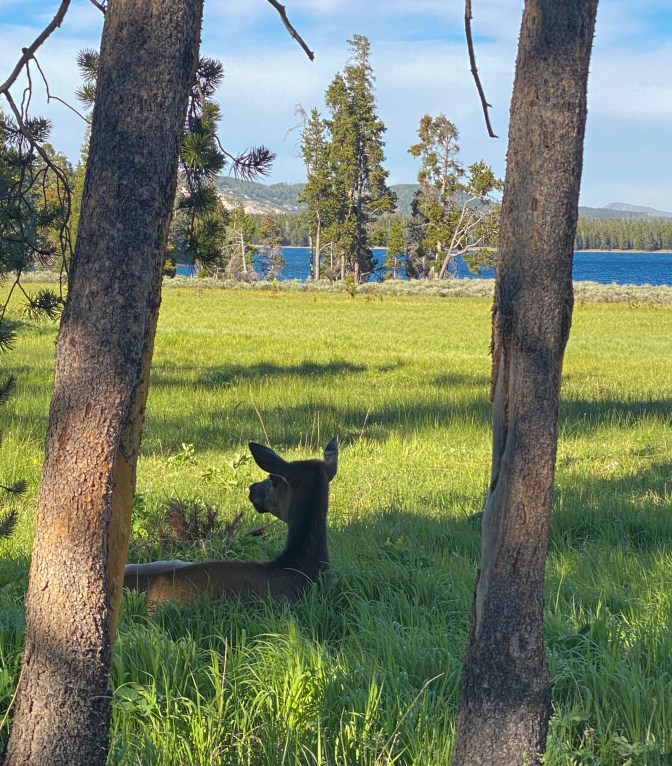
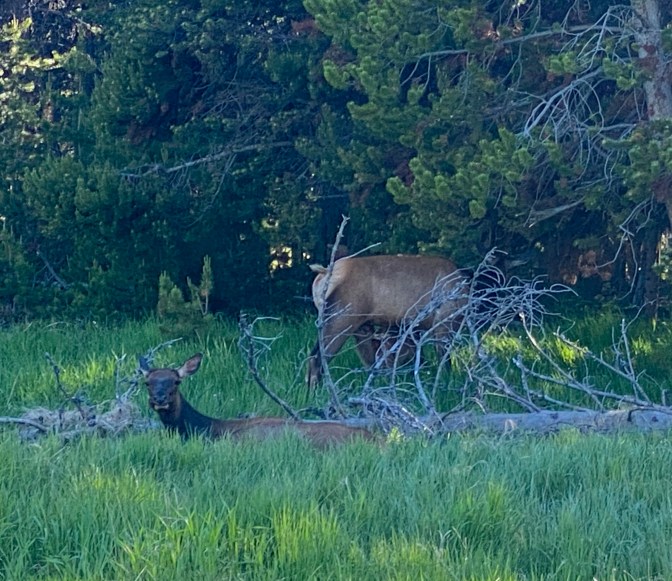
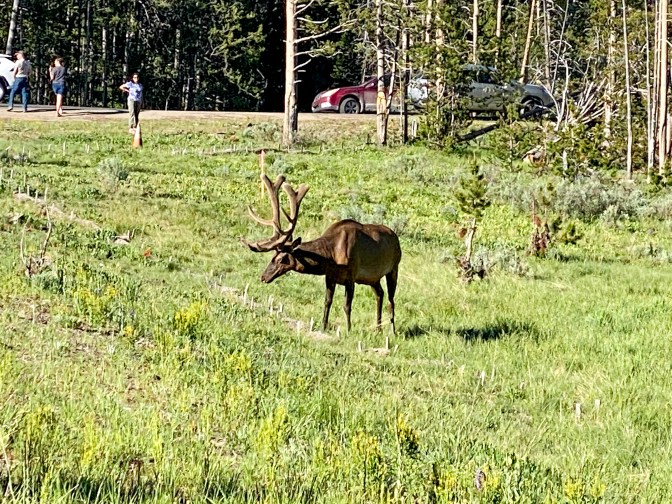
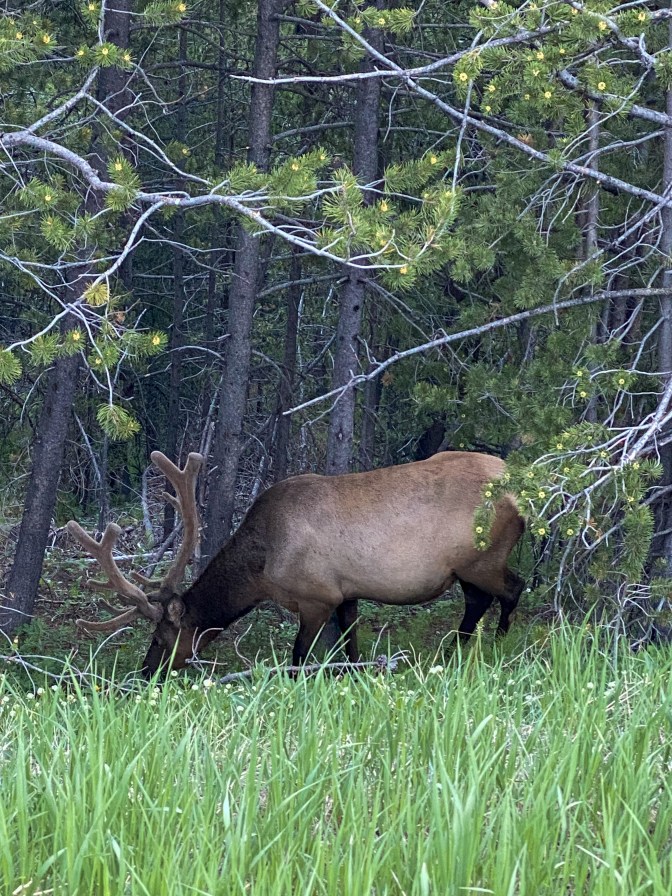
Baby elk nursing 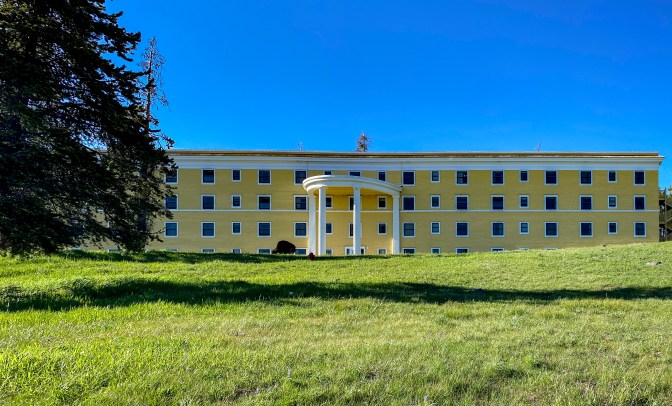
Lake Hotel
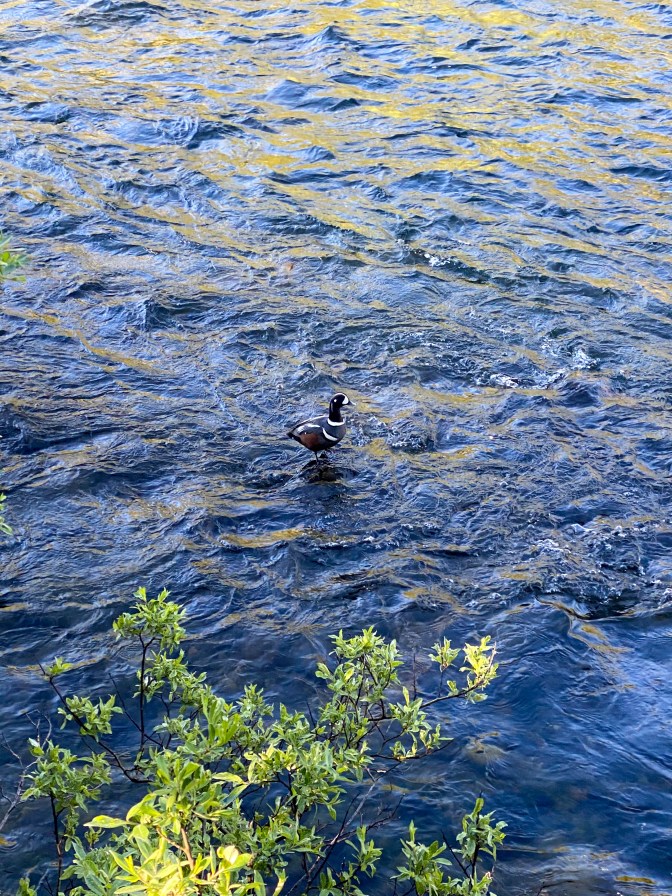
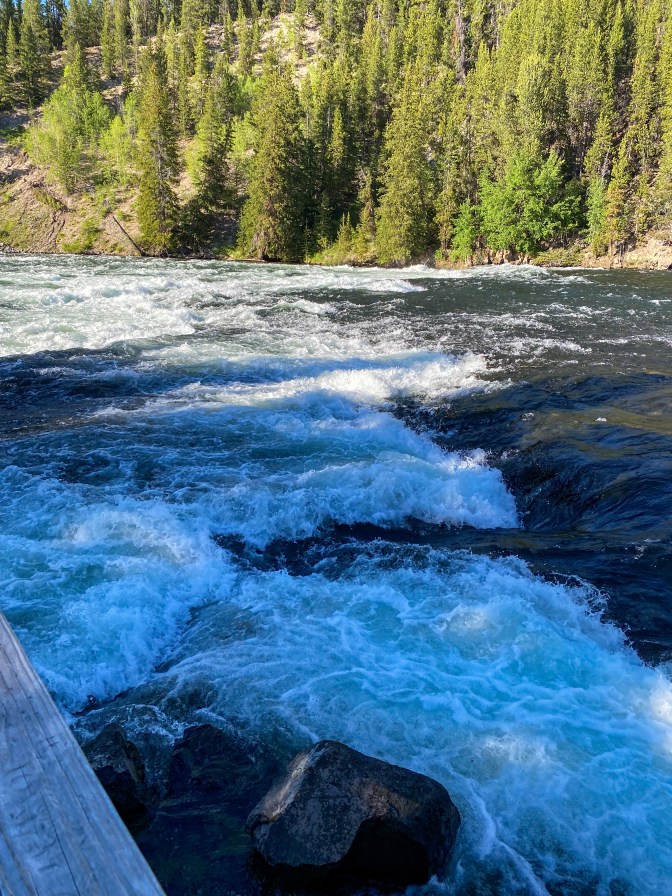
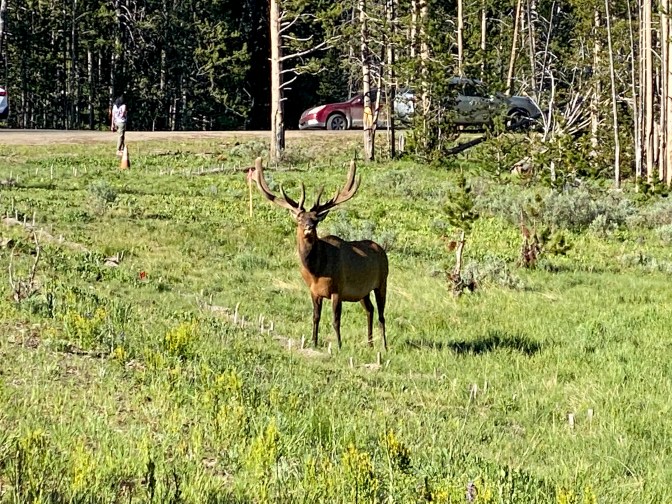
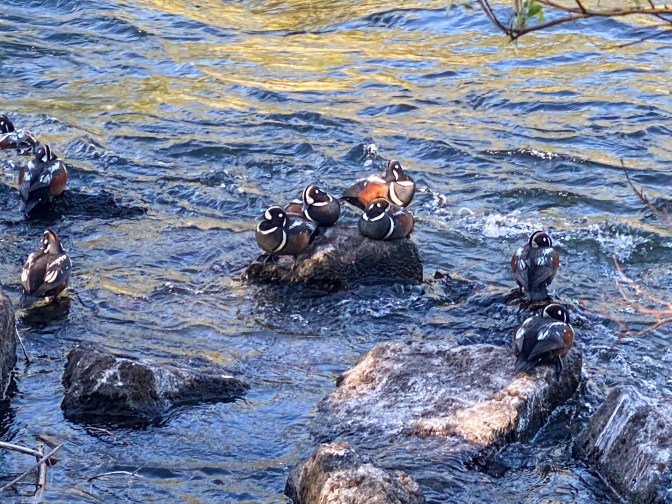
Harlequin ducks!
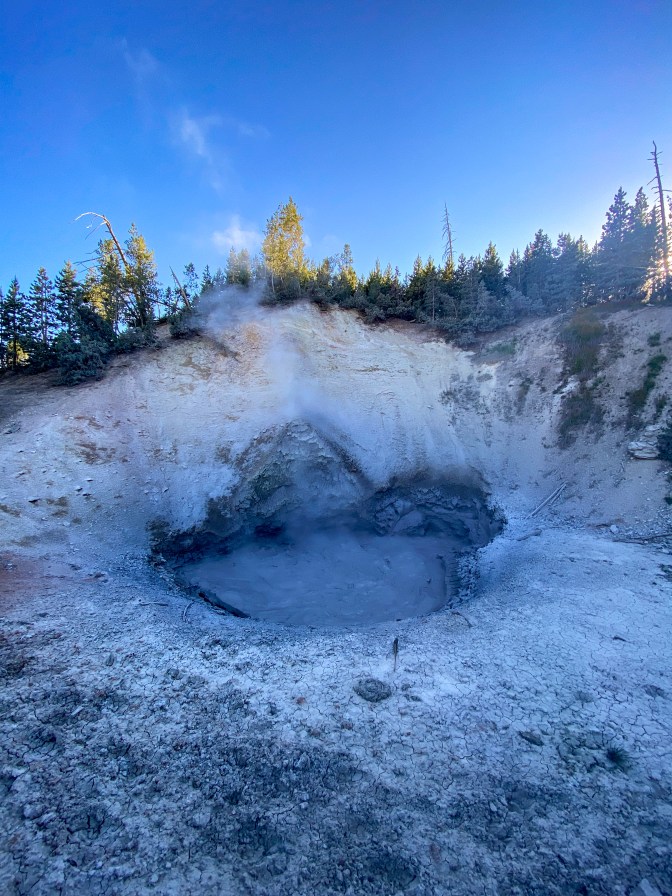
Mud Volcano 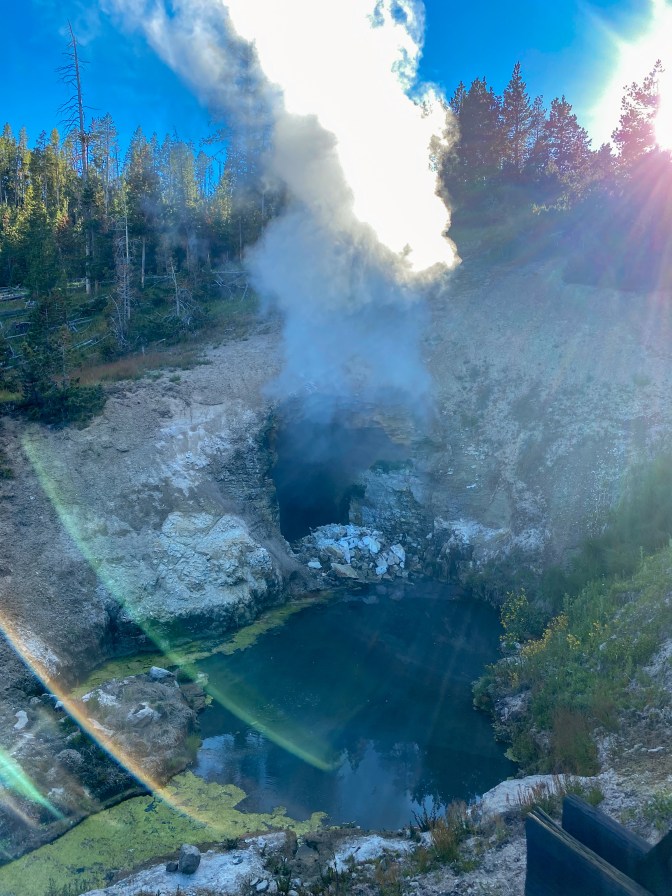
Dragon’s Mouth Spring 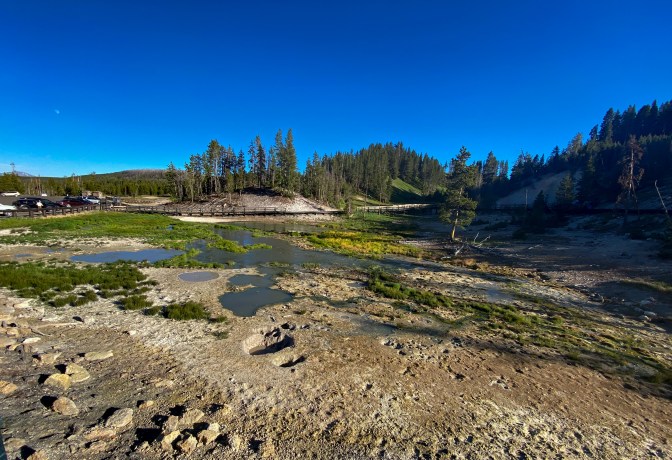
Mud Volcano area aka Shrek’s swamp
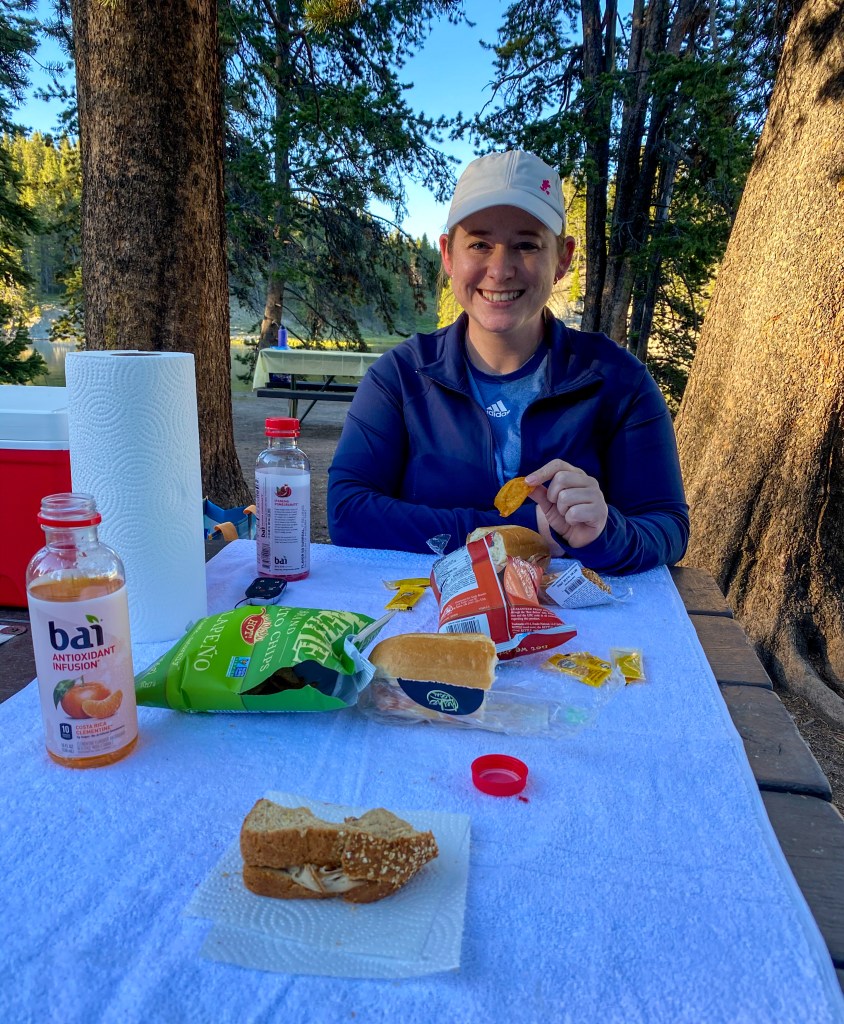
Picnic dinner at Otter Creek 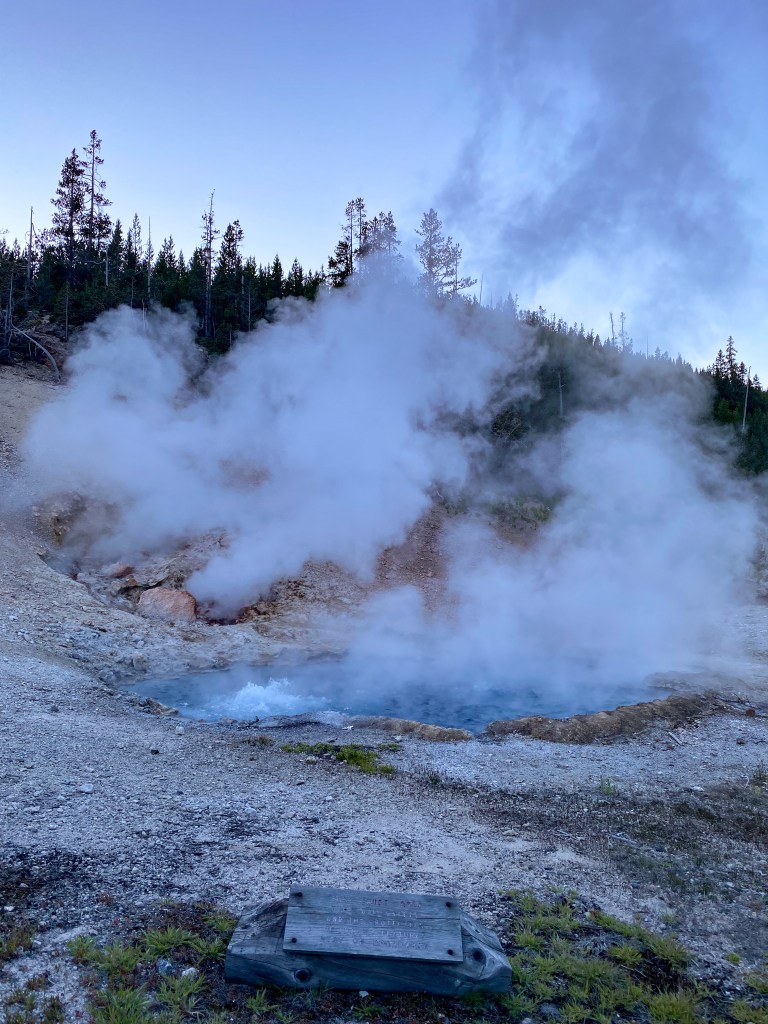
Beryl Spring 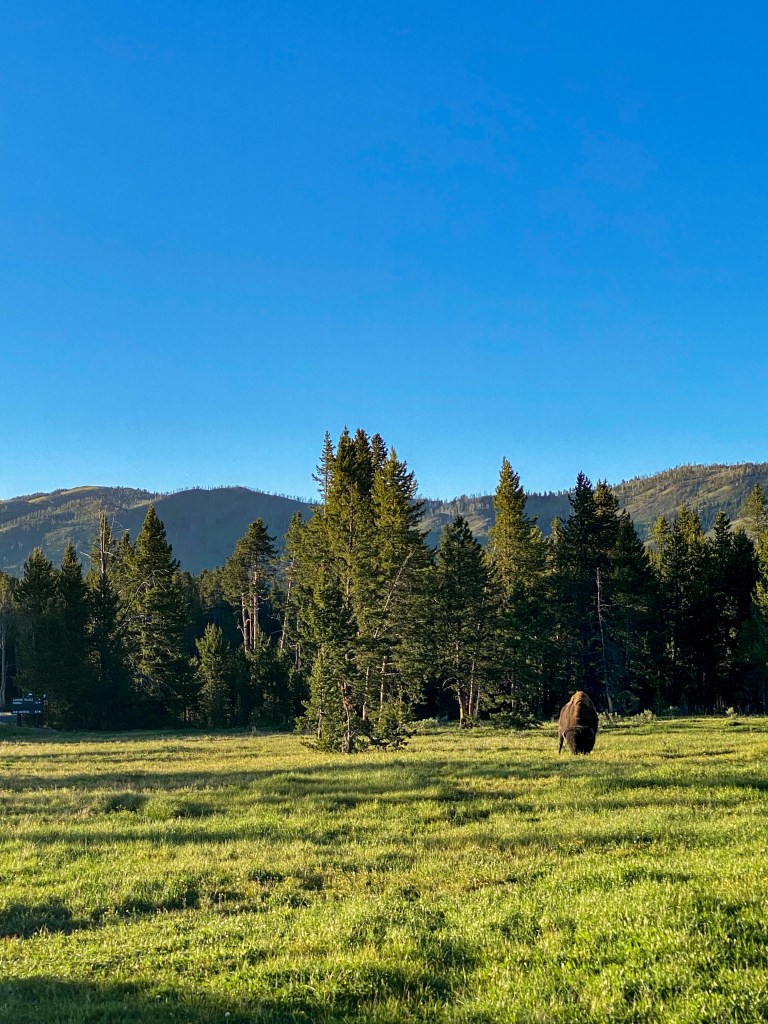
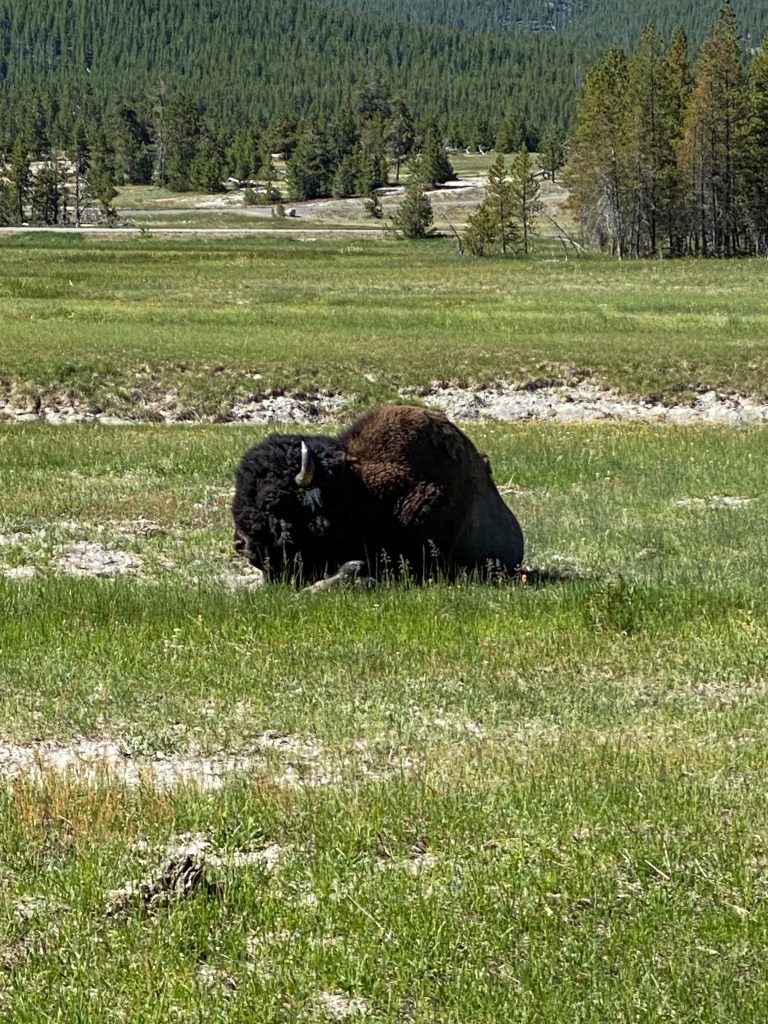
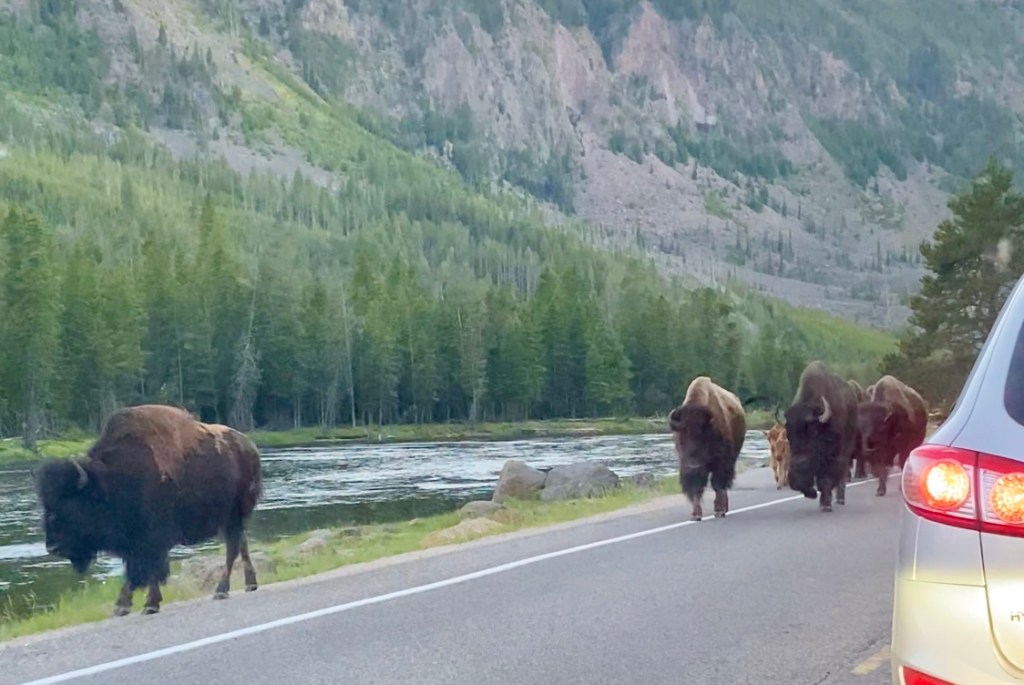
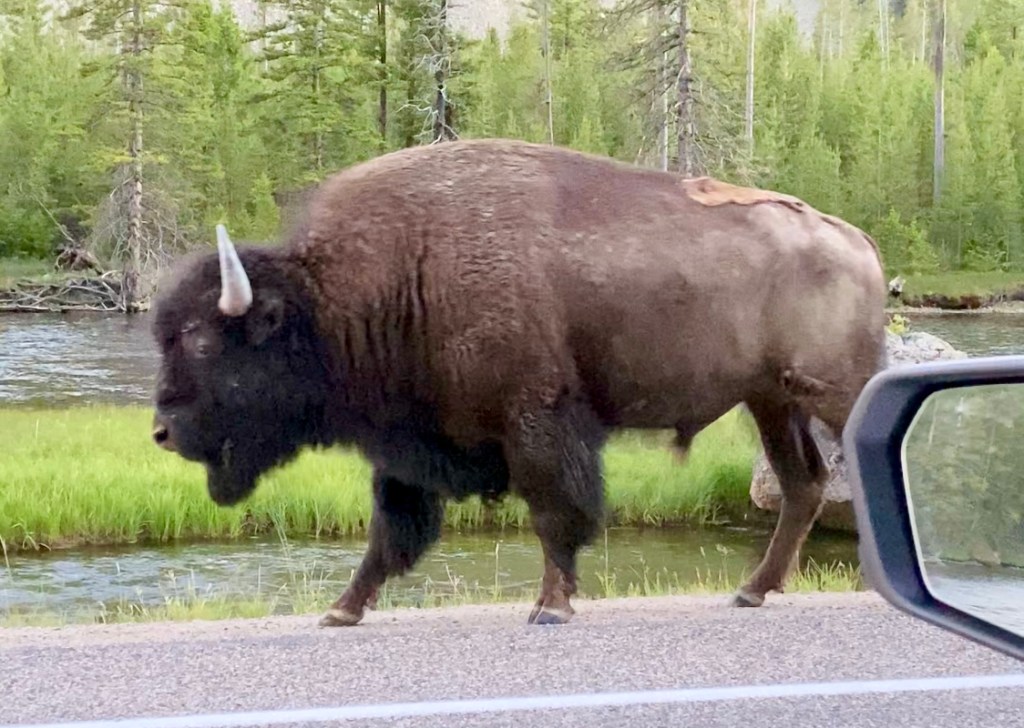
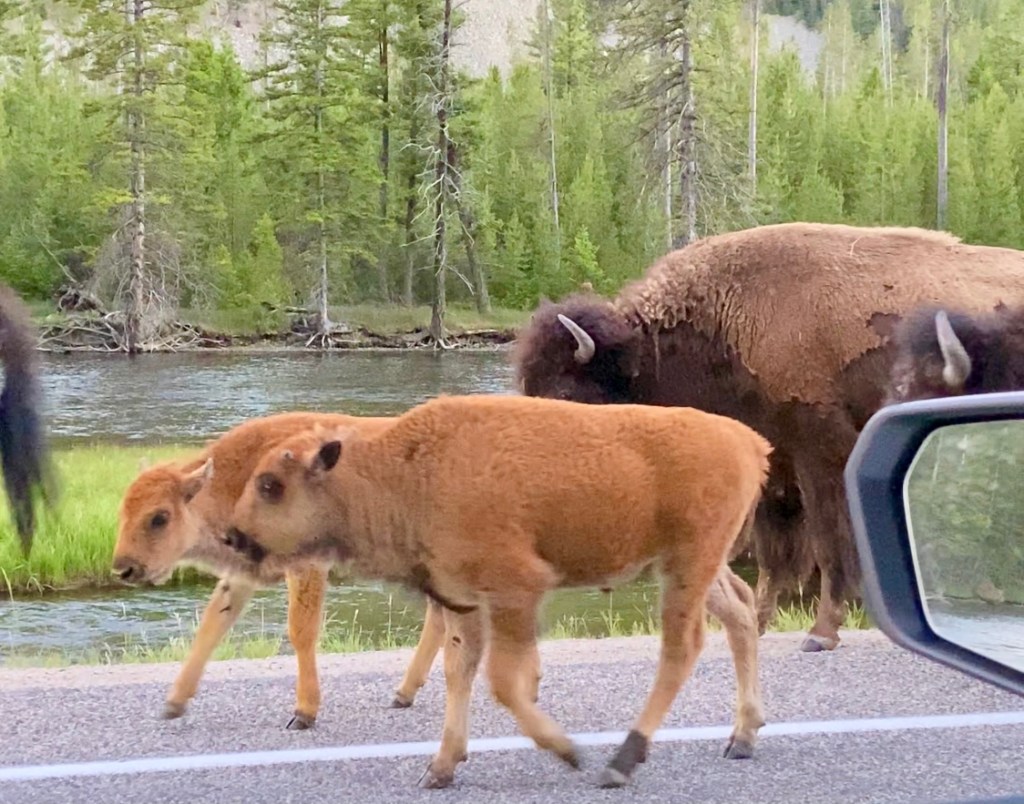
We ended up circling the entire lower half of the Grand Loop to make our way back to West Yellowstone, But right before we left the park, we were halted, stuck in traffic. We had no idea why we weren’t moving until a herd of Buffalo came waltzing down the road. It was an amazing experience to see these giants up close (in the safety of our car!). What a way to end the night!
MILES HIKED: 13 miles (Day One) & 10 miles (Day Two)
STEPS TAKEN: 31,072 (Day One) & 25,453 (Day Two)
ANIMALS SEEN: ALL the Buffalo, Elk – female, male, and BABY!, Otters swimming in Otter Creek (didn’t get a good picture), Harlequin ducks, Chipmunks, a snake


So awesome! Great job Dani!
LikeLike